Tag: Data Protection

  • The Curious Case of the Missing Document: Why Access Control in Document Management Systems is Crucial for Organizations

    Imagine this: You’re racing against a deadline and need to retrieve a critical financial document. It’s too sensitive to entrust to an assistant, and involving unnecessary personnel risks confidentiality. You now face two options: sift through piles of paperwork or hope someone with access can locate it in time. Neither seems ideal, right?

    This scenario underscores the inefficiencies and risks tied to traditional document management practices. The solution? A robust Document Management System (DMS) equipped with access control mechanisms that streamline retrieval and secure sensitive information.
    Role-Based Access: The Cornerstone of Secure Document Management

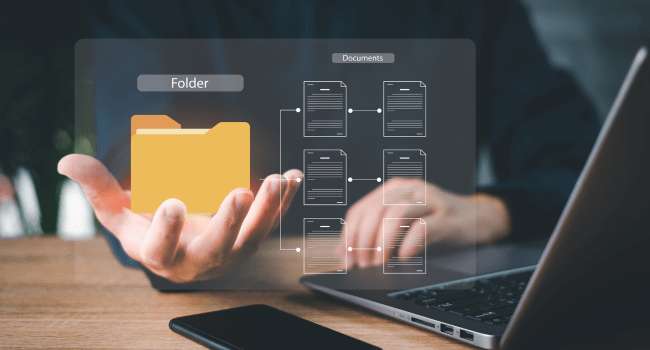
    A fundamental feature of modern DMS platforms is role-based access control (RBAC). This ensures that only authorized personnel can view, retrieve or modify specific documents. Let’s explore how this works:

    • Access by Designation: Permissions are assigned based on roles or designations. This prevents junior employees or unauthorized staff from accessing confidential files while allowing key personnel seamless entry.
    • Eliminating Bottlenecks: A DMS allows the right individuals to retrieve documents instantly without unnecessary delays.
    • Audit Trails: Each action—whether accessing, modifying, or sharing documents—is logged, fostering transparency and accountability.

    With role-based access, critical documents can be found without involving intermediaries, ensuring privacy and efficiency.

    Real-Life Lessons: The Story of ABC Enterprises

    Let’s consider the experience of ABC Enterprises (name changed for confidentiality), a mid-sized manufacturing company preparing for a high-stakes tender submission.

    Ravi, the Head of Finance, needed a sensitive financial document to finalize their bid. The document was vital in justifying their quoted price. However, it was nowhere to be found. Given its importance, Ravi couldn’t delegate the search to an assistant. Instead, he enlisted Meera, a trusted senior colleague, to help. Hours were spent searching shared drives, email threads, and filing cabinets—time they could ill afford to lose.

    To make matters worse, rumours swirled that a competitor might have accessed sensitive data. The suspicion fell on a junior employee who, unbeknownst to management, had unrestricted access to vital documents. The tender submission was completed, but ABC Enterprises narrowly lost the bid, with their competitor quoting just below their price.

    Was it the missing document that cost them the deal?

    A Wake-Up Call: Implementing a DMS

    This incident served as a turning point. ABC Enterprises decided to implement a DMS featuring role-based access controls. The transformation was immediate:

    • Restricted Access: Sensitive documents were now accessible only to Ravi and his core team, eliminating unauthorized access.
    • Advanced Search: Metadata and keyword search functions allowed for quick retrieval of files without unnecessary personnel involvement.
    • Comprehensive Audit Trails: Every document interaction was logged, creating a transparent system of accountability.
    • Centralized Security: Documents were encrypted and stored in a secure, centralized repository, mitigating risks of accidental leaks or data breaches.

    The Outcome: Efficiency and Security in Tandem

    One year later, another tender opportunity arose. This time, ABC Enterprises retrieved all necessary documents in minutes, secured their sensitive data, and submitted their bid without last-minute scrambles. The result? They won the contract with ease, confident that their internal operations were safeguarded from data leaks and inefficiencies.

    Beyond ABC Enterprises: The Broad Benefits of a DMS

    The case of ABC Enterprises highlights the broader advantages of a Document Management System, including:

    • Centralized Storage: No more guessing where a document resides. A DMS consolidates files into one searchable, secure repository.
    • Enhanced Security: Encryption, version control, and restricted access protect documents from unauthorized viewing or accidental loss.
    • Time and Cost Savings: Employees spend less time searching for documents, focusing instead on strategic tasks.
    • Compliance and Risk Reduction: For industries handling sensitive data, a DMS ensures regulatory compliance and mitigates risks linked to poor document management.

    Take Action Today

    The story of ABC Enterprises serves as a reminder that the lack of secure document management can lead to missed opportunities, financial loss, and eroded trust. A Document Management System not only protects sensitive information but also empowers teams to operate efficiently and confidently.

    In today’s competitive business environment, where speed and confidentiality are paramount, investing in a DMS is more than just a technological upgrade—it’s a strategic necessity. Don’t wait for your own “curious case of the missing document.” Protect your organization today.

    Contact us now to learn how a robust DMS can transform your business operations and protect your bottom line.

  • Reblog: Are law firms required to use secure solutions for sending documents?

    Finding the right balance between cost-effectiveness, security features, and adherence to data governance regulations is the key to choosing the right file exchange solution for your law firm.

    New data management and communications technologies are leading an increasing number of law firms to exchange documents online. Although this new approach saves a significant amount of time and money, the fact remains that some risks are still involved.

    With strict regulations governing document sharing and storage in the legal field, it’s important to consider what tools to use to that sensitive information doesn’t fall into the wrong hands when choosing a solution to send and receive your files.

    What the Code of Ethics for Lawyers Says About the Exchange of Confidential Information

    According to the Code of Ethics for Lawyers, all legal professionals are required to take reasonable steps to ensure that the sensitive or confidential information of their clients cannot be accessed or intercepted by an unauthorized third party. This of course includes documents that are sent from or hosted in the Cloud.

    This means that before using Cloud-based file transfer software, lawyers must perform thorough checks that will guarantee the security of the data being exchanged.

    Security Measures Recommended for Sending Legal Documents

    Here are a few tips to help lawyers adopt safe behaviors when they exchange sensitive documents or files, based on best practices suggested by several North American regulatory bodies.

    When using Cloud services, it’s recommended that they have at least one facility in your country of origin. Often, Cloud Service providers use multiple facilities to guarantee uptime in the event of issues like a natural disaster. But if all a provider’s facilities are overseas, it could make things difficult when trying to communicate with them (and in-turn, your clients) if or when disaster does strike.

    Next, law firms should always inform their clients when using a software or Cloud-based file exchange solution. This allows your practice to get client approval before sending any information, and can often positively affect your credibility. Everyone appreciates knowing that their data is in good hands whether its in transit or at rest.

    Finally, it’s also advisable for legal professionals to keep a backup copy of sensitive information stored in the Cloud. This way, the data will be available even in the event of a system outage or a dispute with the Cloud service provider.

    How can lawyers ensure they choose secure file exchange software?

    Legal professionals who want to send files online are faced with a tough choice. While many software solutions exist, not all of them offer the same data protection and privacy features. However, certain certifications can be reassuring.

    For example, ISO 27001 is a model for information security. Among other things, it serves as a benchmark for protecting sensitive and confidential information. It is considered a standard that oversees other legal requirements and rules and ensures that the measures taken to ensure information security are continually updated. This is an essential precaution to cope with the constant and rapidly changing nature of cyber threats.

    A secure file exchange solution tailored to lawyers’ needs

    Lawyers must be very careful when choosing an exchange platform since it is mandatory for them to use every means possible to ensure their clients’ information security.

    They can nevertheless count on the data solutions offered by XMedius. ISO 27001-certified, our trusted company has unique expertise in information security. We are the company to contact if you want to avoid any issues with confidentiality. Questions? Feel free to reach out to one of our knowledgeable experts today.

    The original article can be found here.

    For more information e-mail us on sales@rincon.co.in and we will be glad to assist you.

  • FileDirector Express

    What small businesses have been waiting for:

    • Simple, fast, economic, express
    • Rent instead of buy – just pay for use
    • Up to 10 simlutaneous users
    • Local installation – local storage
    • Always the latest version
    • Compliance and security

    FileDirector express is the ideal Electronic Content Management solution for small businesses and start-ups. Simple to install, simple to set up, simple to use, and with no upfront costs. FileDirector express is the essential tool for your business, but without the capital commitment and you can evaluate FileDirector express 30 days free of charge.

    The benefits of an intelligent Electronic Content Management solution are self-evident. Documents will be captured, stored, managed and retrieved quickly and easily. You are able to rapidly access relevant information according to your needs. What’s more, staff will not waste time or money on duplicating or distributing documents. Scanning avoids all these unnecessary actions and gives you and your colleagues more time to concentrate on the essentials. On top of this, document storage costs are reduced as considerably smaller physical document storage space is required.

    What is just as relevant are factors such as better security control, and audit trail options. You decide at all times who has access to your documents. Then there is also the improvement in customer satisfaction, as a result of faster response times.

    A further – and not insignificant – argument for the use of FileDirector express is compliance with statutory requirements, since we help your organisation to minimise the financial or legal risks which can be caused by lost, damaged or improperly used information. Thanks to FileDirector, complying with the data protection provisions on retention periods and destruction of documents becomes child’s play.

    E-mail us on sales@rincon.co.in for more information and we will be glad to assist you.

  • XMedius Secure Information Exchange For Banking And Insurance

    Companies in the financial sector are focused on implementing strategies aimed at increasing operational efficiencies and improving the administrative workflow. Financial professionals in all corners of the sector handle sensitive documents daily; documents containing business and personal financials, credit card numbers, and much more. By giving financial organizations the ability to fax online within major compliance policies, XMedius solutions solve many of the banking information security challenges of using traditional fax.

    Secure information exchange with no compliance concerns

    Professionals in the financial sector are aware that over time, the regulations for sending sensitive data have tightened. XMedius secure information exchange solutions adhere to strict regulatory and compliance policies like Sarbanes-Oxley (SOX), Gramm-Leach Bliley Act (GLBA), Payment Card Industry Data Security Standard (PCI DSS), Basel II as well as the European Directive for information privacy law and the European data Protection Directive (EU DPD). Our list of certifications is a major reason that we’re the secure information exchange solution that financial organizations trust.

    Increase client satisfaction

    In an age where financial transactions happen instantaneously and clients expect communications to happen just as fast, a secure online fax solution can boost your organization’s level of service. Using your existing telecom setup, XMedius solutions help move your fax transmissions from traditional paper fax machines and unreliable fax servers. With your staff able to send faxes from email, multifunction printers (MFPs), and mobile devices, you’ll be better able to accelerate processes and offer the rapid service your clients deserve.

    Fax anywhere, at any time

    When documents need to be sent urgently, waiting by a fax machine or queuing up an outbound fax for later poses a challenge.  XMedius secure information exchange solutions allow your staff to respond quickly to clients’ needs by enabling them to fax anywhere at any time.  What’s more, inbound faxes are sent directly to your staff’s email inboxes, eliminating the chance of unauthorized viewing or use of financial data.

    Online fax with world-class support

    XMedius’ technical support and customer service teams comprise of highly certified individuals who offer 24/7 support. With an XMedius solution, you’re not only eliminating fax-related headaches like fax machine maintenance and the rebooting of crowded servers, you’ll also benefit from our 20+ years of experience of providing exceptional customer support for any onboarding, integration, or troubleshooting needs you may have.

    To learn more contact us sales@rincon.co.in

  • Reblog: A Compliance Expert Answers Your Top GDPR Questions

    The Ageris GROUP is a French-based company founded in 2003 offering specialized information protection, business continuity and personal data protection consulting services to government organizations, as well as to their clients in the healthcare, finance, and industrial sectors. Ageris’ awareness-raining approach enables companies to continually improve their information acquisition, storage, and distribution processes according to international security standards. Their team of expert consultants help organizations from the risk assessment and audit stages right through to the development and implementation of action plans, including software provisions, that adhere to strict safety compliance standards.

    Recently, Denis Virole, Director of Services and Partner of Ageris Group, was invited to speak at a seminar hosted by XMedius in Paris titled “GDPR: Organizational Impacts for Enterprises” regarding the upcoming GDPR regulation and how it is set to affect businesses around the world. Before Mr. Virole captivated attendees with his talk on how organizations can prepare for GDPR before the regulation comes into play on May 25th 2018, we managed to ask him a few questions about how companies around the world can start getting prepared in advance. Read on for a few of his insights.

    Question 1: In your opinion, which sectors will GDPR impact most?

    Denis Virole: The sectors that will be most affected will definitely be government administration offices, banks, insurance providers, and municipalities. The fact of the matter is that GDPR will affect all companies who process and store personal data, so it’s in everyone’s best interests to get familiar with the regulations.

    Question 2: How will the regulations affect daily operations?

    Denis Virole: I’d say that internal operations will see the biggest impact. There will be much more communication between Information Systems Security Managers, Data Protection Officers, and various departments within organizations. There will also be quite a bit of restructuring around processes for handling data.

    Companies will also have to develop transparency policies for their clients or users. Customers must be informed of their rights and how companies are respecting those rights in regard to obtaining and using their personal information. At this stage, even the most mature companies aren’t yet at an adequate level of compliance for the new regulation.

    Question 3: How can organizations educate employees about GDPR?

    Denis Virole: When it comes to GDPR, it’s important to understand that there is no “one-size-fits-all” solution for every organization. Employee education has to be tailored to an individual company’s culture and its constraints, such as its industry, size, IT environment, etc.

    Any training is doomed to fail if an organization’s upper management structure isn’t properly informed of the specific changes that must take place once the GDPR passes. Next, specific training is needed for managers, various channels within the business, any staff who handles personal data regularly, as well as any IT subcontractors.

    Awareness of best practices should also be provided to users. All customer awareness should be at the same level, and developing policies to raise awareness requires that management get involved. Getting the commitment of high-level representatives isn’t always easy, and this is likely to represent a daunting challenge in more so-called “conventional” sectors, such as government.

    Question 4: What are some of the major consequences of non-compliance?

    Denis Virole: A flagrant consequence for non-compliance would be a loss of confidence in a company, both internally from employees, and externally from customers, business partners, investors, and the general public. Respecting the rights of individuals is major, and any infractions could severely damage a company’s reputation.

    In the event of non-compliance with GDPR regulations, EU authorities have the right to force companies to halt all commercial activities. This obviously leads to economic loss, but can also be majorly detrimental for brand awareness.

    There is also a list of financial penalties associated with non-compliance, as well as civil reparations for damages caused to victims.

    Question 5: What are the long term positive benefits that you expect to see from GDPR after May 25, 2018?

    Denis Virole: I envision that the GDPR will improve synergy between various departments within an organization. The deadline allows companies to become compliant, but also to map out their current IT processes and procedures. Various departments will therefore have to break down any communication barriers that stand between them in order to better work together. Therefore, we can expect a deeper understanding of internal processes from all players, and ideally, we can expect better information management on all levels.

    Question 6: How can companies use technology to optimize their data governance?

    Denis Virole: This is a tricky question since technology doesn’t protect companies. It’s a very useful tool, but just a tool nonetheless. In order to ensure data security, a risk analysis must be carried out with the cooperation of various business units in an organization and its Information Systems Security Managers. Afterwards, a concrete action plan needs to be put in place. This way, technology becomes a solution that facilitates best practices.

    Pseudonymization, for example, is a process where the most identifying fields within a data record are replaced by one or more artificial identifiers (or pseudonyms) and are only made visible when necessary, is very useful in a GDPR context. Using encryption technology can also make individuals’ personal data extremely difficult to decode, and is therefore a great solution when handling sensitive data. XMedius solutions respond very well to this need, and are non-restrictive in the sense that deploying one doesn’t require any restructuring of a company’s current business environment. They are easy-to-use and a solid way to optimize internal processes in order to become GDPR compliant.

    Want more information on solutions that will boost your workflow and help you become more compliant with regulations like GDPR? Contact us sales@rincon.co.in

    The original article can be found here.

  • Reblog: The GDPR primer: 5 Tips for getting your organization ready

    In less than 9 months, the General Data Protection Regulation (GDPR) will come into full effect. It will introduce tough new privacy requirements for companies in the EU, as well as anyone who handles EU data. The new set of laws imposed by the GDPR will give consumers significantly more control over the ways in which their data is collected, distributed, kept, and destroyed.

    Although May 2018 may seem like a far way off, but when you consider the complex changes many organizations will have to undergo in the way they handle personal data, the date is actually approaching pretty quickly.

    To successfully prepare for GDPR, companies of all sizes need to establish a solid foundation for meeting compliance before the new laws come into play. We’ve compiled a list of tips you can follow that will help you align your business practices and processes with GDPR regulations. Our list is not exhaustive, but can help businesses put a few preparations into place in advance.

    1. Raise Awareness

    Businesses handling personal data both in and outside of the EU must begin by developing a full understanding of the GDPR and exactly what it entails. It’s vital to recognize that GDPR applies to organizations everywhere in the world as long as they handle data containing any personal information about EU citizens, no matter where the data is stored. Make it a priority to circulate training videos or documentation containing detailed information on GDPR regulations around your organization so that everyone can begin to understand how it applies to your business processes.

    2. Develop a coherent privacy policy

    Organizations will need to clearly communicate with customers the purpose for which they are collecting their data under GDPR, so writing privacy policies that are easily understandable should become a top priority. Consumers need to be aware of their rights to disclose or refuse disclosure of personal information and understand the specific purpose for which it will be used. The GDPR also outlines that any information that’s collected for a stated purpose can only be used for that purpose after obtaining consent.

    Most companies practice transparency, but it’s important to make sure that privacy policies that contain a lot of fine print must be brought to the forefront and made legible and easy to understand or you could be faced with a fine. The fines for data breaches are huge – In cases of violation, the GDPR gives EU regulators the authority to impose fines of between 2 and 4 percent of a company’s global revenues.

    3. Prepare your data breach policy

    GDPR is no different than many regulations in that it requires you to inform consumers about data breaches that may affect their personal information – but with one catch – you have to do it within 72 hours. It’s one of the tightest timelines out there in the compliance world and may require that you revise your current data breach policy. Ensure that your insurance policies and internal procedures for incident reporting reflect the new law.

    4. Assess existing technology risks

    When strict regulations come into play, organizations need to reexamine the solutions they use to send and receive consumer information – it’s important to assess which solutions may need to be upgraded or replaced. If your HR, finance, or other departments are currently using inherently non-secure means of transmitting sensitive data between countries, it’s time to reassess your options. A cloud fax solution, for example, eliminates several of the security risks that come with using traditional fax machines.

    Cloud fax software enables employees to send and receive sensitive documents directly from their workstations, which means no more printed documents left lying around potentially falling into the wrong hands or being otherwise misplaced. Full knowledge of your organization’s technology risks can present opportunities to leverage existing solutions that will get rid of any security gaps in your infrastructure and help enable GDPR compliance.

    5. Investigate innovative new technologies

    GDPR will require companies handling personal data to develop strong data discovery and incident detection processes so that they can keep track of where their information is, and is being sent, at all times. Not everyone has a data controller on staff, and refining these processes doesn’t have to be a complicated task. Consider secure file exchange solutions that automate some of the workload for you.

    Solutions with features such as a built-in audit trail function eliminate guesswork by keeping a timestamped record of all files and documents that are transferred, whether inbound or outbound. Not only does can this boost organizational workflow, you’ll have a chronological record of system activities in case you’re ever up for audit. It’s all too common for organizations to transfer consumer’s personal information without the proper safeguards in place, which is why looking into new technologies that can improve your processes is so crucial.

    By understanding the GDPR in advance, you’ll get a stronger grasp of its requirements and be well on your way to mitigating any risks associated with how you handle personal data. Looking to boost security when sending and receiving sensitive information? Speak with an expert today to learn about solutions that will help take your organization’s security and compliance to the next level.

    The original article can be found here.

    To learn more contact us sales@rincon.co.in