Tag: Data Security

  • The Top 5 Document Management Challenges Faced by Businesses (And How to Overcome Them)

    Managing documents effectively is a critical part of running a business. From financial records and contracts to operational workflows, every organization deals with vast amounts of information daily. Yet, without the right tools and strategies, document management can quickly become a headache.

    Did you know that 21% of daily productivity losses in medium-sized businesses are attributed to poor document management? Or that 7.5% of all company documents are lost entirely, costing businesses significant time and money to recreate or retrieve them?

    1. Difficulty in Document Retrieval

    One of the most common challenges is locating the right document when you need it most. Studies reveal that employees spend an average of 18 minutes searching for a single document, which translates to hours of lost productivity each week.

    How to Overcome It:

    • Implement a centralized document storage system.
    • Use advanced search capabilities, such as keyword or metadata tagging, to locate files quickly.

    2. Lack of Data Security

    According to recent reports, 60% of businesses have experienced a data breach in the past two years, often due to unsecured document management practices. Sensitive files like financial records and client contracts are especially vulnerable to unauthorized access.

    How to Overcome It:

    • Restrict access using role-based permissions.
    • Encrypt sensitive files and ensure secure backups are maintained.

    3. Compliance Risks

    In sectors with strict regulations, non-compliance can result in significant fines, legal penalties, and reputational damage. A survey of compliance officers found that nearly 50% struggle to retrieve documents promptly during audits, increasing the likelihood of non-compliance.

    How to Overcome It:

    • Maintain detailed audit trails to track document interactions.
    • Ensure your system is designed to meet regulatory standards like GDPR, HIPAA, or ISO 27001.

    4. Manual Processes and Bottlenecks

    Relying on manual document workflows—like physical approvals or email chains—not only slows operations but also increases errors. It’s estimated that 46% of professionals cite manual processes as their biggest productivity bottleneck.

    How to Overcome It:

    • Automate document-related workflows, such as approvals and reviews.
    • Use digital tools to streamline collaboration and eliminate repetitive tasks.

    5. Limited Scalability

    As businesses grow, so does the volume of their documents. Without scalable solutions, managing large amounts of data becomes inefficient. A report indicates that 60% of growing businesses face operational inefficiencies due to outdated document management practices.

    How to Overcome It:

    • Adopt a document management system that can grow with your organization.
    • Ensure the solution can handle high volumes of data without compromising performance.

    Final Thoughts

    The figures are clear: poor document management is a costly inefficiency that affects productivity, compliance, and security. Addressing these challenges with the right strategies and tools is essential to staying competitive in today’s fast-paced environment.

    At Rincon, we understand the unique challenges businesses face and offer advanced Document Management and Workflow Solutions tailored to your needs. From secure storage and retrieval to automated workflows, our solutions help you streamline operations, enhance security, and ensure compliance.

    Ready to transform your document management? Contact us today to learn how Rincon’s capabilities can make a difference for your business.

  • The Curious Case of the Missing Document: Why Access Control in Document Management Systems is Crucial for Organizations

    Imagine this: You’re racing against a deadline and need to retrieve a critical financial document. It’s too sensitive to entrust to an assistant, and involving unnecessary personnel risks confidentiality. You now face two options: sift through piles of paperwork or hope someone with access can locate it in time. Neither seems ideal, right?

    This scenario underscores the inefficiencies and risks tied to traditional document management practices. The solution? A robust Document Management System (DMS) equipped with access control mechanisms that streamline retrieval and secure sensitive information.

    Role-Based Access: The Cornerstone of Secure Document Management

    A fundamental feature of modern DMS platforms is role-based access control (RBAC). This ensures that only authorized personnel can view, retrieve or modify specific documents. Let’s explore how this works:

    • Access by Designation: Permissions are assigned based on roles or designations. This prevents junior employees or unauthorized staff from accessing confidential files while allowing key personnel seamless entry.
    • Eliminating Bottlenecks: A DMS allows the right individuals to retrieve documents instantly without unnecessary delays.
    • Audit Trails: Each action—whether accessing, modifying, or sharing documents—is logged, fostering transparency and accountability.

    With role-based access, critical documents can be found without involving intermediaries, ensuring privacy and efficiency.

    Real-Life Lessons: The Story of ABC Enterprises

    Let’s consider the experience of ABC Enterprises (name changed for confidentiality), a mid-sized manufacturing company preparing for a high-stakes tender submission.

    Ravi, the Head of Finance, needed a sensitive financial document to finalize their bid. The document was vital in justifying their quoted price. However, it was nowhere to be found. Given its importance, Ravi couldn’t delegate the search to an assistant. Instead, he enlisted Meera, a trusted senior colleague, to help. Hours were spent searching shared drives, email threads, and filing cabinets—time they could ill afford to lose.

    To make matters worse, rumours swirled that a competitor might have accessed sensitive data. The suspicion fell on a junior employee who, unbeknownst to management, had unrestricted access to vital documents. The tender submission was completed, but ABC Enterprises narrowly lost the bid, with their competitor quoting just below their price.

    Was it the missing document that cost them the deal?

    A Wake-Up Call: Implementing a DMS

    This incident served as a turning point. ABC Enterprises decided to implement a DMS featuring role-based access controls. The transformation was immediate:

    • Restricted Access: Sensitive documents were now accessible only to Ravi and his core team, eliminating unauthorized access.
    • Advanced Search: Metadata and keyword search functions allowed for quick retrieval of files without unnecessary personnel involvement.
    • Comprehensive Audit Trails: Every document interaction was logged, creating a transparent system of accountability.
    • Centralized Security: Documents were encrypted and stored in a secure, centralized repository, mitigating risks of accidental leaks or data breaches.

    The Outcome: Efficiency and Security in Tandem

    One year later, another tender opportunity arose. This time, ABC Enterprises retrieved all necessary documents in minutes, secured their sensitive data, and submitted their bid without last-minute scrambles. The result? They won the contract with ease, confident that their internal operations were safeguarded from data leaks and inefficiencies.

    Beyond ABC Enterprises: The Broad Benefits of a DMS

    The case of ABC Enterprises highlights the broader advantages of a Document Management System, including:

    • Centralized Storage: No more guessing where a document resides. A DMS consolidates files into one searchable, secure repository.
    • Enhanced Security: Encryption, version control, and restricted access protect documents from unauthorized viewing or accidental loss.
    • Time and Cost Savings: Employees spend less time searching for documents, focusing instead on strategic tasks.
    • Compliance and Risk Reduction: For industries handling sensitive data, a DMS ensures regulatory compliance and mitigates risks linked to poor document management.

    Take Action Today

    The story of ABC Enterprises serves as a reminder that the lack of secure document management can lead to missed opportunities, financial loss, and eroded trust. A Document Management System not only protects sensitive information but also empowers teams to operate efficiently and confidently.

    In today’s competitive business environment, where speed and confidentiality are paramount, investing in a DMS is more than just a technological upgrade—it’s a strategic necessity. Don’t wait for your own “curious case of the missing document.” Protect your organization today.

    Contact us now to learn how a robust DMS can transform your business operations and protect your bottom line.

  • Reblog: 4 Things You Might Not Know About HIPAA Compliance

    [thumbnail target=”_self” src=”https://www.rincon.co.in/site/wp-content/uploads/2019/01/Healthcare-1024×560.jpg”]

    HIPAA is an incredibly influential part of the US healthcare regulatory landscape. Because its focus is the security of electronic personal information, it’s no surprise that the law and its requirements continue to evolve as the tech landscape changes.

    While this is ultimately a good thing, ensuring that the law makes sense in regards to the resources available and challenges faced in healthcare IT, it can also make HIPAA compliance a bit of a moving target. What doesn’t change, however, is the extreme consequences of a security breach.

    1. It’s Not the Fines That Get You

    A HIPAA breach can deliver a serious blow to your organization’s financials, but the costs may not be coming from where you think. The requirement to publicize that the breach occurred can cause more damage than a government fine.

    [well type=””]

    “If you do the math and you look at an organization that has 10,000 records, that’s between $2 million and $4 million worth of risk. 25,000 records? Up to $10 million in risk. And 100,000 records mean $40 million in risk. Now, I’m saying risk because it’s not the cost of the breach itself. A study shows that about one-third of these numbers is the actual cost of the breach.

    The cost of the breach includes notifying patients and hiring lawyers. If it’s a big breach, you have to set up an 800-number and have people answering it. You may have to do credit monitoring. That’s about a third of these costs. What’s the other two-thirds? It’s the loss of business.”

    Mike Semel

    President & Chief Compliance Officer, Semel Consulting

    [/well]

    2. Inattention is No Excuse, Even If Nothing Bad Happens

    The law requires organizations to secure information from prying eyes, whether those eyes are there or not. Organizations are required to make sure all their systems are properly maintained, even if that means installing a completely new operating system (which may itself require new hardware).

    [well type=””]

    “HIPAA says that you have to have devices that are currently supported with patches and updates in order to be compliant.”

    Mike Semel

    President & Chief Compliance Officer, Semel Consulting

    [/well]

    3. HIPAA Breaches Can Even Come from Within

    It’s important to remember that HIPAA violations aren’t always caused by malicious outsiders, your own employees can be a source of trouble, either intentionally or unintentionally. It’s essential to remember that HIPAA requires only relevant staff have access to any given record. If a nurse looks at the diagnosis for a celebrity staying in another ward, that’s a violation. If your radiology department email’s a patient’s x-ray results to the wrong doctor, that’s a violation.

    Regular training and oversight are key to protecting your organization against threats from within, in addition to keeping bad actors out.

    4. A Key to Better Health Data Security Can Be Simplicity

    Because many data security solutions are cumbersome, it is common for staff to circumvent them by relying on insecure (but more user-friendly) consumer file-exchange solutions instead. The best way to keep this from happening? Make your security rules easier rather than weaker.

    If sending a document via Fax-Over-IP or a secure file exchange solution is as easy as sending an unsecured email, your employees are much more likely to do it. By making proper compliance the path of least resistance, you streamline workflows, reduce staff frustration, and better protect your organization.

    Ready to streamline regulatory compliance with XMedius secure document exchange solutions?

    The original article can be found here.

    For more information e-mail us on sales@rincon.co.in and we will be glad to assist you.

  • Reblog: Are free online fax solutions right for companies?

    Choosing a free online fax solution versus a professional service will depend on an organization needs in terms of security features, customer service, and support.

    With all its advantages, online fax technology is increasingly popular within organizations that need to exchange documents on a regular basis. At the same time, alternatives to the traditional fax have been developed by numerous providers. Some developers even present solutions that they offer free of charge over the Internet. But are these free online fax solutions appropriate for companies?

    Here are a few features that highlight various shortcomings of these free Internet fax programs.

    Free online fax solutions and data security

    As recent news about data breaches and compliance issues will show you, more and more companies need to improve the way they handle personal information about their customers or any other sensitive data that may have a high value for defrauders. It’s clear that data security has become a major issue for many organizations.

    To ensure the confidentiality of documents transmitted online, certain telecommunications companies have developed effective solutions for secure transfer, assuring users that their documents can only be consulted by the intended recipients.

    Procedures such as encryption or transit over highly secure infrastructure can guarantee users of an online fax service that their messages will remain confidential.

    It is also possible that the messages received may be infected by computer viruses. It is therefore a good idea to make sure that the selected service can identify the presence of this kind of threat.

    However, these security features are very rarely a privilege of free online faxing, making them a risky choice for companies that work with sensitive data.

    Performance can differ between free and professional services

    Since each company is different, their communications needs will differ based on factors such as their size and their area of business. For example, some organizations require archiving tools, while others must regularly send large files that exceed email attachment limitations.

    However, free fax services often offer only basic options that do not include long-term storage of documents or the sending of larger files.

    Fax solutions providers, on the other hand, offer solutions tailored to their customer’s needs. Organizations who are looking for specific features, like the ability to transmit larger files, customizable security options, and an audit trail, for example, will find that consulting with fax service providers on the options available to them will work better for them in the long run. Today’s fax solutions come with an assortment of volume-based pricing options, so in the end, organizations only pay for their typical usage.

    Support offered by online fax service providers

    Implementing an online fax service may require technical skills that only specialists possess. For companies that need to send faxes daily, a service interruption can cause significant problems.

    For this reason, companies moving to fax over IP solution should be able to count on support from their service provider. Although free fax solutions usually offer customer service, it is rarely fast, nor would a user be able to get the full support they require.

    With a full-featured online fax solution, the customer obtains the benefits of a technical team and 24/7 customer support. This minimizes the risk that a lengthy service interruption will impact the organization’s activities.

    Online fax solutions from XMedius

    In light of this information, although free online fax solutions may be appropriate for certain users, they can be a risky choice for companies that don’t want to find themselves in an unfortunate situation because of their shortcomings.

    In order to benefit from secure transfers, added features and constant technical support, put your trust instead in a recognized provider like XMedius.

    XMedius is a world leader in the field of secure file transfer solutions for companies. It developed the first all-inclusive fax over IP software in the industry. The services it offers have what it takes to meet the needs of all organizations.

    The original article can be found here.

    For more information e-mail us on sales@rincon.co.in and we will be glad to assist you.

  • Reblog: E-LOGGING service

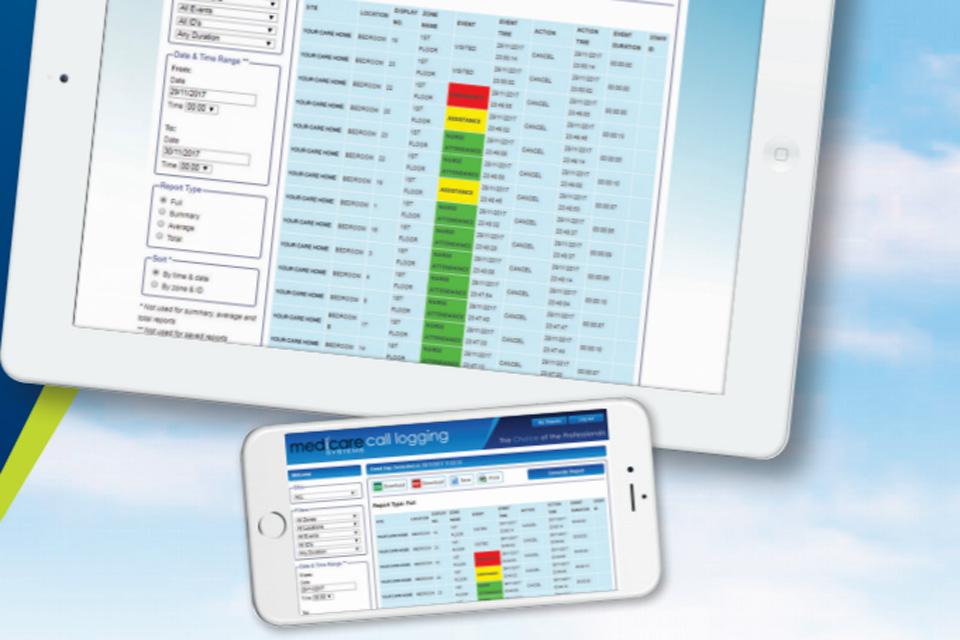
    Medicare’s E-LOGGING service provides secure access to nurse call data through the iCloud platform.

    Used in the Nursing and Residential environment, this powerful reporting tool supplies accurate call data analysis providing evidential reports. All reports can be individually tailored, automated and emailed to selected recipients.

    • Allows remote access anywhere on any device including smartphones, tablets and desktops.
    • Gives you the capability to monitor trends providing evidential data to assist with compliance reports.
    • Cost effective, with the ability to interface with systems, old and new*
    • Automated email reporting to suit management requirements.
    • Bespoke detailed or summary reports including response times and attendance times.
    • Specific incident investigation and reporting tools
    • Works efficiently with bespoke electronic care plans, packages and fee levels.
    • Respects all data security regulations.

    To know more contact us on sales@rincon.co.in

    The original article can be found here.

  • Reblog: A Compliance Expert Answers Your Top GDPR Questions

    The Ageris GROUP is a French-based company founded in 2003 offering specialized information protection, business continuity and personal data protection consulting services to government organizations, as well as to their clients in the healthcare, finance, and industrial sectors. Ageris’ awareness-raining approach enables companies to continually improve their information acquisition, storage, and distribution processes according to international security standards. Their team of expert consultants help organizations from the risk assessment and audit stages right through to the development and implementation of action plans, including software provisions, that adhere to strict safety compliance standards.

    Recently, Denis Virole, Director of Services and Partner of Ageris Group, was invited to speak at a seminar hosted by XMedius in Paris titled “GDPR: Organizational Impacts for Enterprises” regarding the upcoming GDPR regulation and how it is set to affect businesses around the world. Before Mr. Virole captivated attendees with his talk on how organizations can prepare for GDPR before the regulation comes into play on May 25th 2018, we managed to ask him a few questions about how companies around the world can start getting prepared in advance. Read on for a few of his insights.

    Question 1: In your opinion, which sectors will GDPR impact most?

    Denis Virole: The sectors that will be most affected will definitely be government administration offices, banks, insurance providers, and municipalities. The fact of the matter is that GDPR will affect all companies who process and store personal data, so it’s in everyone’s best interests to get familiar with the regulations.

    Question 2: How will the regulations affect daily operations?

    Denis Virole: I’d say that internal operations will see the biggest impact. There will be much more communication between Information Systems Security Managers, Data Protection Officers, and various departments within organizations. There will also be quite a bit of restructuring around processes for handling data.

    Companies will also have to develop transparency policies for their clients or users. Customers must be informed of their rights and how companies are respecting those rights in regard to obtaining and using their personal information. At this stage, even the most mature companies aren’t yet at an adequate level of compliance for the new regulation.

    Question 3: How can organizations educate employees about GDPR?

    Denis Virole: When it comes to GDPR, it’s important to understand that there is no “one-size-fits-all” solution for every organization. Employee education has to be tailored to an individual company’s culture and its constraints, such as its industry, size, IT environment, etc.

    Any training is doomed to fail if an organization’s upper management structure isn’t properly informed of the specific changes that must take place once the GDPR passes. Next, specific training is needed for managers, various channels within the business, any staff who handles personal data regularly, as well as any IT subcontractors.

    Awareness of best practices should also be provided to users. All customer awareness should be at the same level, and developing policies to raise awareness requires that management get involved. Getting the commitment of high-level representatives isn’t always easy, and this is likely to represent a daunting challenge in more so-called “conventional” sectors, such as government.

    Question 4: What are some of the major consequences of non-compliance?

    Denis Virole: A flagrant consequence for non-compliance would be a loss of confidence in a company, both internally from employees, and externally from customers, business partners, investors, and the general public. Respecting the rights of individuals is major, and any infractions could severely damage a company’s reputation.

    In the event of non-compliance with GDPR regulations, EU authorities have the right to force companies to halt all commercial activities. This obviously leads to economic loss, but can also be majorly detrimental for brand awareness.

    There is also a list of financial penalties associated with non-compliance, as well as civil reparations for damages caused to victims.

    Question 5: What are the long term positive benefits that you expect to see from GDPR after May 25, 2018?

    Denis Virole: I envision that the GDPR will improve synergy between various departments within an organization. The deadline allows companies to become compliant, but also to map out their current IT processes and procedures. Various departments will therefore have to break down any communication barriers that stand between them in order to better work together. Therefore, we can expect a deeper understanding of internal processes from all players, and ideally, we can expect better information management on all levels.

    Question 6: How can companies use technology to optimize their data governance?

    Denis Virole: This is a tricky question since technology doesn’t protect companies. It’s a very useful tool, but just a tool nonetheless. In order to ensure data security, a risk analysis must be carried out with the cooperation of various business units in an organization and its Information Systems Security Managers. Afterwards, a concrete action plan needs to be put in place. This way, technology becomes a solution that facilitates best practices.

    Pseudonymization, for example, is a process where the most identifying fields within a data record are replaced by one or more artificial identifiers (or pseudonyms) and are only made visible when necessary, is very useful in a GDPR context. Using encryption technology can also make individuals’ personal data extremely difficult to decode, and is therefore a great solution when handling sensitive data. XMedius solutions respond very well to this need, and are non-restrictive in the sense that deploying one doesn’t require any restructuring of a company’s current business environment. They are easy-to-use and a solid way to optimize internal processes in order to become GDPR compliant.

    Want more information on solutions that will boost your workflow and help you become more compliant with regulations like GDPR? Contact us sales@rincon.co.in

    The original article can be found here.

  • Reblog:3 Best Practices for Protecting Student Records

    Compliance, compliance, compliance! A closer look at the basics of FERPA

    Taking measures to protect student record confidentiality isn’t just a list of suggested best practices – it’s the law. Since student records contain so much PII, including student or parent financial and health information, educational institutions must comply with several regulations to keep sensitive data safe.

    These regulations may include:

    • The Family Educational Rights and Privacy Act (FERPA)
    • The Health Insurance Portability and Accountability Act(HIPAA)
    • The Children’s Online Privacy Protection Act (CORPA)

    The regulation that most commonly applies to schools is FERPA. The Family Educational Rights and Privacy Act (FERPA) is a federal law that protects the privacy of student education records. Educational institutions receiving funds under programs administered by the U.S. Secretary of Education are bound by FERPA regulations. The law basically outlines when and to whom it’s okay to disclose student PII to. Whether you’re a teacher, professor, school administrator or healthcare provider, a few key components of the FERPA act you should know are:

    • Once a student turns 18, or begins attending college, university, or any higher education institution considered post high school, the rights transfer from the parents having the right to inspect and review a student’s record to the student themselves.
    • School officials may not disclose PII about students, nor permit inspection of their records, without written permission from the student, unless such action is covered by exceptions permitted by the Act. An acceptable example would be disclosing information to school officials determined by the institution to have a legitimate educational interest.
    • Students have the right to see and review their educational records within 45 days of a request. They also have the right to request an amendment of their education records that the they believe is inaccurate or in violation of their privacy rights.

    Whether one, all of the above, or other compliance regulations for protecting student data apply to your educational institution, it’s clear that it’s important to have the proper security measures in place. Let’s take a look at a few best practices.

    1. Appoint a data security leader: an educator for educators

    One practice that’s required to adhere to strict compliance regulations in healthcare, financial services, technology and other sectors is to designate an individual who’s responsible for understanding regulations, educating staff, and ensuring that the right processes are in place. By tasking an individual (or a committee of individuals) who are responsible for overseeing compliance, you’re well on your way to creating effective security roadmap for protecting your student’s data.

    Your data security leader, whether an appointed existing staff member or outside consultant, can stay informed of changes in the compliance landscape and determine the best and safest methods for responding to both internal and external for access and use of student data. In doing so, it would be this individual (or committee’s) responsibility to:

    • Assess your data collection practices (and improve them accordingly)
    • Identify and implement your security objectives (each institution has its own protocols for things like wireless network access, etc.)
    • Provide ongoing training to educators and administrators

    Which brings us to our next point…

    2. Provide ongoing student privacy training

    Training employees at every level is essential to a solid security program. Everyone in your organization should have a good understanding of the types of issues that can create student privacy and data security risks. In an educational environment, there are endless possibilities for creative training and messaging that will help familiarize all staff of good data privacy and security practices.

    Try to make sure that training is performed regularly, is updated alongside any changes in the laws, and that new staff members receive security training within a reasonable amount of time.

    3. Develop monitoring, auditing, and reporting processes

    No matter which security processes and measures you choose to implement, monitoring is a critical element to keeping your security program in check. Your security processes need to be routinely tested, monitored, and updated to make sure your student data remains safe over time. Malicious computer malware, for example, is a rapidly evolving threat that will always be looking for new ways to make its way onto school databases, so only through continuous auditing by qualified internal or external individuals can your student privacy and security efforts maintain credibility. An important part of your reporting process should include clear protocols for identifying and reporting data breaches in case they occur.

    Looking for a way to ensure your student records are protected in transit and at rest? Speak with an expert today about secure file exchange solutions that improve your security levels and help you adhere to strict compliance regulations.

    The original article can be found here.

    To learn more contact us sales@rincon.co.in

  • Reblog – Data Security In Education: What IT Professionals Need To Know

    How adopting Fax-over-IP technology can help participants in the educational sector meet their various legal obligations.

    Educational institutions, from primary schools to universities, send and receive important and confidential documents every day. And because significant volumes of highly sensitive data are exchanged, security threats are an ever-growing problem. As a result, data security has become a primary concern.This infographic illustrates why the transmission of information by fax is a critical component of an efficient and secure information system, and how adopting Fax-over-IP technology can help participants in the educational sector meet their various legal obligations.

    xmedius_blogimage

    The original post appears on the Xmedius.com website and is available here.