Tag: Fax-over-IP

  • Are You Worried About Document Safety?

    Luckily, there is a technology that you can use to protect your important documents. Storing documents electronically can be much more cost-effective and safer than paper storage. Protecting the electronic documents from alteration and keeping a history of authorized changes is a must and now no more need to worry about documents.

    We offer an end-to-end solution right from scanning your documents to archival of the same.

    Concerned about maintaining the server on your premises? We also have the solution available on the cloud.

    Importance of Scanning & Storing

    • Eliminate Paper Clutter
    • Never Lose a File
    • Improve Customer Service
    • Lower Expenses
    • Secure Your Information
    • Access Your Documents Anywhere.
  • Reblog: What is the T.38 Fax Protocol and How is It Used?

    We’ve written extensively about the reasons why fax remains relevant in today’s society from a functional standpoint (widespread systemic adoption within certain industries, privacy regulations, and security), but it can be hard to wrap one’s head around how Fax over IP (FoIP) technology is different from simply uploading and downloading image files from e-mail attachments, file sharing applications, etc.

    The key difference is that fax images are still transmitted as electrical impulses via the phone line rather than files. That makes the core of the technology, even in the age of FoIP, closer to telephony than computer networking.

    Just like Voice over IP (VoIP) technology bypasses large portions of the phone network, FoIP uses IP networks to transmit fax impulses long distances in real time. While full IP transmission is possible, the FoIP data packets are often converted (via a “gateway”) to and/or from traditional phone signals at the beginning or end of their journey to travel some portion via the phones (typically as a local call). Many FoIP solutions use T.38 as their protocol for crossing the IP-based portion of the journey.

    1. How is T.38 FoIP Different than VoIP?


    In terms of their goals and technology, FOIP and VoIP are quite similar, and at least one voice protocol (RTP/G.711) can be used for fax transmission.

    However, some VoIP protocols are balanced for different strengths that can make them less than ideal for FoIP. These protocols are designed to preserve the real-time flow of audio conversation in situations with inconsistent bandwidth, even if they have to drop bits of voice data (typically evidenced by momentary drops in quality like jitter, delay, etc) here and there to do it.

    Given that a fax is being transmitted with the goal of having a complete whole clearly resolved on the other side, this style of omitting compression can cause problems for FoIP.

    T.38 was instead designed with the opposite goal: to preserve the completeness and accuracy of image data, even if it has to use additional bandwidth and time in order to transmit it. In order to do this, there are redundant sections and accuracy checks built into the data streaming in order to make sure everything arrives safely on the other end.

    It’s worth noting that FoIP messages transition to conventional fax protocols (like T.3) if they’re filtered through a gateway and spend time on the conventional phone system. That means that the packet-integrity protections in T.38 only apply while the fax is travelling on the IP network.

    2. Do fax machines use T.38?


    No, most do not. T.38 is generally reserved for fax servers, devices that package faxes in data packets for transmission across IP networks. Traditional fax machines (still in widespread use, despite their drawbacks) and non-FoIP-connected Multifunction Printers (MFPs) rely on traditional phone lines and the fax protocols associated with them (T.3, etc).

    3. How does FoIP save money?


    Traditional faxing has several substantial costs associated with it that FoIP can avoid entirely. Organizations sending & receiving via FoIP can eliminate their fax-dedicated phone lines entirely, dramatically reducing service costs. In addition, because FoIP can be handled by computers rather than fax machines, faxes don’t need to be a physical object. That eliminates the cost of ink, paper, shredding and storage. Finally, fax machines are notoriously unreliable – maintenance and repairs can eat up a lot of IT staff’s time and budget.

    FoIP systems also centralize an organization’s fax processing through a single server that is easier for IT departments to manage, with the various integrated devices and programs sending the faxes (e-mail clients, fax applications, Multifunction Printers, etc) serving merely as points of origin.

    Bring your organization’s document transfer systems into the modern era

    Just because fax is a technology with a history stretching back to the mid-19th century (predating the telephone) doesn’t mean that it has to be clunky today. XMedius offers a cutting-edge FoIP solution that provides all the benefits that have kept fax technology in use (and more!), without the hassles and costs that make traditional fax machines infamous.

    The original article can be found here.

    Reach out to us to learn more about how this technology is saving organizations money, streamlining workflows, and preserving security.

    For more information e-mail us on sales@rincon.co.in and we will be glad to assist you.

  • Reblog: Are IP Fax Solutions More Economical Than Traditional Fax?

    [image src=”https://www.rincon.co.in/site/wp-content/uploads/2019/02/traditionalfax.jpg” shape=”img-rounded”]


    If your organization is still using traditional phone lines, going with a traditional fax machine can be tempting. The machine itself is relatively affordable, and it can use the phone lines you already have. It’s quite possible that your organization already has a traditional fax setup, which can make the costs of a change seem high relative to just staying put with what you know.

    Unfortunately, several factors make traditional fax machines unsustainable today. The day-to-day costs of ink/toner and paper add up fast. Machines break easily, which not only means they’re out of service, but that you’re paying to fix them.

    1. The hidden cost of Traditional Fax is time

    Employees have to print their document, walk to the machine, then wait for it to send its payload so they can retrieve the original (especially important if it contains data covered under GDPR, HIPAA, SOX, FERPA, or similar laws).

    It’s difficult to tell if an entire fax has been received on the other end, so if they’re doing the sending, they may need to call or email the intended recipient to check. If they’re on the receiving end and document is particularly timely, essential, or private, they may have to coordinate with the sender to make sure they’re standing by the machine ready to catch the document when it comes out.

    That’s a lot of wasted time where staff could instead be doing productive work.

    2. Phone lines are dying

    Reliability and consumable costs aside, one key consideration trumps all others: fax machines will be completely unable to operate in a post-phone line world. That time is coming sooner than you may think, Europe has announced an end date for their traditional phone services, Australia is following suit, and several US carriers are planning on ending installation of new lines.

    Once those lines are no longer supported, traditional fax infrastructure becomes useless. This is already the case for many organizations who have moved or are moving their phone services to a VoIP system (such as a SIP Trunk).

    3. Fax over IP (FoIP) has none of these problems

    Cheaper connections & SIP-friendly

    FoIP can completely sidestep a connection to the conventional phone network, using the internet to get the message out instead. IP connections are dramatically cheaper than traditional phone lines, and have the added benefit of being technology that continues to be useful after the traditional network eventually goes away.

    Save time by faxing from anywhere

    Using a FoIP solution, faxes can be sent from an employee’s desk (via a laptop or desktop) rather than a machine down the hall. Solutions with mobile & web clients can even send faxes from mobile devices like tablets and cell phones, allowing faxes to be sent from anywhere there’s a signal.


    The added benefit of routing faxes through these devices is the security your IT department can put around them. If someone has to log into your machine to see a fax, it’s a lot more secure than a piece of paper sitting in a public tray.


    Skip the ink, toner, and paper

    While you can print out a FoIP document, you don’t have to, when sending or receiving. That means fewer consumable costs, and less paper copies of sensitive documents to file or shred.

    Manage IT how you wish, and subscribe rather than buy

    A good FoIP solution should be available both on-premises and in the Cloud. If maintaining a fax server on site isn’t something your organization would like to take on, Cloud FoIP solutions allow you to handle everything via a SaaS subscription. Prepaid credit systems are also available that allow you to only pay for what you use.


    Decrease Costs and Increase Efficiency with XM Fax

    XM Fax is a cutting-edge FoIP solution that can deliver excellent ROI and dramatically reduce the wasted time and frustration associated with traditional fax. Bring all the benefits listed above to bear on your communications needs to reap the rewards. Reach out to us to learn more about what it can do for your organization’s workflows and bottom line.

    The original article can be found here.

    For more information e-mail us on sales@rincon.co.in and we will be glad to assist you.
  • Reblog: Are free online fax solutions right for companies?

    Choosing a free online fax solution versus a professional service will depend on an organization needs in terms of security features, customer service, and support.

    With all its advantages, online fax technology is increasingly popular within organizations that need to exchange documents on a regular basis. At the same time, alternatives to the traditional fax have been developed by numerous providers. Some developers even present solutions that they offer free of charge over the Internet. But are these free online fax solutions appropriate for companies?

    Here are a few features that highlight various shortcomings of these free Internet fax programs.

    Free online fax solutions and data security

    As recent news about data breaches and compliance issues will show you, more and more companies need to improve the way they handle personal information about their customers or any other sensitive data that may have a high value for defrauders. It’s clear that data security has become a major issue for many organizations.

    To ensure the confidentiality of documents transmitted online, certain telecommunications companies have developed effective solutions for secure transfer, assuring users that their documents can only be consulted by the intended recipients.

    Procedures such as encryption or transit over highly secure infrastructure can guarantee users of an online fax service that their messages will remain confidential.

    It is also possible that the messages received may be infected by computer viruses. It is therefore a good idea to make sure that the selected service can identify the presence of this kind of threat.

    However, these security features are very rarely a privilege of free online faxing, making them a risky choice for companies that work with sensitive data.

    Performance can differ between free and professional services

    Since each company is different, their communications needs will differ based on factors such as their size and their area of business. For example, some organizations require archiving tools, while others must regularly send large files that exceed email attachment limitations.

    However, free fax services often offer only basic options that do not include long-term storage of documents or the sending of larger files.

    Fax solutions providers, on the other hand, offer solutions tailored to their customer’s needs. Organizations who are looking for specific features, like the ability to transmit larger files, customizable security options, and an audit trail, for example, will find that consulting with fax service providers on the options available to them will work better for them in the long run. Today’s fax solutions come with an assortment of volume-based pricing options, so in the end, organizations only pay for their typical usage.

    Support offered by online fax service providers

    Implementing an online fax service may require technical skills that only specialists possess. For companies that need to send faxes daily, a service interruption can cause significant problems.

    For this reason, companies moving to fax over IP solution should be able to count on support from their service provider. Although free fax solutions usually offer customer service, it is rarely fast, nor would a user be able to get the full support they require.

    With a full-featured online fax solution, the customer obtains the benefits of a technical team and 24/7 customer support. This minimizes the risk that a lengthy service interruption will impact the organization’s activities.

    Online fax solutions from XMedius

    In light of this information, although free online fax solutions may be appropriate for certain users, they can be a risky choice for companies that don’t want to find themselves in an unfortunate situation because of their shortcomings.

    In order to benefit from secure transfers, added features and constant technical support, put your trust instead in a recognized provider like XMedius.

    XMedius is a world leader in the field of secure file transfer solutions for companies. It developed the first all-inclusive fax over IP software in the industry. The services it offers have what it takes to meet the needs of all organizations.

    The original article can be found here.

    For more information e-mail us on sales@rincon.co.in and we will be glad to assist you.
  • Migrating your Fax Server to XMEDIUSFAX

    Fax-over-IP is a critical component in the communications infrastructure of many organizations. It is optimized to secure and streamline their document workflows, and it helps them to achieve compliance with the security and privacy regulations that apply to their respective industry sectors.

    XMediusFAX® is an ideal FoIP solution. It is a single-source, software-only technology and includes its own patented T.38 protocol, the most reliable protocol for transmitting faxes over a VoIP network. Better yet, XMediusFAX® doesn’t require a third party to enable your fax infrastructure and our R&D team has fully mastered the software and can intervene quickly if any assistance is needed. Furthermore, XMediusFAX® features shared High Availability (HA) channels that replicate information in real time. Both of its servers are active, so should one fail, the other takes over until the malfunctioning server resumes its normal workload. This ensures an uninterrupted workflow.

    Because of all these critical benefits, the XMediusFAX® solution attracts a range of organizations that are interested in implementing a superior FoIP solution.

    However, switching over from another solution can raise some concerns. One that prospective customers most often express involves migrating and preserving their existing data. In response to this concern, the XMedius team has developed a tool to help our new customers migrate from their current database* to an XMediusFAX® server while preserving all of their fax records and user information.

    Would you like more information about the migration offer of your current Fax-over-IP solution to ours?

    *Conditions Apply

    E-mail us on sales@rincon.co.in for more information and we will be glad to assist you.

  • Reblog: Mobility and the User Experience

    ipad-handsIt should come as no surprise that mobile communications are no longer the wave of the future: they are the wave of today. Here are some recent statistics:

    • The number of mobile devices in use will jump from over 7.7 billion in 2014 to over 12.1 billion by 2018. (Source: The Radicati Group, Inc., February 2014)
    • In 2014, for the first time ever, time spent on mobile apps exceeded desktop web access (Source: Marketing Charts)
    • Over 50% of total email opens occurred on a mobile phone or tablet in Q3 2014. (Source: Experian “Quarterly email benchmark report [Q3 2014]”)
    • And last, but certainly not least, – 64% of employees rarely use enterprise mobile apps because of poor user experience. (Source : Forrester)

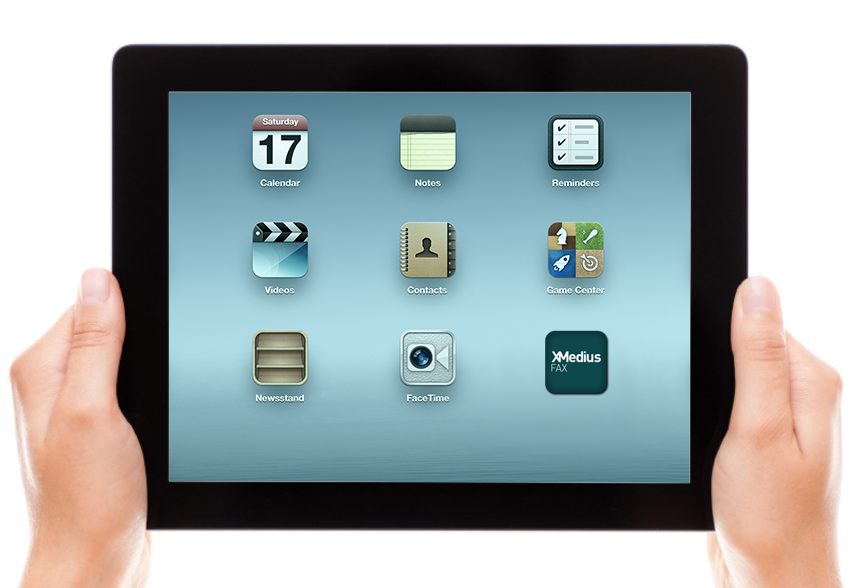
    When we developed XMediusFAX® one of our predominant concerns was to offer users an elegantly simple way to send and receive faxes from the entire range of communication tools, including desktop and email clients, web-browser interfaces, MFPs and mobile devices. With each revision and upgrade, making the user experience even better has been a priority.

    What constitutes a better user experience? Certainly functionality is an essential part of the equation. Is the fax solution comprehensive and versatile enough to address all the user’s needs, whether for communication, tracking or security? Does it improve productivity? Does it enhance rather than impede the workflow? From the user experience perspective, is it simple, easy and enjoyable to use? Does it make your work life easier? Is it intuitive–does it do what you want it to do in the way that you want it to?

    All these considerations were top of mind when we designed the XMediusFAX® for iPhone and iPad app.

    First and foremost, the app allows users to fax documents anywhere and at anytime without the need for a fax machine, a computer or phone lines. And we designed it so that faxing from a mobile device is as simple as sending an email. Unlike email, though XMediusFAX® for iPhone and iPad provides the highest levels of security which enables compliance with the full range of regulatory and compliance mandates.

    We also created an easy-to-use touchscreen interface to optimize the faxing experience. With this interface, users can:

    • Transmit documents to the same fax numbers they have always used
    • Fax legal documents upon signature
    • Select documents from virtually any mobile file management application, such as GoogleDrive and DropBox
    • Use the embedded camera in the iPhone or iPad to scan documents to be sent
    • Fax documents from within any other mobile application that can export PDF, MS Word or image files–or any other format supported by the fax service

    Moreover, in response to expressed user needs, we have provided flexible options for selecting fax recipients–users can select existing contacts, for example, or enter new contacts on the fly.

    Finally, we included enterprise grade features that provide a variety of easy-to-configure fax options, from personalized cover sheets and delayed faxing to notifications and tracking.
    In short, our goal has been to make faxing from a mobile device as versatile, secure and easy as faxing from a desktop or web browser.

    With XMediusFAX® for iPhone and iPad, we’ve tried to create the perfect mobile complement to our XMediusFAX® on-premises and cloud solutions.

    If you are considering the implementation of a fax automation system for your business, but are still on the fence when it comes to selecting the right solution, please e-mail us on sales@rincon.co.in and we will be glad to assist you.
    The original post is written by Marcello Michelet Quintaes and appears here.

  • Reblog – Data Security In Education: What IT Professionals Need To Know

    How adopting Fax-over-IP technology can help participants in the educational sector meet their various legal obligations.

    Educational institutions, from primary schools to universities, send and receive important and confidential documents every day. And because significant volumes of highly sensitive data are exchanged, security threats are an ever-growing problem. As a result, data security has become a primary concern.This infographic illustrates why the transmission of information by fax is a critical component of an efficient and secure information system, and how adopting Fax-over-IP technology can help participants in the educational sector meet their various legal obligations.

    xmedius_blogimage

    The original post appears on the Xmedius.com website and is available here.