Tag: Government

  • Reblog: The enduring appeal of fax -Why it refuses to go away

    As different forms of business to business communication have come and gone over the years, there is one which refuses to go away. In fact, for many industry sectors, it continues to be an essential channel of communication.

    Time and time again, we’ve read articles predicting its final demise.
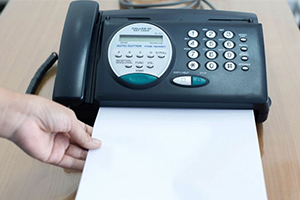
    Yet fax continues to hold its own, surviving and thriving in certain sectors where other forms of communication don’t provide the same level of simplicity, proof of delivery or, in some cases, levels of security.

    Anecdotal evidence from Japan is that faxing is still very common, and that virtually every office and workplace is equipped with the ability to send and receive faxes. Faxing is still in use for everyday communications such as replying to party invitations.

    We should add at this point that Japan is a special case, with a complex alphabet which makes hand writing messages preferable on many occasions. Perhaps there is even a cultural attachment to the personal aspect of sending a fax, but even so, evidence of the enduring qualities of fax comes from around the world.

    A 2017 survey of German companies with at least 20 employees found that:

    • 70% of respondents said they sent fax messages ‘often’ or ‘very often’
    • Amongst businesses with less than 50 employees, this figure rose to 77%

    The message is clear – if you want to do business with Germany or Japan, you need to include fax in your mix of communications channels.

    Yet this phenomenon is not confined to just these countries. A 2017 IDC (International Data Corporation) survey of senior decision makers in financial services, healthcare, government and manufacturing, across North America, Western Europe and Asia Pacific, found that the use of faxes was actually on the rise.

    • 82% of respondents had seen their use of faxes rise or stay the same compared with the previous year
    • The volume of faxes being sent had risen by 27%
    • Across the 3 regions, the average predicted growth in fax volume over the next 2 years was 25%

    Whilst it might be assumed that the healthcare and legal sectors make more use of faxes due to the paper trail they leave, the projected growth was spread across all sectors:

    • Finance – 20%
    • Healthcare – 25%
    • Government – 27%
    • Manufacturing – 29%

    Other reasons for the ongoing global appeal of faxing are varied:

    Compliance

    Sectors such as healthcare, legal, finance and government demand high levels of data and communications compliance, for example in maintaining a clear paper trail for certain processes and transactions.

    Many jurisdictions only accept signatures on faxed documents as being legally binding, and the fact that sending a fax produces an instant acknowledgement and record of receipt, contributes to the sense of reliability as a communications medium.

    Simplicity

    The simplicity of faxing is also an advantage in sectors such as manufacturing, when getting the right documents signed by the right people in a hurry is frequently advantageous.

    Many businesses still rely on keeping individual copies of receipts, invoices and contracts, and faxing is still the simplest means of ensuring that papers such as these go to exactly the right person, without being lost amongst the avalanche of emails received on a daily basis.

    Security

    Across all sectors, the security offered by faxing can be a huge advantage.

    Faxes can’t be tampered with once sent; nor can they carry a hidden virus.

    This advantage was underlined when Sony Pictures suffered an embarrassing cyber-attack in 2014, during which thousands of private emails were published online. In 2016, the chief executive of Sony, Michael Lynton, revealed that in response to the attack, he now writes out sensitive messages by hand and sends them by fax.

    The handwritten approach may seem a bit over the top for some, but the security and peace of mind offered by faxing is clear.

    In summary

    Fax remains a vital component of business communications across many industries. The benefits fax provides ensures its enduring appeal as a communications vehicle, that other comm’s methods such as email simply can’t match.

    Our ever-popular Zetafax network fax solution continues to meet on-going demand, offering the advantages of faxing combined with the flexibility of online hosting. It is used by more than 65,000 customers worldwide and improves on manual faxing through factors such as:

    • Cost cutting automation
    • Automated archiving
    • Support for Fax over Internet Protocol (FoIP)
    • Integration with other applications

    For more information e-mail us on sales@rincon.co.in and we will be glad to assist you.

    The original article can be found here.

  • Reblog: Is Fax Dead in Healthcare?

    The word “fax” has some pretty outdated connotations within today’s highly mobile and technologically savvy workforce. When people think fax, it may invoke a flashback of standing in front of a jammed machine as they attempt another go at sending a single page for the 6th time, or trying to get an urgent document over to a waiting recipient, only to discover that the receiving fax machine is out of ink. Regardless of the reputation fax has for being obsolete tech, the reality is that fax usage in many industries is still rising, not dropping, and faxing itself no longer means having to rely on outdated machines.

    If you’ve pondered the question “Who still faxes in 2018?” the straightforward answer is that many businesses rely on fax for their day-to-day operations.

    In The International Data Corporation’s (IDC) 2017 fax survey, 82% of respondents in the Finance, Healthcare, Manufacturing, Legal, and Government sectors saw fax usage go up or remain consistent compared to the previous year. The average growth of fax usage across the board was 27%, with a quarter of companies in these sectors reporting growth between 50-74% – a very far cry from the statement that “fax is dead”!

    Fax is far from dead. Not only is it still widely used, it has evolved into a digitized medium that integrates seamlessly with interfaces that most of us use regularly, like email. While fax machines may remain for a little while longer, their use is no longer synonymous with faxing itself. Fax-over-internet-protocol (FoIP) technology has revolutionized communications, allowing for increased security, mobility, and ease-of-use. Read on for an overview of how and why fax has remained commonplace in the healthcare industry.

    The Role of Compliance in Healthcare Faxing

    The healthcare industry’s wide use of fax has a lot to do with regulatory compliance, namely with the Health Insurance Portability and Accountability Act, or HIPAA, which was passed by the US Congress in 1996. Navigating the details of regulatory compliance can get overwhelming: when it comes to secure data transmission, what does HIPAA actually say? The HIPAA Privacy Rule was enacted in 2001, shedding a little more light on exactly how healthcare organizations should protect patient data. It urges healthcare professionals to take “reasonable safeguards” when sharing patient files between hospitals, labs, doctors’ offices, and insurance providers.

    The US Department of Health and Human Services (HHS) clearly names fax as an essential method of transmitting medical records, test results, and anything else containing personally identifiable information (PII). This is not to say that email isn’t widely used as well, but there are tremendous security risks that come along with using email to send and receive sensitive files.

    A quick “healthcare data breach” search in Google will reveal the startling number of phishing scams and email hacks that take place in the industry almost every day. While there are secure email servers galore available on the market, these platforms are often reserved for larger healthcare corporations or hospital networks since they are often too costly or complicated for the average healthcare provider.

    EHR/EMR Systems and Paperless Faxing

    The advent of Electronic Health Record and Electronic Medical Record (EHR/EMR) systems have completely changed the healthcare records management landscape. Not only is electronic record management in accordance with HIPAA’s efforts to digitize the healthcare environment, it provides a safer means for storing data. Electronic record keeping also allows healthcare professionals to minimize human error while taking full advantage of cost savings.

    As technology advances, EHR/EMR systems vendors now offer on-site or cloud data hosting options, and the systems themselves provide improved coordination between healthcare providers, even granting patients the ability to access their records online. They’ve progressively become more prevalent in healthcare facilities of all sizes – It’s estimated that 77% of today’s healthcare providers have moved their records into the digital sphere.

    Fax-over-Internet-Protocol (FoIP) technology has also evolved over time, with many vendors offering seamless integration with today’s EHR/EMR systems. From a user perspective, sending a fax is now as simple as pushing a button on the interface they already use every day. This eliminates the need for paper filing and simplifies the data transmission process since documents no longer need to be printed or scanned to before users hit send.

    Healthcare Carries the Highest Digital Fax Adoption Rate

    Healthcare showed 9% growth in digital fax usage in 2017. Right now, in healthcare facilities across North America, GPs, surgeons, nurses and other staff are putting a sensitive document in a fax tray, pressing send, and listening to the cringey audio-frequency tones that signify their information being transmitted one page per minute. Of course, not all medical records are sent through fax machines – many healthcare organizations have digitized their faxing or are in the process of doing so. In fact, the healthcare industry leads the pack for transitioning to modern FoIP technology, representing a whopping 30% contribution to the fax services global market in 2017.

    Confirmations of Receipt: From Paper Trail to Audit Trail

    The fact that faxing gives organizations confirmation of receipt is a major reason that it remains a prevalent form of communication. For years, the confirmation page (the printout that lets users know that their message has been completely received) has served as a faster and cheaper equivalent of sending registered mail. Most email systems come equipped with a read receipt feature, but these typically still give recipients the choice to opt out.

    For healthcare organizations who send and receive large volumes of sensitive data daily, confirmations of receipt offer several benefits:

    • They eliminate both administrative and IT guesswork (follow-up calls, manual logging)
    • They facilitate easy records keeping

    When it comes to dealing with sensitive patient information, confirmations of receipt are necessary from both an administrative and regulatory compliance perspective. Today, medical staff have a few ways of maintaining a paper trail of how, when, and to whom patient data is exchanged. While physical paper filing might be a slightly outdated practice, it remains a reliable system for some healthcare organizations. Many use document scanners or multifunction printers (MFPs) to scan confirmations of receipt and file them electronically.

    Healthcare facilities who have implemented FoIP solutions, however, often do so for their built-in records keeping features. XMediusFAX, for example, is designed to keep an audit trail of all fax transmissions, maintaining detailed records that can generate reports any time. Not only does this free up time for healthcare administration, it alleviates healthcare IT of having to use additional software to log communications.

    FoIP for Savings

    In addition to security and compliance benefits, switching to FoIP can bring significant savings as well. Switching organizations regularly reduce costs by eliminating expensive analog fax lines and paper filing/waste. IT departments love being able to get rid of high-maintenance fax machines in favor of more reliable software and MFP integration.

    Beyond the IT and accounting departments, FoIP is a win for the rest of the staff too. Staff members across Healthcare report significant time savings between reducing/eliminating trips to machines, no longer waiting for acknowledgement receipts, and incoming faxes automatically being routed directly to them, wherever they are.

    Fax Isn’t Dead, It’s Evolving

    Discover how fax software can improve the security and compliance of your healthcare document transmissions. Speak with one of our knowledgeable experts today about how FoIP solutions could work for you.

    The original article can be found here.
    For more information e-mail us on sales@rincon.co.in and we will be glad to assist you.

  • XMedius Cloud computing and On-Premise solutions for government

    Government organizations worldwide all have considerable document exchange requirements whether they operate on the local, state, or federal level. Paper-based fax is a common method for government offices to send sensitive documents to one another, and it is also a popular way for businesses and the public to send forms and supportive documents through to government organizations. Traditional fax, however, has its limitations when it comes to security, compliance, and increased pressure on government organizations to decrease operating costs and “go green”.

    XMedius cloud computing solutions are a modern alternative to traditional fax systems that meet the compliance and IT security needs of government organizations. The ability to fax online also boosts productivity and provides significant cost savings.

    Protect your Data: No more IT Security or Compliance Risks

    Government organizations regularly transmit and receive a large number of sensitive documents, including:

    • Financial reports
    • Statements
    • Tax information
    • Human Resources documents
    • Grant requests

    XMedius government cloud and on-premise solutions cater to organizations that must comply with regulations such as the DoD IT Security Certification and Accreditation Process (DITSCAP), the Health Insurance Portability and Accountability Act (HIPAA), Section 508, and the Gramm Leach-Bliley (GLB) Act for privacy, protection and document security.

    Preferred Government Cloud and On-Premise Solutions

    As a preferred solution, XMediusFAX is available through the U. S. General Services Administration Schedule (GSA) and the Canadian Government’s Software Licensing Arrangement (SLSA). In addition to that, XMedius has an extensive network of consultants and partners across the globe that can help facilitate government and public sector purchases.

    Our customers benefit by having XMediusFAX solutions on the GSA and SLSA because:

    • It reduces the time and bureaucracy in purchasing goods and services
    • It ensures the best possible price
    • It guarantees that the products/services purchased adhere to the strictest of government
    • T security standards.

    Reduce Unnecessary Costs with Online Fax

    In a paper-based fax environment, things can get costly – especially when there’s a high number of faxes being sent and received. There’s the cost of the fax machines, lines, and any maintenance associated with them. There’s the continual cost of paper and toner for fax machines and printers, and the list goes on.

    XMedius cloud computing and on-premise solutions allow users in government organizations to send and receive faxes directly from their computers, multifunction printers (MFPs), and mobile devices. Not only does this provide a boost in productivity (no more waiting in line for faxes), you’ll see immediate cost savings and eliminate paper waste.

    To learn more contact us sales@rincon.co.in

  • Wither fax?

    [wc_column size=”one-third” position=”first”]

    [/wc_column]

    [wc_column size=”two-third” position=”last”]

    Fax is the most commonly forgotten, but most reliable and secure method of document delivery. One of the biggest mistakes a company can make when it comes to securing sensitive data is not utilising the method of faxing for securing sensitive data in their document delivery mechanism.

    Fax is still a much more secure delivery method than both email and cloud storage. This is critical not only for industries such as finance, but also for health care, logistics, education, government and more. Viruses cannot infect your network from a fax, because they cannot be embedded anywhere. Besides your network cannot be hacked into using the fax protocol. [/wc_column]


    The advent of technology has helped companies move over from conventional fax machines to centralised fax servers. A fax server is part of the network yet uses the secure T.30 faxing protocol or the T.38 Fax over IP protocol. The fax server integrates with your mail server as well as your Line of Business applications to offer a seamless experience to users.

    If you are considering implementing a fax management solution for your organisation, but are still sitting on the fence when it comes to selecting the right solution, we encourage you to e-mail us on sales@rincon.co.in and we will be glad to assist you.

  • Fax Automation Simplified

    Since 1998 Rincon has been at the forefront of faxing technology across India and has customers in Sri Lanka and Bangladesh as well.

    faximage

    Why do organisations use Rincon? Rincon has been a market leader with a proven and trusted record. Our credentials speak for themselves :

    • Delivered and managed in excess of 250 projects across customers
    • Large banks, mutual funds, insurance companies use Rincon
    • Blue chip customers include Finance, Government, Healthcare, Utilities, Supply Chain & Logistics and FMCG
    • Cisco and other IP telephony implementations
    • Multi-site and geographical deployments using Analog, E1 PRI, T1, FoIP and SIP Trunk
    • Rincon has enabled organisations across India, Sri Lanka and Bangladesh become agile and better at communication, more organised and effective
    • Rincon offers solutions to suit the customers’ needs and not necessarily pitch solutions it has
    • Integration with SAP, Filenet, IBM CM, MS Exchange, Lotus Domino, Digital Sender and MFPs, Avaya, CISCO, Nortel, Siemens, Matrix, Alcatel, Audiocodes amongst others.

    If you are considering the implementation of fax automation for your business, but are still on the fence when it comes to selecting the right solution, please e-mail us on sales@rincon.co.in and we will be glad to assist you.