Tag: Invoices

  • Reblog: A slice from Evelyne’s life, executive assistant in a hospital specializing in cardiology

    In my work, I interact with many institutions in the health sector. I meet and have discussions with people who handle a great deal of medical information. I take the time to learn about their daily lives. I enjoy it when they share their experiences and stories with me.

    [row]
    [column lg=”6″ md=”12″ sm=”12″ xs=”12″ ]
    [thumbnail target=”_self” src=”https://www.rincon.co.in/site/wp-content/uploads/2019/01/Hospital-300×200.jpg”]
    [/column]
    [column lg=”6″ md=”12″ sm=”12″ xs=”12″ ]

    Evelyne held a number of positions in various hospitals (in health care and economic services) before becoming Executive Assistant in a hospital specializing in cardiology. She quickly discovered that the hospital had to manage a large number of fax documents of all types (medical notifications, insurance case takeovers, analyses results, care sheets, history certificates, intervention approvals, radiology reports, various test requests or results, purchase orders, invoices, etc.).
    [/column]
    [/row]

    It became increasingly difficult to handle them effectively. Many documents were lost and others were sent to the wrong recipient or forgotten near the fax machine in full view of everyone. With such a volume of documents piled up in the filing cabinets, searching for a fax was lengthy and tedious.

    It was then that Evelyne remembered that the hospital where she had worked a few years prior used a fax software solution instead of traditional fax machines. Showing initiative, she decided to talk to the hospital IT director about it. Aware of the problems associated with the processing of documents sent and received by fax, he dealt with the problem. He quickly approved the idea of replacing the fax machines and fax boards by a software solution.

    This is how the XM Fax® solution was adopted, to the great delight of Evelyne, her co-workers, the IT department and management.

    Evelyne can now send and receive faxes from her work station, her messaging device and her electronic medical records. The processing of faxed documents has thus become much faster and she saves a lot of time. She no longer goes to fax machines many times per day. Evelyne is more productive and effective. She can focus on her mission, which is to provide quality services to patients and to ensure the absolute confidentiality of their personal information. Incoming faxes are now forwarded to the correct recipient without any human intervention, thus limiting unauthorized viewings of health-related personal medical information by the wrong person. With XM Fax, confidential documents of various types are routed to mailboxes or network folders belonging to approved recipients and to designated secure printers.

    As for the IT director, in addition to optimizing his telephone and IP network, it has drastically reduced his expenses related to the use of fax equipment (fax machines, fax boards, maintenance, ink, paper, and telephone lines), and has made it possible to better control the flow and security of communicating by fax. His team is now equipped to administer, monitor and track all the operations and actions carried out in connection with fax transmissions. She can avoid any unauthorized viewings, including those carried out by the administrators themselves, create audit trails, and report to the hospital management. Furthermore, since the hospital is equipped with a high availability redundant fax solution, service continuity is assured. In addition, the advanced and integrated control features of the fax server, the encryption, and the management for users/administrators, meet the requirements of the medical sector in terms of security and compliance. This solution is gaining popularity within hospitals in expansion. Fortunately, this system is scalable to handle a larger volume of faxes and thus serve more departments and employees.

    Today, thanks to Evelyne’s initiative, the hospital is optimizing its unified communications infrastructure, reducing its costs, and increasing the productivity of its employees. Above all, the healthcare organization is now able to process its patient records quickly and in a completely secure manner.

    This truly inspiring account proves to me that any person, no matter his or her hierarchical position, can influence the course of events within the organization in a positive way.

    The original article can be found here.

    For more information e-mail us on sales@rincon.co.in and we will be glad to assist you.

  • Reblog: How financial institutions can easily comply with the SOX Act

    The following article is the first one of a series of three about how the fax can help financial organizations to meet their legal obligations. This first text covers Sarbanes-Oxley, a legislation passed by the U.S. Congress to protect shareholders like you and me.

    Despite what people might think, the fax is still an essential communication tool in the financial sector. From banks and insurance companies to investment management and advisory firms, financial service organizations share high volumes of sensitive data. Document transactions are part of complex workflows and information is manipulated by numerous people in different geographic locations, demanding anytime/anywhere access.

    Finance-driven documents

    • Credit applications
    • Financial reports and statements
    • Fund transfers
    • Invoices
    • Loan approvals and denials
    • Mortgage documents
    • Trade confirmations
    • Regulatory disclosures and information
    • Securities reports

    Decision makers are continuously seeking better ways to keep their IT infrastructure costs and operational risks under control while addressing security concerns and complying with stringent industry regulations. Many firms recognize the advantages of moving to the cloud in order to reduce costs, but are rightly concerned about the security of their confidential information.

    The transmission of information by fax remains a critical component of an information system. Choosing a fax provider with a proven track record and demonstrated expertise in developing enterprise-class cloud fax services is of paramount importance.

    SARBANES-OXLEY

    Sarbanes-Oxley (SOX) was implemented in 2002 and legislates how business records are protected and preserved to prevent destruction and corruption. SOX has also set e-records management standards to which all businesses should adhere. SOX mandates that all electronic records (including faxes), be retained for a period of seven years. Furthermore, it requires tamper-proof resources to prevent the corruption and modification of records. This rule is designed to protect investors from fraudulent activity and to safeguard financial data.

    Entities subject to SOX compliance include all US-based publicly traded companies and international companies that have registered equity or debt securities with the Securities and Exchange Commission. Accounting firms that provide auditing services to the above entities are also subject to SOX compliance.

    How XMediusFAX® helps achieve SOX compliance standards

    • Offers secure and real-time fax transmission
    • Faxes are sent and received directly from any application to the intended recipient’s fax number, with notification of receipt and routing of incoming faxes to intended recipients’ email inboxes, network folders or secure printers.
    • Provides a centralized solution – XMediusFAX® allows for secure integration with corporate systems such as ERP, Document Management, Archiving, and virtually any other 3rd party network application to enable inbound and outbound document delivery via fax, email or the Internet.
    • Maintains electronic storage and an audit trail of fax transmission logs
    • XMediusFAX® can be configured to store all incoming and outgoing faxes electronically in a secure cloud-based storage environment, or on a network archiving system or database. It also allows users and administrators to track fax history and verify fax delivery.

    Along with the ability to set up notifications for deliveries and receipts, a complete audit trail of fax activity is also provided.

    XMediusFAX® is ISO 27001 certified for its Information Security Management System (ISMS). The infrastructure supporting the XMediusFAX® service meets the rigorous physical, technical, administrative, processes and management controls required to achieve the highest security standard. ISO 27001:2013 can therefore be used to help verify SOX compliance.

    In short, XMediusFAX® offers a level of security and protection that very few fax cloud providers can match. Clients operate across regulated industries and require an enterprise-grade faxing solution to achieve the highest security standards. XMediusFAX® is that solution.

    Discover how XMedius helped KPMG Australia to reach a higher level of security while reducing their costs associated with faxing: https://www.xmedius.com/en/industries/finance/

    The original article can be found here.

    To learn more contact us sales@rincon.co.in

  • Repost: GST may add to India Inc’s documentation burden

    India gears up for GST to be rolled out from July 1. However, have we thought of the documentation needed for compliance? Here is an interesting article.

    Industry is worried it might face increased compliance burden due to rules under the proposed goods and services tax (GST) regime.

    Companies would have to upload three returns every month – by the 10th, 15th and 20th of the month after a sale happens, said M S Mani, senior director, indirect tax, Deloitte.

    According to rules on returns, companies would have to submit details of its supplies or invoices by the 10th of the subsequent month. They have to upload details of purchases of inputs by the 15th of the subsequent month.

    GST returns, carrying details of taxes paid and input credit taken, have to be filed by the 20th of the next month, said Mani. Besides, by the next year-end, companies would have to upload annual returns as well.

    This would burden industry with too much compliance. Service companies such as Infosys, Tata Consultancy Services (TCS) and Airtel, among others, would be particularly hit.

    Service providers would have to file 37 returns each a year, said Mani, from two returns – one every six months – now.

    Besides, service tax is a central duty. So service providers do not have to file returns in each of the state where they have offices. This will, however, change under the GST regime and they would have to file 37 returns for each state they have an office in, besides the central government.

    Currently, goods companies, on their part, have to file returns every month for value-added tax (VAT) and excise duties.

    The GST Council is to discuss pending rules and changes to the already approved norms this month-end. The Council will work out rules on composition, valuation, input tax credit and transitions on March 31.

    It has already approved rules on refunds, invoices, returns, payments and registration. The government had made public rules on five categories before taking these to the Council. But it would not do so in case of pending rules, said officials.

    Industry is worried that online marketplace players such as Flipkart and Amazon will have to pay up to one per cent tax collected at source (TCS) – rules for which have not yet come — on behalf of vendors and this would add too much procedural work.

    S S Gupta of Taxmann said these marketplaces have thousands of vendors and to exactly match TCS of each would be extremely difficult. If anything goes wrong while matching, the input credit would go to another and the vendor would be asked to pay more, he said.

    If a customer returns a product purchased via an online marketplace, it will take time to reach the supplier. By then, TCS might have been paid by the online company. If that vendor does not supply to the online company again, the marketplace would have to bear the burden, explained Gupta.

    Though a cap on TCS has been reduced from two per cent in draft GST Bills to one per cent in the revised drafts approved by the Council, the tax is not aimed at revenue generation but to keep a track of vendors by the tax authorities.

    The government’s logic has been that as it can’t go after every vendor, it would ask the marketplace to deduct TCS. Keeping track of the vendors and not revenues was the concern here, said the expert with Taxmann.

    Mani said the government was basically burdening industry with compliance, even in areas where the authorities should take the responsibility.

    The other issue relates to input tax credit, rules on which are yet to come. However, rules would not contradict the Bills. A buyer would not get input tax credit unless the supplier concerned paid tax. In state-level VAT, input tax credit would be given as soon as the invoice was uploaded, he added.

    Archit Gupta, founder & chief executive officer of ClearTax.com, said there might be issues around pre-existing VAT credit in the earlier regime when these goods are exempted in GST. “So we hope this is covered under the inputs credit and transition rules.”

    For a truly unified structure, he said, the government must focus on greater fungibility of credit.

    “Exempted excise manufacturers and exempted VAT manufactures may have to face GST rates and taxes, and most of these are state-specific exemptions. So it needs to be seen how these concerns can be uniformly addressed,” added Gupta.

    The Council has cleared all GST Bills and most of these will go to the Cabinet and be tabled in Parliament. Similarly, state GST Bills will be moved to the respective state Cabinets and Assemblies. Only rules and item-wise rates have to be decided.

    While we would have electronic filing, we still have to maintain the pdf files for records. Do give a thought to managing so many files which may be pdfs or maybe hard copy. A Document Management System can help overcome these challenges. Contact sales@rincon.co.in on how we can help achieve your goals and overcome your obstacles.

    The original article appears on rediff.com and is available here

  • Sales Order Processing Simplified

    The sales order (SO) is an entry point into the organisation’s system and involves different people / departments. Any business can benefit from the elimination of the current paper driven Order Fulfilment processes by replacing them with electronic Order Fulfilment and subsequent electronic storage.

    Benefits:

    • Incoming orders, invoices and legal documents are made available instantly and by mouse click
    • E-mail, the scanned order forms can be accessed instantly with the press of a button
    • Less filing, increased job satisfaction and lowered stress levels — this means less turnover and overall reduction of personnel costs for recruiting and training
    • Reduced paper handling (from capturing, retrieving to storing) allow employees to focus on core job responsibilities
    • Cost effective software solution to help them automate their workflow process
    • Business has grown without adding staff and that is the ultimate objective of every organization.

    If you are considering the implementation of a document management system for your business, but you are still on the fence when it comes to selecting the right solution, please e-mail us on sales@rincon.co.in and we will be glad to assist you.

  • Proof of Delivery Management

    Proof of delivery (POD) is a method to establish the fact that the recipient received the contents sent by the sender. When the sender sends multiple documents through mail or through a courier service, there is a possibility of some not reaching the intended recipient.

    Proof of delivery becomes very important when legal and financial documents are to be exchanged between two parties. Commercial fleet operators also need to be able to confirm proof of delivery of goods to their customers.

    It is very common for vendors to send invoices with the supporting documents to customers. Most customers now deliver their own goods and have a customer sign the POD. A few days later, when the accounts department is chasing the customer for payment, the customer says they never received one of the items or then never received the invoice.

    With a document management system in place, rather than going into another office to find the paper-work stored in an ever-growing pile of files and folders, the accounts personnel can key in the order number, click search and retrieve the signed POD in a few seconds. They can then email it onto the customer. With the query settled, payment can be collected. Thus it leads to a better cash flow too.

    If you are considering the implementation of a document management system for your business, but you are still on the fence when it comes to selecting the right solution, please e-mail us on sales@rincon.co.in and we will be glad to assist you.

  • Document Management System for Accounts Payable

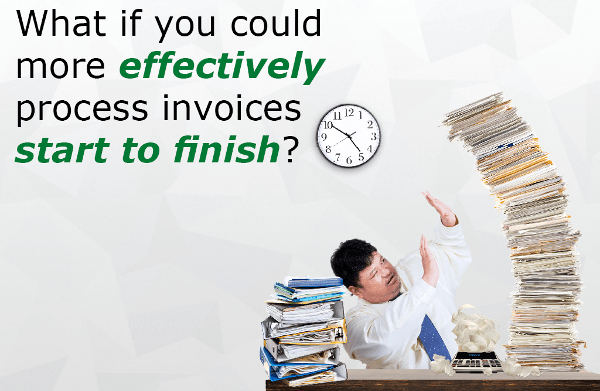
    Accounts Payable (AP) is a basic function of every organisation. Whatever be your business, you will have invoices to pay, processes to adhere to and accountability to document. Missed early payment discounts, late fees, lost invoices, dozens of calls, emails, faxes, and other inefficiencies can substantially drive up your operating costs.

    Beyond invoices and payments, there are compliance issues surrounding accounting. Auditors require an ability to keep track of and report all aspects of your accounting system and processes including Accounts Payable. Failed audits resulting from lost documents or poor documentation can result in large fines, or a range of other penalties.

    With a Document Management System (DMS) in place, you can ensure processes are being adhered to and are fully auditable. It allows you to:

    • Secure and keep track of all incoming invoices and related documents (PO’s, notes, GRNs, etc.)
    • Ensure early payment discounts and eliminate late payment fees
    • Reduce data entry errors
    • Compare approved purchase order amounts to invoices and eliminate overpayment
    • Ensure all your accounting procedures and approvals are adhered to using automated routing for review, approvals, and processing

    If you are considering the implementation of a document management system for your business, but you are still on the fence when it comes to selecting the right solution, please e-mail us on sales@rincon.co.in and we will be glad to assist you.