Tag: Legal

  • Reblog: How Can an Audit Trail Help Law Firms Protect Client Interests?

    Sharing legal documentation can be a tricky, but vital, aspect of virtually any legal firm’s business. Legal firms need to deliver documents to clients, the courts, and other concerned parties in a timely manner. Their delivery methods must also take special care to avoid accidentally sharing information with unintended parties as to avoid an accidental breach of attorney-client privilege.

    In the past, when a legal firm needed to ensure proper delivery of documents to a specific party, they would typically hire a process server to physically hand deliver documents. This has typically been considered the best way to securely deliver documents and prove they were received by the intended party. The drawback of this method is that it can be time consuming and very costly, especially if the process server encounters difficulty delivering the documents.

    SHARING INFORMATION VIA EMAIL: DANGEROUS FOR EVERYONE

    For more routine document sharing, such as an attorney sharing court documents with a client or internally with other attorneys, many legal firms find themselves leaning on email and file sharing services. Email, as a rule, should never be used to share sensitive files of any kind. While emailing files is a quick way to share information, someone monitoring traffic in and out of a firm’s IT environment may be able to see the contents.

    The risk of information being accidentally emailed or shared with unintended parties is also a reason to avoid emailing sensitive files. To illustrate the point, according to the Australian government’s Notifiable Data Breaches Quarterly Statistics Report in May 2019, human error was in general, the cause of 31% of breaches in Australia; the second most common reason overall (the first being malicious or criminal attack at 61% of all breaches). The most common error made was sending personal information to the wrong recipient, accounting for 31% of all breaches caused by human error. The second most common error was unauthorized disclosure of information through an unintended release or publication (including online), which could include files inadvertently forwarded to an unintended party.

    Of the malicious and criminal attacks, 5% were caused by social engineering, including email-based executive fraud. All of these factors make sharing files via email an especially risky policy.

    SHARING INFORMATION VIA EMAIL: ESPECIALLY DANGEROUS FOR LAW FIRMS

    If these numbers weren’t daunting enough, the law sector-specific statistics are even worse. While the percentage of breaches caused by human error remains consistent (approximately 34% of legal sector breaches were caused by human error, versus 31% across all industries), 62.5% of those were caused by personal information being emailed to the wrong recipient. Add in the percentage of breaches through unauthorized disclosures, assuming the information was disclosed via email, and that brings the total to 75% of all breaches caused by human error.

    Put another way, during the first quarter of 2019, potentially up to 75% of Australian legal sector breaches caused by human error could have been prevented simply by avoiding the use of email.

    MOST FILE SHARING SERVICES AREN’T MUCH BETTER

    File sharing services may seem like an obvious solution; they are simple to set up and it’s easy to invite relevant parties to collaborate and share documents. The truth is, these types of services frequently lack adequate security (such as two-factor authentication) and retention policies. Additionally, if permissions are not properly set up, it may be possible for collaborators to invite others or share a direct link to the files with unintended parties. These services also often lack detailed auditing functionalities that can decisively prove documents were properly delivered to their intended recipient, nor do they record who actually accessed and downloaded files. What may be the most significant problem is the lack of retention policy controls. File sharing services frequently require files be manually deleted, which can lead to old files remaining in a shared folder well past when is necessary.

    FAX IS BETTER, BUT LIMITED

    Sending documents via fax remains a popular way to securely transfer documents as it is very difficult to intercept faxes in transit. There are a few drawbacks of using traditional fax solutions, however. One is that there can be a risk of unintended parties viewing the files, such as if there is one central, office-wide fax machine. Another is that fax can only support transferring printed documents (no audio or video) and may have constraints on the number of pages that can be faxed based on the memory of the machine receiving the fax (analog fax machines commonly have 64 MB of memory). There often will be a delivery confirmation feature with fax, but in the event the fax is being sent to an office-wide fax machine, there is no real way to tell who has actually looked at the document.

    BUT HOW CAN AN AUDIT TRAIL ACTUALLY HELP?

    A detailed audit trail can make a huge difference in protecting the sanctity of attorney-client privilege, ensuring the proper delivery of legal documents, and holding individuals accountable.

    The original article can be found here.

    E-mail us on sales@rincon.co.in and we will be glad to assist you.
  • Reblog: The enduring appeal of fax -Why it refuses to go away

    As different forms of business to business communication have come and gone over the years, there is one which refuses to go away. In fact, for many industry sectors, it continues to be an essential channel of communication.

    Time and time again, we’ve read articles predicting its final demise.

    Yet fax continues to hold its own, surviving and thriving in certain sectors where other forms of communication don’t provide the same level of simplicity, proof of delivery or, in some cases, levels of security.

    Anecdotal evidence from Japan is that faxing is still very common, and that virtually every office and workplace is equipped with the ability to send and receive faxes. Faxing is still in use for everyday communications such as replying to party invitations.

    We should add at this point that Japan is a special case, with a complex alphabet which makes hand writing messages preferable on many occasions. Perhaps there is even a cultural attachment to the personal aspect of sending a fax, but even so, evidence of the enduring qualities of fax comes from around the world.

    A 2017 survey of German companies with at least 20 employees found that:

    • 70% of respondents said they sent fax messages ‘often’ or ‘very often’
    • Amongst businesses with less than 50 employees, this figure rose to 77%

    The message is clear – if you want to do business with Germany or Japan, you need to include fax in your mix of communications channels.

    Yet this phenomenon is not confined to just these countries. A 2017 IDC (International Data Corporation) survey of senior decision makers in financial services, healthcare, government and manufacturing, across North America, Western Europe and Asia Pacific, found that the use of faxes was actually on the rise.

    • 82% of respondents had seen their use of faxes rise or stay the same compared with the previous year
    • The volume of faxes being sent had risen by 27%
    • Across the 3 regions, the average predicted growth in fax volume over the next 2 years was 25%

    Whilst it might be assumed that the healthcare and legal sectors make more use of faxes due to the paper trail they leave, the projected growth was spread across all sectors:

    • Finance – 20%
    • Healthcare – 25%
    • Government – 27%
    • Manufacturing – 29%

    Other reasons for the ongoing global appeal of faxing are varied:

    Compliance

    Sectors such as healthcare, legal, finance and government demand high levels of data and communications compliance, for example in maintaining a clear paper trail for certain processes and transactions.

    Many jurisdictions only accept signatures on faxed documents as being legally binding, and the fact that sending a fax produces an instant acknowledgement and record of receipt, contributes to the sense of reliability as a communications medium.

    Simplicity

    The simplicity of faxing is also an advantage in sectors such as manufacturing, when getting the right documents signed by the right people in a hurry is frequently advantageous.

    Many businesses still rely on keeping individual copies of receipts, invoices and contracts, and faxing is still the simplest means of ensuring that papers such as these go to exactly the right person, without being lost amongst the avalanche of emails received on a daily basis.

    Security

    Across all sectors, the security offered by faxing can be a huge advantage.

    Faxes can’t be tampered with once sent; nor can they carry a hidden virus.

    This advantage was underlined when Sony Pictures suffered an embarrassing cyber-attack in 2014, during which thousands of private emails were published online. In 2016, the chief executive of Sony, Michael Lynton, revealed that in response to the attack, he now writes out sensitive messages by hand and sends them by fax.

    The handwritten approach may seem a bit over the top for some, but the security and peace of mind offered by faxing is clear.

    In summary

    Fax remains a vital component of business communications across many industries. The benefits fax provides ensures its enduring appeal as a communications vehicle, that other comm’s methods such as email simply can’t match.

    Our ever-popular Zetafax network fax solution continues to meet on-going demand, offering the advantages of faxing combined with the flexibility of online hosting. It is used by more than 65,000 customers worldwide and improves on manual faxing through factors such as:

    • Cost cutting automation
    • Automated archiving
    • Support for Fax over Internet Protocol (FoIP)
    • Integration with other applications

    For more information e-mail us on sales@rincon.co.in and we will be glad to assist you.

    The original article can be found here.

  • Reblog: Is Fax Dead in Healthcare?

    The word “fax” has some pretty outdated connotations within today’s highly mobile and technologically savvy workforce. When people think fax, it may invoke a flashback of standing in front of a jammed machine as they attempt another go at sending a single page for the 6th time, or trying to get an urgent document over to a waiting recipient, only to discover that the receiving fax machine is out of ink. Regardless of the reputation fax has for being obsolete tech, the reality is that fax usage in many industries is still rising, not dropping, and faxing itself no longer means having to rely on outdated machines.

    If you’ve pondered the question “Who still faxes in 2018?” the straightforward answer is that many businesses rely on fax for their day-to-day operations.

    In The International Data Corporation’s (IDC) 2017 fax survey, 82% of respondents in the Finance, Healthcare, Manufacturing, Legal, and Government sectors saw fax usage go up or remain consistent compared to the previous year. The average growth of fax usage across the board was 27%, with a quarter of companies in these sectors reporting growth between 50-74% – a very far cry from the statement that “fax is dead”!

    Fax is far from dead. Not only is it still widely used, it has evolved into a digitized medium that integrates seamlessly with interfaces that most of us use regularly, like email. While fax machines may remain for a little while longer, their use is no longer synonymous with faxing itself. Fax-over-internet-protocol (FoIP) technology has revolutionized communications, allowing for increased security, mobility, and ease-of-use. Read on for an overview of how and why fax has remained commonplace in the healthcare industry.

    The Role of Compliance in Healthcare Faxing

    The healthcare industry’s wide use of fax has a lot to do with regulatory compliance, namely with the Health Insurance Portability and Accountability Act, or HIPAA, which was passed by the US Congress in 1996. Navigating the details of regulatory compliance can get overwhelming: when it comes to secure data transmission, what does HIPAA actually say? The HIPAA Privacy Rule was enacted in 2001, shedding a little more light on exactly how healthcare organizations should protect patient data. It urges healthcare professionals to take “reasonable safeguards” when sharing patient files between hospitals, labs, doctors’ offices, and insurance providers.

    The US Department of Health and Human Services (HHS) clearly names fax as an essential method of transmitting medical records, test results, and anything else containing personally identifiable information (PII). This is not to say that email isn’t widely used as well, but there are tremendous security risks that come along with using email to send and receive sensitive files.

    A quick “healthcare data breach” search in Google will reveal the startling number of phishing scams and email hacks that take place in the industry almost every day. While there are secure email servers galore available on the market, these platforms are often reserved for larger healthcare corporations or hospital networks since they are often too costly or complicated for the average healthcare provider.

    EHR/EMR Systems and Paperless Faxing

    The advent of Electronic Health Record and Electronic Medical Record (EHR/EMR) systems have completely changed the healthcare records management landscape. Not only is electronic record management in accordance with HIPAA’s efforts to digitize the healthcare environment, it provides a safer means for storing data. Electronic record keeping also allows healthcare professionals to minimize human error while taking full advantage of cost savings.

    As technology advances, EHR/EMR systems vendors now offer on-site or cloud data hosting options, and the systems themselves provide improved coordination between healthcare providers, even granting patients the ability to access their records online. They’ve progressively become more prevalent in healthcare facilities of all sizes – It’s estimated that 77% of today’s healthcare providers have moved their records into the digital sphere.

    Fax-over-Internet-Protocol (FoIP) technology has also evolved over time, with many vendors offering seamless integration with today’s EHR/EMR systems. From a user perspective, sending a fax is now as simple as pushing a button on the interface they already use every day. This eliminates the need for paper filing and simplifies the data transmission process since documents no longer need to be printed or scanned to before users hit send.

    Healthcare Carries the Highest Digital Fax Adoption Rate

    Healthcare showed 9% growth in digital fax usage in 2017. Right now, in healthcare facilities across North America, GPs, surgeons, nurses and other staff are putting a sensitive document in a fax tray, pressing send, and listening to the cringey audio-frequency tones that signify their information being transmitted one page per minute. Of course, not all medical records are sent through fax machines – many healthcare organizations have digitized their faxing or are in the process of doing so. In fact, the healthcare industry leads the pack for transitioning to modern FoIP technology, representing a whopping 30% contribution to the fax services global market in 2017.

    Confirmations of Receipt: From Paper Trail to Audit Trail

    The fact that faxing gives organizations confirmation of receipt is a major reason that it remains a prevalent form of communication. For years, the confirmation page (the printout that lets users know that their message has been completely received) has served as a faster and cheaper equivalent of sending registered mail. Most email systems come equipped with a read receipt feature, but these typically still give recipients the choice to opt out.

    For healthcare organizations who send and receive large volumes of sensitive data daily, confirmations of receipt offer several benefits:

    • They eliminate both administrative and IT guesswork (follow-up calls, manual logging)
    • They facilitate easy records keeping

    When it comes to dealing with sensitive patient information, confirmations of receipt are necessary from both an administrative and regulatory compliance perspective. Today, medical staff have a few ways of maintaining a paper trail of how, when, and to whom patient data is exchanged. While physical paper filing might be a slightly outdated practice, it remains a reliable system for some healthcare organizations. Many use document scanners or multifunction printers (MFPs) to scan confirmations of receipt and file them electronically.

    Healthcare facilities who have implemented FoIP solutions, however, often do so for their built-in records keeping features. XMediusFAX, for example, is designed to keep an audit trail of all fax transmissions, maintaining detailed records that can generate reports any time. Not only does this free up time for healthcare administration, it alleviates healthcare IT of having to use additional software to log communications.

    FoIP for Savings

    In addition to security and compliance benefits, switching to FoIP can bring significant savings as well. Switching organizations regularly reduce costs by eliminating expensive analog fax lines and paper filing/waste. IT departments love being able to get rid of high-maintenance fax machines in favor of more reliable software and MFP integration.

    Beyond the IT and accounting departments, FoIP is a win for the rest of the staff too. Staff members across Healthcare report significant time savings between reducing/eliminating trips to machines, no longer waiting for acknowledgement receipts, and incoming faxes automatically being routed directly to them, wherever they are.

    Fax Isn’t Dead, It’s Evolving

    Discover how fax software can improve the security and compliance of your healthcare document transmissions. Speak with one of our knowledgeable experts today about how FoIP solutions could work for you.

    The original article can be found here.

    For more information e-mail us on sales@rincon.co.in and we will be glad to assist you.

  • Reblog: Are law firms required to use secure solutions for sending documents?

    Finding the right balance between cost-effectiveness, security features, and adherence to data governance regulations is the key to choosing the right file exchange solution for your law firm.

    New data management and communications technologies are leading an increasing number of law firms to exchange documents online. Although this new approach saves a significant amount of time and money, the fact remains that some risks are still involved.

    With strict regulations governing document sharing and storage in the legal field, it’s important to consider what tools to use to that sensitive information doesn’t fall into the wrong hands when choosing a solution to send and receive your files.

    What the Code of Ethics for Lawyers Says About the Exchange of Confidential Information

    According to the Code of Ethics for Lawyers, all legal professionals are required to take reasonable steps to ensure that the sensitive or confidential information of their clients cannot be accessed or intercepted by an unauthorized third party. This of course includes documents that are sent from or hosted in the Cloud.

    This means that before using Cloud-based file transfer software, lawyers must perform thorough checks that will guarantee the security of the data being exchanged.

    Security Measures Recommended for Sending Legal Documents

    Here are a few tips to help lawyers adopt safe behaviors when they exchange sensitive documents or files, based on best practices suggested by several North American regulatory bodies.

    When using Cloud services, it’s recommended that they have at least one facility in your country of origin. Often, Cloud Service providers use multiple facilities to guarantee uptime in the event of issues like a natural disaster. But if all a provider’s facilities are overseas, it could make things difficult when trying to communicate with them (and in-turn, your clients) if or when disaster does strike.

    Next, law firms should always inform their clients when using a software or Cloud-based file exchange solution. This allows your practice to get client approval before sending any information, and can often positively affect your credibility. Everyone appreciates knowing that their data is in good hands whether its in transit or at rest.

    Finally, it’s also advisable for legal professionals to keep a backup copy of sensitive information stored in the Cloud. This way, the data will be available even in the event of a system outage or a dispute with the Cloud service provider.

    How can lawyers ensure they choose secure file exchange software?

    Legal professionals who want to send files online are faced with a tough choice. While many software solutions exist, not all of them offer the same data protection and privacy features. However, certain certifications can be reassuring.

    For example, ISO 27001 is a model for information security. Among other things, it serves as a benchmark for protecting sensitive and confidential information. It is considered a standard that oversees other legal requirements and rules and ensures that the measures taken to ensure information security are continually updated. This is an essential precaution to cope with the constant and rapidly changing nature of cyber threats.

    A secure file exchange solution tailored to lawyers’ needs

    Lawyers must be very careful when choosing an exchange platform since it is mandatory for them to use every means possible to ensure their clients’ information security.

    They can nevertheless count on the data solutions offered by XMedius. ISO 27001-certified, our trusted company has unique expertise in information security. We are the company to contact if you want to avoid any issues with confidentiality. Questions? Feel free to reach out to one of our knowledgeable experts today.

    The original article can be found here.

    For more information e-mail us on sales@rincon.co.in and we will be glad to assist you.
  • Reblog: Best Practices for Protecting Client File Privacy in the Legal Sector

    There are ways to protect the sensitive data contained in client files and reduce data loss around the legal office with software updates, document digitization, and FoIP solutions.

    The legal sector is comprised of law firms of all sizes, independent legal practitioners, and legal departments within organizations. Although this describes a vast array of legal offices, what ties them all together is that the legal workforce is responsible for high volumes of sensitive client information. Client files often contain the full gamut of personally identifiable information (PII) – from medical records to banking history and credit card numbers – placing the legal sector in the unique position of being under several compliance regulations when it comes to handling said data.

    Whereas regulations like HIPAA govern the exchange, storage, and auditing of PII for the healthcare industry, and regulations like SOX do the same for the financial sector, organizations in the legal sector can be subject to fines and penalties from both of these regulatory bodies and more. In a recent blog, we took a look at the inherent risks involved in transmitting client info via email. Taking the time to understand the threats linked with email use is a great first step, but email risks are only the tip of the iceberg when it comes to the possibilities of a data breach. If you work in the legal sector, this article aims to look at the broader picture and provide a few best practices you can apply around the office to keep client files safe.

    Perform an IT Audit and Update your Software

    Is your legal practice still using Windows XP? Despite the rising prevalence of data breaches due to unpatched and/or unsupported software with highly exploitable vulnerabilities, many companies still don’t see the need to upgrade to newer systems. After the WannaCry attacks in May, 2017, Microsoft provided legacy Windows platforms that were no longer receiving standard support, including Windows XP, Windows 8, and Windows Server 2003 with a security update. It was revealed that at the time of the attack, there were over 100 million legacy windows systems still in use around the world.

    Regardless of your current operating system, outdated technology puts your legal practice, and all the sensitive data within, at huge risk. You can have strong data governance policies in place and all your other organizational ducks in a row, but if you’re running an outdated OS, hackers can and will exploit such vulnerabilities. Don’t let this happen to you.

    Digitize Legal Records

    Transitioning to a completely paperless legal office may seem like a daunting task. Look around and you’ll likely see paper documents all over the place: client letters, court filings, case notes and more. Regulations like HIPAA for the healthcare industry are pushing organizations in the direction of electronically managing and filing records containing PII for several reasons. Paper file management is time consuming, costly, and leaves too much room for human error in a time where data breaches are so prevalent. Surprisingly though, a significant amount of legal practices still resorts to paper filing for their legal records, mostly because up until recently, practices involved in litigations have been required to print, bind, and share thick stacks of paper related to court cases.

    Luckily, many courts today are adopting electronic filing and services. This enables legal practices to transmit documents directly to a court’s case management system where it can be distributed to any other parties involved.

    Transitioning to a paperless environment doesn’t happen overnight, but most of today’s paralegal training incorporates digital filing and systems management, making it easier for law firms of all sizes to hire the right help. Legal practices that print and collate files for long-term storage may want to consider secure cloud-based storage and sharing services. Even in-house servers take up way less space than your average paper filing cabinet, and greatly reduce the likelihood of unauthorized parties accessing client files.

    Make your Document Transmissions Paperless

    The fax machine is the most paper-intensive communication technology still in use, and it’s still going strong in the legal sector. Not only is it costly to maintain a fax machine, its leaves the details of client files up for grabs, whether documents are left lying around in plain sight, or the fax machine at the receiving end of your transmissions is left unattended. Email and scanning technology have their own list of security risks and have therefore not made outdated fax technology obsolete. A range of fax services, including fax over internet protocol (FoIP) solutions have made a tremendous impact on organizational efficiency in recent years, allowing users to send and receive secure faxes directly from their PCs, laptops, and mobile devices. This means no more printing is required, and the legal workforce can securely send their documents while on-the-go – a relief for those rushing to make their next courtroom appearance.

    Want to learn more about FoIP and secure file exchange solutions that can simplify document management, improve compliance, and boost security for your client files? E-mail us on sales@rincon.co.in for more information and we will be glad to assist you.
    The original article can be found here.

  • FileDirector Small Business Edition (SBE)

    The ideal solution for SMEs
    • Cost-favourable
    • Easy to use
    • Up to 15 users simultaneously
    • World-wide access to your documents
    • Intuitive security concept

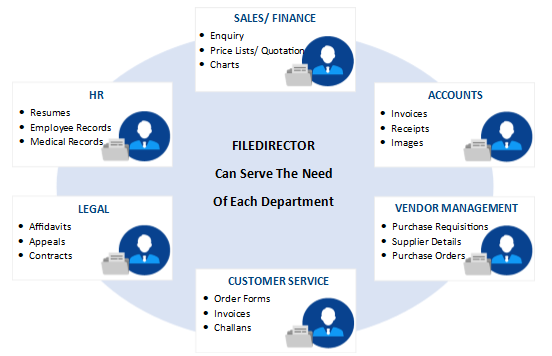
    FileDirector Small Business Edition (SBE) offers small businesses an effective, favourable priced and easy-to-use Electronic Content Management system. Perfectly matched to the requirements of smaller businesses for handling business-related documents such as orders, invoices or contracts, the software instantly makes your business more efficient.

    FileDirector SBE is a high performer when it comes to mapping your business processes. Your staff can go through their work with significantly-increased productivity, which means your customers are offered a higher level of service. At the same time, your documents are stored securely and accessible at any time.

    FileDirector SBE allows up to 15 users to be working at the same time, without the need to run on a Windows domain. Microsoft SQL Server or Oracle provide the database platforms. This means that you have acceptable hardware requirements, delivering a high degree of data security.

    If your business grows and along with it your requirements, FileDirector can grow with a simple license upgrade from SBE to Enterprise. The modular system of FileDirector products emphasises this philosophy.

    Extend the usage to Purchase, HR, Legal, Administration, Accounts Receivable, Sales Order Processing and other Paper / E-mail / Electronic document driven processes.

    E-mail us on sales@rincon.co.in for more information and we will be glad to assist you.
  • Why Fax is Still Important?

    Fax is legally binding

    • UETA of 1999, fax contracts are legally binding
    • Regulatory compliance – Personal Data (Privacy) Ordiance (Cap. 486), HIPAA, Sarbanes-Oxley, Graham-Leach-Bliley Act, Basel II
    • For highly regulated industry, e.g. Banking, Finance & Insurance, Legal Firm, Health Care, Hospital
    • EMail is not legal binding

    Email is not secure

    • Email is transmitted through the Internet, captured and scanned by various third parties e.g. Hilary email scandal
    • Avoid hackers which lead to information leakage
    • Avoid Locky Ransowmare Virus

    Email cannot protect privacy (PIA)

    • Sending privacy documents through email means information exposed to the public

    Fax is a tamper-proof transmission

    • Fax is a secure “point-to-point” communication but email is not
    • Proof of delivery with exact time stamp
    • During transmission, cannot copy, tape and hack
    • Avoid email blocking, delay or attachments missing

    A universally accessible and accepted format

    Why use Fax Server to Replace Fax Machine or MFP Fax?

    Consolidation & Audit Trail

    • Consolidate all fax transmission
    • Centralize all fax records and provide audit trail
    • Avoid users sending unauthorized documents

    Save Cost and Achieve Green Office (Environmental Protection)

    • Consolidate all fax machines and MFP fax
    • e.g. 20 fax machines or MFP fax line can consolidate to 4 to 8 lines fax server
    • Compliance with ISO14000
    • Reduce fax line, manual work, fax consumption
    • Save electricity, water, trees, papers, etc

    Efficient and easy to use

    • Send fax throug desktop, email, web, ERP
    • Auto-faxing: Can integrate with backend systems to send fax automatically

    E-mail us on sales@rincon.co.in for more information and we will be glad to assist you.
  • XMedius software for law firms and the legal industry

    Legal professionals throughout the world – whether in law firms, corporate legal departments, or otherwise – use fax daily to send and receive confidential documents with the courts, with clients, and with other attorneys. The majority of law offices rely on traditional fax, but with the increasing stringency of federal regulations, a paper-based infrastructure lacks the security required for modern legal communications. Law firms and in-house counsel are also becoming aware of the other inefficiencies that come along with using traditional fax: it’s costly and can decrease the efficiency and productivity of staff.

    XMedius’ electronic and cloud-based fax software for law firms step up to the plate where paper-based fax falls short with a range of built-in features designed to extend fax capabilities for legal professionals.

    Secure File Exchange On-the-Go

    With our mobile fax apps, your team can fax from anywhere, whether in the office, on the road, or in court using any internet connected mobile device. You’ll have the ability to turn any fax machine into your own personal printer by sending documents via your mobile phone or tablet and have the paperwork you need, whenever you need it.

    Fax Software For Law Firms that Integrates with MFPs

    XMedius solutions require no additional hardware investments. On top of staff being able to send and receive faxes directly from their email inboxes, XMedius law office technology can also integrate directly into your existing multifunction printers (MFPs). This means that rather than having to print documents first and run them through a fax machine, attorneys and staff can fax documents online right from the printer. This eliminates the cost of leasing and maintaining fax machines and updates the capabilities of the MFPs your organization has already invested in.

    Simplify Document Management with an Audit Trail

    XMedius solutions keep track of all sent and received fax transmissions with a built-in audit trail function. This makes document management hassle-free and helps law firms associate costs of faxes to specific clients, streamlining billing and cost recovery.

    Adhere to Compliance Regulations

    Secure file exchange solutions used in the legal industry need to protect your data while meeting Federal compliance regulations at all times. XMedius software for law firms allow you to send and receive sensitive legal documents in compliance with HIPAA, SOX, and more. Learn more about our certifications and compliance.

    To learn more contact us sales@rincon.co.in

  • Repost: GST may add to India Inc’s documentation burden

    India gears up for GST to be rolled out from July 1. However, have we thought of the documentation needed for compliance? Here is an interesting article.

    Industry is worried it might face increased compliance burden due to rules under the proposed goods and services tax (GST) regime.

    Companies would have to upload three returns every month – by the 10th, 15th and 20th of the month after a sale happens, said M S Mani, senior director, indirect tax, Deloitte.

    According to rules on returns, companies would have to submit details of its supplies or invoices by the 10th of the subsequent month. They have to upload details of purchases of inputs by the 15th of the subsequent month.

    GST returns, carrying details of taxes paid and input credit taken, have to be filed by the 20th of the next month, said Mani. Besides, by the next year-end, companies would have to upload annual returns as well.

    This would burden industry with too much compliance. Service companies such as Infosys, Tata Consultancy Services (TCS) and Airtel, among others, would be particularly hit.

    Service providers would have to file 37 returns each a year, said Mani, from two returns – one every six months – now.

    Besides, service tax is a central duty. So service providers do not have to file returns in each of the state where they have offices. This will, however, change under the GST regime and they would have to file 37 returns for each state they have an office in, besides the central government.

    Currently, goods companies, on their part, have to file returns every month for value-added tax (VAT) and excise duties.

    The GST Council is to discuss pending rules and changes to the already approved norms this month-end. The Council will work out rules on composition, valuation, input tax credit and transitions on March 31.

    It has already approved rules on refunds, invoices, returns, payments and registration. The government had made public rules on five categories before taking these to the Council. But it would not do so in case of pending rules, said officials.

    Industry is worried that online marketplace players such as Flipkart and Amazon will have to pay up to one per cent tax collected at source (TCS) – rules for which have not yet come — on behalf of vendors and this would add too much procedural work.

    S S Gupta of Taxmann said these marketplaces have thousands of vendors and to exactly match TCS of each would be extremely difficult. If anything goes wrong while matching, the input credit would go to another and the vendor would be asked to pay more, he said.

    If a customer returns a product purchased via an online marketplace, it will take time to reach the supplier. By then, TCS might have been paid by the online company. If that vendor does not supply to the online company again, the marketplace would have to bear the burden, explained Gupta.

    Though a cap on TCS has been reduced from two per cent in draft GST Bills to one per cent in the revised drafts approved by the Council, the tax is not aimed at revenue generation but to keep a track of vendors by the tax authorities.

    The government’s logic has been that as it can’t go after every vendor, it would ask the marketplace to deduct TCS. Keeping track of the vendors and not revenues was the concern here, said the expert with Taxmann.

    Mani said the government was basically burdening industry with compliance, even in areas where the authorities should take the responsibility.

    The other issue relates to input tax credit, rules on which are yet to come. However, rules would not contradict the Bills. A buyer would not get input tax credit unless the supplier concerned paid tax. In state-level VAT, input tax credit would be given as soon as the invoice was uploaded, he added.

    Archit Gupta, founder & chief executive officer of ClearTax.com, said there might be issues around pre-existing VAT credit in the earlier regime when these goods are exempted in GST. “So we hope this is covered under the inputs credit and transition rules.”

    For a truly unified structure, he said, the government must focus on greater fungibility of credit.

    “Exempted excise manufacturers and exempted VAT manufactures may have to face GST rates and taxes, and most of these are state-specific exemptions. So it needs to be seen how these concerns can be uniformly addressed,” added Gupta.

    The Council has cleared all GST Bills and most of these will go to the Cabinet and be tabled in Parliament. Similarly, state GST Bills will be moved to the respective state Cabinets and Assemblies. Only rules and item-wise rates have to be decided.

    While we would have electronic filing, we still have to maintain the pdf files for records. Do give a thought to managing so many files which may be pdfs or maybe hard copy. A Document Management System can help overcome these challenges. Contact sales@rincon.co.in on how we can help achieve your goals and overcome your obstacles.

    The original article appears on rediff.com and is available here

  • Proof of Delivery Management

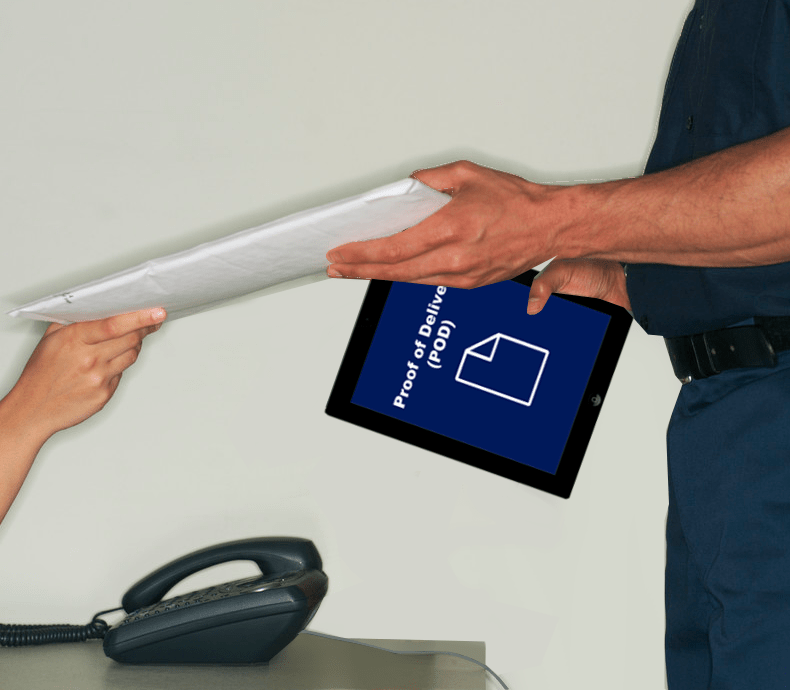
    Proof of delivery (POD) is a method to establish the fact that the recipient received the contents sent by the sender. When the sender sends multiple documents through mail or through a courier service, there is a possibility of some not reaching the intended recipient.

    Proof of delivery becomes very important when legal and financial documents are to be exchanged between two parties. Commercial fleet operators also need to be able to confirm proof of delivery of goods to their customers.

    It is very common for vendors to send invoices with the supporting documents to customers. Most customers now deliver their own goods and have a customer sign the POD. A few days later, when the accounts department is chasing the customer for payment, the customer says they never received one of the items or then never received the invoice.

    With a document management system in place, rather than going into another office to find the paper-work stored in an ever-growing pile of files and folders, the accounts personnel can key in the order number, click search and retrieve the signed POD in a few seconds. They can then email it onto the customer. With the query settled, payment can be collected. Thus it leads to a better cash flow too.

    If you are considering the implementation of a document management system for your business, but you are still on the fence when it comes to selecting the right solution, please e-mail us on sales@rincon.co.in and we will be glad to assist you.