Tag: Medicare

  • Wireless Nurse Call Systems

    Flexible solution for more efficient and effective patient care

    Wireless Nurse Call systems are becoming more and more popular in nursing homes and acute hospitals because of the ease of installation. A system can be installed in very little time causing little or no disruption to the patients and staff.

    • The system is particularly effective in providing a low-cost solution when replacing old and hardwired systems
    • Wireless systems offer the end-user total flexibility allowing them to relocate or add extra equipment as required
    • Whether you run a small nursing home or a large acute hospital and all facilities in between the Medicare Wireless Nurse Call system can be tailored to meet your requirements
  • Reblog: Adapting and evolving Nurse call systems as demand changes

    As featured in Health Estates Journal, Medicare Systems, discusses some of the features and capabilities of modern nurse call systems – the functionality of which now extends well beyond their original purpose, explains what to look for when considering purchasing one, and looks ahead to what new features we can expect to be incorporated in the future.

    Nurse call systems have been a vital part of hospitals since the Victorian era. Today’s systems are an essential part of nursing, and bear little resemblance to their predecessors. Nurse call systems today need to be functional to withstand the demands of a fast-paced hospital environment. It would be fair to say that many systems are no longer simply a nurse call system; their enhanced technology allows hospitals and other healthcare facilities to access a wider range of features, transforming the way that such institutions operate, and including many advantages for nurses, both directly and indirectly.

    Medicare Systems’ MD, Derek Timoney, explains how ‘the information required these days for a nurse call system is far more than just an acknowledgment that the patient in bed 3 has pushed her call button’. He says: “The growth in technology, plus the needs of nursing staff and patients, have led to massive changes in the way the call system operates. We have seen systems with just audible or visual identification become systems with numerous functions, including emergency call, cardiac alert, and real-time data recording, along with the advent of wireless systems which can be installed in hours rather than days, all operating within the busy environment of today’s hospitals. Technology is all-pervasive in our modern-day lives, nowhere more so than the healthcare industry. Indeed, as Pamela Cipriano said in a 2009 article, ‘The technology enabled nurse’, ‘Technology is the greatest tool available to transform and innovate the delivery of nursing care’.”1

    What is a nurse call system?

    Firstly we should define what a nurse call system is? A nurse call system is, first and foremost, a highly cost-effective solution for monitoring the wellbeing of patients. It ensures that when they have a particular need – whether it is simply for a drink or something to eat, or a medical emergency, medical and nursing staff are alerted and can respond quickly However, modern nurse call systems need to offer considerably more if they are to compete in today’s market.

    Functionality

    The key to a contemporary nurse call system is being multifunctional, yet still retaining the simplicity of some of the earlier systems. Nurse call systems now have so much to offer in terms both of improving the patient experience and assisting the nurses caring for them.

    There are three points that are fundamental to any room unit:

    Performance – The buttons need to be clearly displayed and colour coded. Ask yourself, are the buttons too close together? You don’t want a nurse to press the wrong button by mistake. Each button/call should trigger a different tone for clarity between calls.

    Smart – While the functionality of your room unit is key, it also needs to look smart within the bay. The unit needs to be crisp and clear. Hygiene is paramount in hospitals, and ensuring that the nurse call units and system components are easy to clean is vital.

    Robust – A nurse call unit or components that will break at the slightest knock are no use to a hospital or other healthcare facility. Hospital environments can be extremely busy, and there is thus a strong chance that your unit could be dropped, so you need to ensure that the unit you choose will stand the test of time. Bedroom units include two sockets, one for the pear push lead and a second for auxiliary items. Your call point should be mounted on a bracket so that it can be moved if required, for safe, easy operation, or secured using a locking clip.

    Display panel requirements

    Display panels should include the very latest in technology, offering multiple options to suit all environments. There must also be a variety of sizes available, and the option of a wall or desk-mounted display panel to provide the ability to view multiple calls on the same screen. Your display panel will be easily programmed to show just a room number or more detailed individual information specific to your needs. The panel will offer a variety of tones, depending on the call type, which will make it easier for nursing staff to establish the urgency of a call. Display panels will also typically show call logging – the primary aim of which is to monitor, record, and print reports on all calls and responses, providing evidential data for reports.

    Medicare Systems’ Call Logging facility makes reporting easy. The key with call logging data is that it needs to be simple, yet at the same time to provide all the necessary information, enabling the recipient to monitor and record all responses. This in return helps to ensure that hospitals and other healthcare facilities get all the information that they require to provide high levels of accountability and efficient delivery of patient care.

    Aesthetics

    Another key feature to consider within a nurse call system is the aesthetics. With technology and manufacturing moving forward there is no excuse for bulky and unsightly systems. The design of the nurse call system should be such that it is immediately clear how to access the key functions, particularly given that in an emergency situation there may be no time to think about which button needs to be pressed. Once staff have been trained, using the system should become second nature.

    When choosing a nurse call system, it is important to ensure that the panels are colour-coded to meet HTM guidelines, as follows:

    • Standard calls (orange).
    • Assistance calls (yellow).
    • Emergency calls (red).
    • Staff presence (green).
    • Call acceptance (grey).

    Call points should also employ HTM colouring as standard, with raised buttons to assist patients with poor eyesight.

    Wired vs. wireless?

    There is still an ongoing argument as to the respective merits of wired vs wireless within the nurse call. Each option has both its positives and negatives to consider (see Table 1), and indeed many manufacturers today offer both wired and wireless systems, to suit the particular application.

    ‘Landscape’ wireless room units

    One flexible solution is with newly designed landscape wireless room units. These are able to fit into bedhead trunking within hospital wards, creating the illusion of a traditional wired system fitting in with the hospital environment, yet simultaneously offering the cost effectiveness and time-saving benefits of a wireless system. Many now argue that wireless call systems offer maximum flexibility, in turn allowing for better care process management. The appropriate use of the system should free up time for staff and enable them to ‘work smarter’, while the greater the ‘future-proofing’ embedded, the better the system will be able to ‘flex’ and be expanded/added to in the future, to address changing demands.

    Cardiac/‘crash’ units

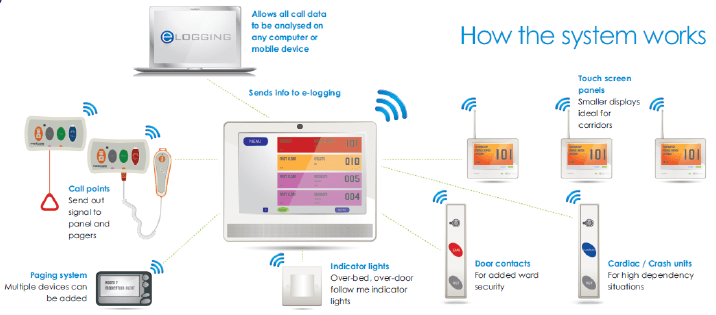
    There may be an area of the hospital which presents frequent high dependency situations, and here the ability to offer an emergency response is critical. Nurse call companies will offer a specific button for this, often a unit with a single HTM compliant blue button. A cardiac/crash unit would be ideal for an emergency department within the hospital.

    Door contact units

    Again, there may be specific areas of the hospital where you may need extra security for patients. A door contact unit is designed to provide an easy-to-operate monitoring system for internal and external doors. The unit will be easily armed and disarmed, often using a magnetic swipe fob or infra-red trigger, and will usually offer an emergency call button for added safety and security.

    Accessories

    With the development of ever more sophisticated and capable call systems, various additional features have been added over recent years. Nurse call manufacturers today offer a variety of accessories. These will typically interface with the installed system and aid even the most severely disabled patient in operating it, while a number of accessories and additional components are designed to provide vital alerts to nursing and clinical teams. For example, pressure mats are now available which will activate an alarm should a patient leave their bed or chair, while installing movement sensors will let staff know if a patient is on the move.

    Thanks to advanced understanding of illnesses today, there are many specifically designed accessories to address the needs of patients living with illnesses such as epilepsy and dementia – for example, specialised Epilepsy monitors, seizure alarms, and tremor alarms. There may be situations when a patient struggles with the ‘pear push’ button, for example if they have only limited use of their hands and require something a little more touch-sensitive. There is now a diverse range of switches and buttons available to aid every need – from extra-large, extra-sensitive buttons, to finger switches and even breath switches – to ensure that every patient need is met.

    Installation

    An important element when considering selecting a nurse call system is the potential disruption that can be caused during its installation. Thankfully, due to considerable advances in technology, wireless nurse call systems offer a simpler installation than their hard-wired counterparts. MD, Derek Timoney, explains: “A radio system with access to all points on the day could be installed in around five hours – there may typically be a couple of display panels in the ward, one at the nurses’ station, and one in the body of a ward. With ‘wireless’ systems we see all the required components installed in hours rather than days. With no wires to worry about, no fundamental changes are needed to the building, while very little manual labour is required. There is thus minimal disruption for either residents or staff, and generally no need to redecorate after the system has been installed.”

    Training

    As mentioned previously, a modern nurse call system should be straightforward to use. To ensure that all staff are confident and can use the system efficiently, free comprehensive training should be given. This is often provided on the day of installation, but a separate appointment should be made if staff members are not available on that specific day, or training could be provided online. Good aftersales support is also key – with an already overstretched service, hospitals and healthcare facilities need to know that there is someone on the end of the phone should they need it.

    Infection control

    Infection control is clearly a paramount factor within the hospital environment, and equipment should be designed and manufactured with infection control strongly in mind. For example, call points need to be able to be easily wiped clean. Medicare designs its call points with the addition of Microban to the labels, while an anti-microbial additive is also added to the plastic during manufacture to enhance infection control. Pear-push leads should also be manufactured with both these additives, and need to be designed so they can be dipped into the cleaning solutions normally used within the hospital environment to clean surfaces. This will help to eliminate the spread of any infection.

    ‘Breakout’ systems

    When a wired system in a hospital fails it often affects the whole ward, and getting the fault repaired can be a time consuming process, with it often taking days to find the cause of the problem. During this time a ward is often without a fully functioning nurse alert system, and this is where hospitals need to be prepared for a crisis. Introducing a wireless nurse call ‘breakout’ system is a quick and easy solution to what could otherwise be a significant problem. The breakout system should take around 20 minutes to install, and then be fully functional immediately. A ‘breakout’ system that is pre-programmed for the hospital environment offers an open and practical solution in times of a nurse call crisis. It should be HTM-compliant and quick and easy to programme.

    Research on the market

    Having looked at what should be considered when selecting a nurse call system, perhaps we should take a little time to consider the future of the nurse call market? Will ongoing development of nurse call systems further enhance the quality of care patients can receive?

    A report recently published by Markets and Markets2 about the global nurse call system market explains how an ageing population, the rising prevalence of chronic diseases, new product launches, technological advancements, and increasing healthcare expenditure, are among the major factors driving the growth of the nurse call market. The nurse call systems market is, it says, segmented into ‘buttons, integrated communication systems, mobile systems, and intercom systems’. It is predicted that the integrated communication systems segment will account for the largest share of the market, growing at an annual rate of 13.6% from 2018 to 2021.

    The technology ‘division’ of the nurse call system market is spilt into wired systems and wireless systems. In 2018, the report maintains, wireless systems are expected to account for the highest growth rate in the market – driven by low-cost and fast installation, plus the speed of transmission of radio communication.

    Future development

    The development of technology in today’s society means consumers are expecting more and more. Whether it’s mobile phones, computers, or televisions, we are constantly adapting and improving products to make designs smaller and functions more advanced. This is certainly very evident within the healthcare sector. When wireless nurse call systems were introduced, and as they developed, they naturally became more ‘intelligent’, and there is constant pressure to continue improving such equipment and to offer hospitals multifunctional systems.

    Del Gray, Medicare Systems’ technical director, explained: “These days call systems are no longer just alerts and alarms; they are an important part of the information technology employed in hospitals. Call systems have come a long way from the simple hand bell, and while their primary function remains the same, they offer so much more than just communication between staff and patients. People want more information, more data analysis, and more functionality.

    Accountability and traceability

    “Accountability and traceability are two increasingly key requirements, which is why we added features such as our call logging system. This feature allows hospitals to record all events and produce tailored evidential activity reports so that key performance indicators – such as staff response – can be monitored, or data provided if incidents need to be investigated. Routine or regularly required reports can be saved and automatically delivered to the required recipients by email, and maintenance is made easy by automated status reports. We have seen an increase in demand for location and tracking features, particularly within MHU, AMU, CCU, Maternity, and areas where the vulnerable staff or patients require monitoring. In these instances it is important to know who the individual that requires assistance or intervention is, and their location. Knowing the latter also ensures an efficient and timely response to events.”

    Enormous changes

    Both society and the healthcare sector have changed enormously, the latter particularly within recent years with the increasing pressures facing both NHS and private hospitals. Through all these changes nurse call systems have continued to develop and adapt. Increasing demand for information at the point of care has prompted the introduction of a host of new products and technologies designed to simplify the job of those at the frontline, but it’s important not to encumber the user, so integration of these services is key to both the efficient running of a care facility, and the effectiveness of staff under increasing pressure to deliver care within tight budgets. Looking at the progressive nature of the nurse call system, and the new technology developed year after year, the future for such systems, and for companies such as Medicare developing and pioneering new technologies, looks an exciting one.

    The original article can be found here.

    For more details contact us on sales@rincon.co.in
  • If your call system goes down, don’t let your wards stand empty!

    Installing a Medicare HTM Wireless Nurse Call System is quick and simple

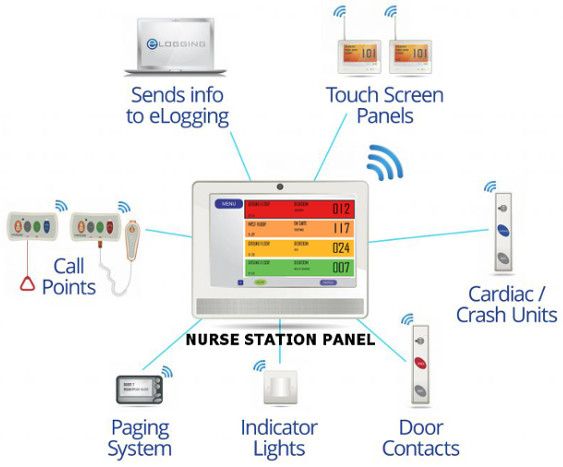
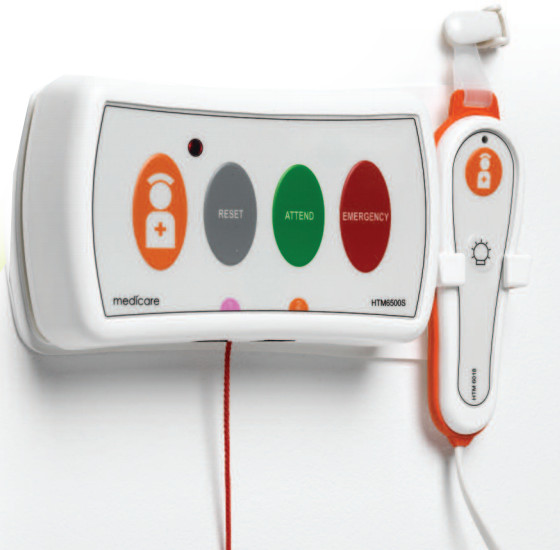
    Panels are colour-coded to meet HTM guidelines for standard calls (orange), assistance calls (yellow), emergency calls (red), staff presence (green) and call accept (grey). Further the standard calls, assistance and emergency calls each have their own specific tone.

    Combination of visual and audible alerts provide care staff with a simple and safe method of correctly identifying the status of any call.

    Touch screen display panels allow staff to accept calls, informing other staff that the call is being dealt with. There is also a mute facility on the panel to reduce sound intrusion. Both the call-accept and mute facility are temporary, if the original call is not reset within 90 seconds the display panels will reinstate the call and sound.

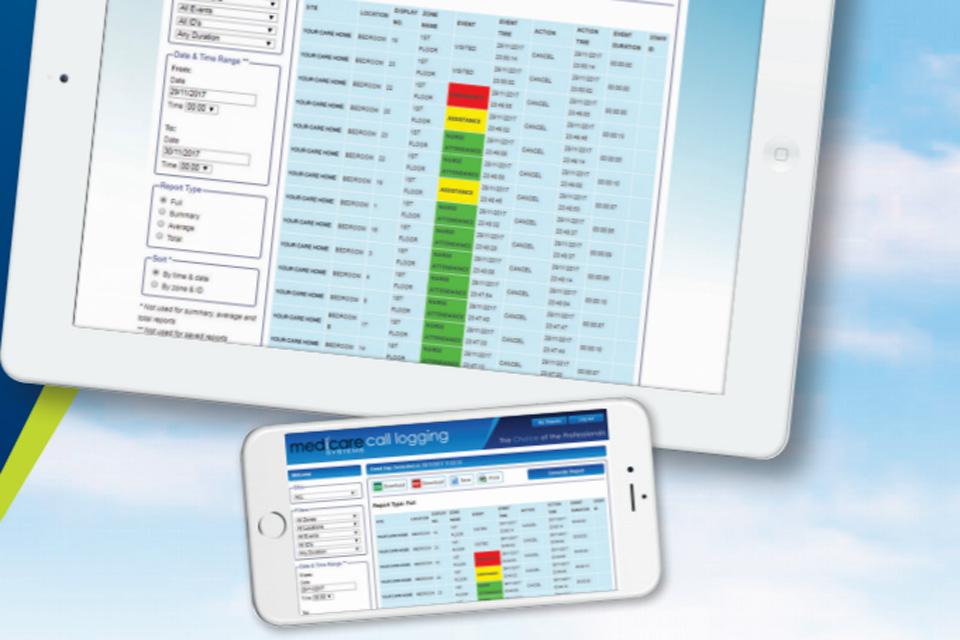
    Includes a basic 200 event call-log on display panels. Full detailed calllogging data is accessed from your PC and can be exported to Excel.

    Call points employ HTM colouring as standard. Raised buttons assist residents with poor eyesight.

    Luminescent labels for both the call point and pear-push lead (handset) have Microban© embedded providing protection against bacteria.

    Bedroom units include two sockets, one for the pear-push lead and a second for auxiliary items such as pressure mats, etc.

    Call points are mounted on wall brackets and can be moved around the room for safe, easy operation, or secured using a locking clip.

    Many useful additional items are available that can be linked into our nurse call system, including neck pendants with safety lanyards, exit door alarm points, staff pagers, remote sounders, pressure mats, mattress and chair mats, PIR’s and many more.

    Medicare’s HTM Wireless Nurse Call System is used nationwide in private and NHS hospitals, and in many environments, including:

    Hospital Wards:
    • Hydrotherapy Units
    • Swimming Pools & Gyms
    • Operating Theatres
    • Consulting Rooms
    • Disabled Toilets
    • X-ray Departments
    • Temporary Buildings

    For more details contact us on sales@rincon.co.in
  • Reblog: E-LOGGING service

    Medicare’s E-LOGGING service provides secure access to nurse call data through the iCloud platform.

    Used in the Nursing and Residential environment, this powerful reporting tool supplies accurate call data analysis providing evidential reports. All reports can be individually tailored, automated and emailed to selected recipients.

    • Allows remote access anywhere on any device including smartphones, tablets and desktops.
    • Gives you the capability to monitor trends providing evidential data to assist with compliance reports.
    • Cost effective, with the ability to interface with systems, old and new*
    • Automated email reporting to suit management requirements.
    • Bespoke detailed or summary reports including response times and attendance times.
    • Specific incident investigation and reporting tools
    • Works efficiently with bespoke electronic care plans, packages and fee levels.
    • Respects all data security regulations.

    To know more contact us on sales@rincon.co.in

    The original article can be found here.

  • Medicare Nurse Call Systems For Your Hospitals

    From initial consultation through to installation and after-sales support, Medicare Systems offers a professional and friendly service.

    Quick to fit, HTM standards compliant and excellent value for money, the Medicare HTM series Nurse Call system is designed for ease of use, and built to withstand the demands of the busiest hospital environment.

    Features:

    • HTM compliant nurse call systems specifically designed for a hospital environment
    • Low power, wireless technology, easily configured to your requirements installed within one day
    • Works regardless of size and structure
    • Using signal boosting equipment, we can provide full coverage for any sized facility
    • Industry led, landscape design for fitting within bedhead panel
    • Antimicrobial additives to help maintain infection control
    • Safe to use with absolutely no interference to other equipment
    • NEW cardiac unit for high dependency situations
    • e-Logging allows all call data to be analysed on any computer or mobile device
    • Used extensively by NHS UK and a host of other Private hospitals around the world

    Wireless Nurse Call Products For Hospitals

    For more details contact us on sales@rincon.co.in
  • Wireless Nurse Call Systems in Hospitals

    In hospitals, care homes and other similar organisations, It is frequent for patients to constantly ask for help.

    Time is the essence as it can be a matter of life and death. If the patient can’t get timely assistance, it not only delays treatments but also greatly affects the whole image of the institution. It is vital for the management of such institutions to ensure that convenient and rapid assistance can be provided when needed. A wireless calling system is a necessary solution for such organisations enabling provision of timely professional service and emergency help if required.

    Medicare systems are an innovative, cost-effective way for patients to call for assistance at any time just by pressing a button. It is easy to use and allows reaching out to the caregiver no matter where they are.

    The system is designed to provide patients with better quality service and helps you in monitoring your staff’s performance. The system records all the information from the patients and the time taken to respond.

    Medicare is UK based and the systems are HTM compliant. Health Technical Memoranda (HTMs) give comprehensive advice and guidance on the design, installation and operation of specialised building and engineering technology used in the delivery of healthcare. Some of the notable features of Medicare systems are:

    • For high dependency unit, (Code Blue) they have a specific single blue button unit
    • Panels are colour-coded to meet HTM guidelines
    • Calls tones are as per their HTM specifications
    • Lights are colour coded in line with HTM guidance.

    For more details contact us on sales@rincon.co.in
  • Let’s go Wireless using Medicare Nurse Call System

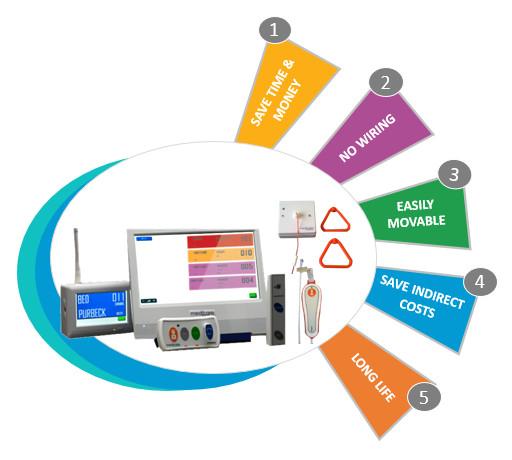
    If you have realised the total cost of your wired Nurse Call System, it is now time to plan and replace it with Medicare Wireless Radio Nurse Call Systems.

    Quick to fit, HTM standards compliant and excellent value for money, the Medicare HTM series Nurse Call system is designed for ease of use, and built to withstand the demands of the busiest hospital environment.

    From initial consultation through to installation and after-sales support, we offer a professional and friendly service, from scoping through to after-sales support.

    Benefits:
    • No Wiring so save on Material and Maintenance
    • Buy Just in Time
    • Easy Programming
    • Low Inventory Cost
    • Maximum up time
    • Installation in 2-3 days
    • Easy to move in changed room layout
    • Reporting and Escalation helps improve Quality

    Where can one use Nurse Call Systems?

    Suggested areas of usage of Nurse call systems include but are not limited to:

    Hospitals – The obvious usage is to call a nurse or call for assistance when the patient needs it.
    Day clinics, nursing homes or old age centres need nurse call systems that are on the go. Patients here, are into their recovery process and this means starting to get by on their own, though still with direct access to medical staff. Wireless call buttons allow for these patients to be able to roam about freely and take in their leisurely walks by carrying it around with them. If they would need help getting back to their room, then a simple press on the call button would give them instant help.

    At Home use is widely becoming an angle for care, whether for a person in recovery or for old age care. The simple system makes the installation of nurse call systems a breeze. This need no longer be a drawn out process of getting the wiring up and then hassling with the interiors.

    To learn more, contact us on sales@rincon.co.in
  • Basic components that go into making the Wireless Nurse Call System

    In the last post we had discussed Wireless Nurse Call Systems. In this post, we will discuss the basic components that go into making the Wireless Nurse Call System.

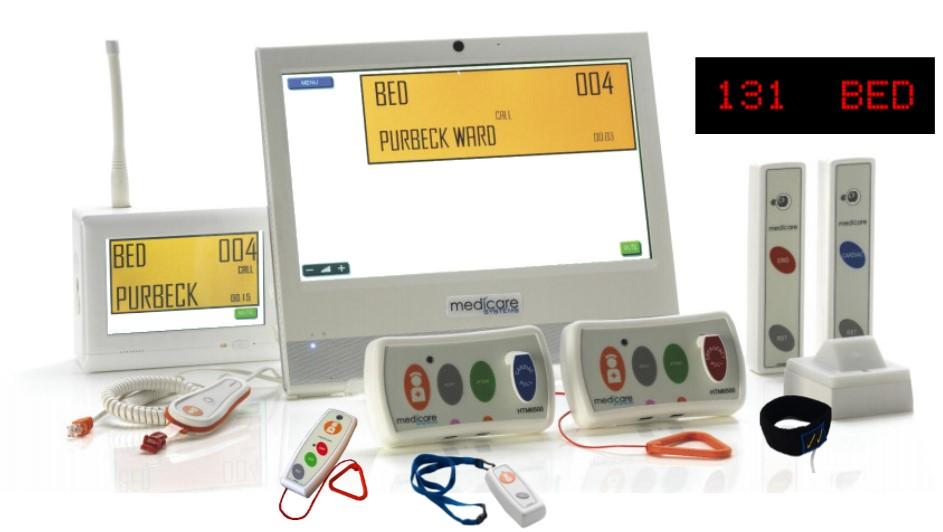
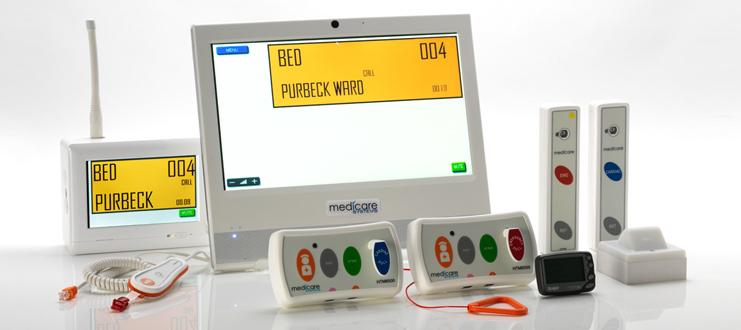
    Call Points

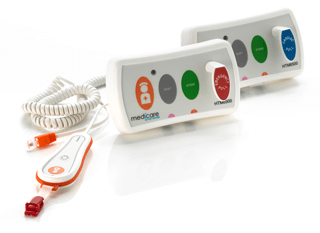
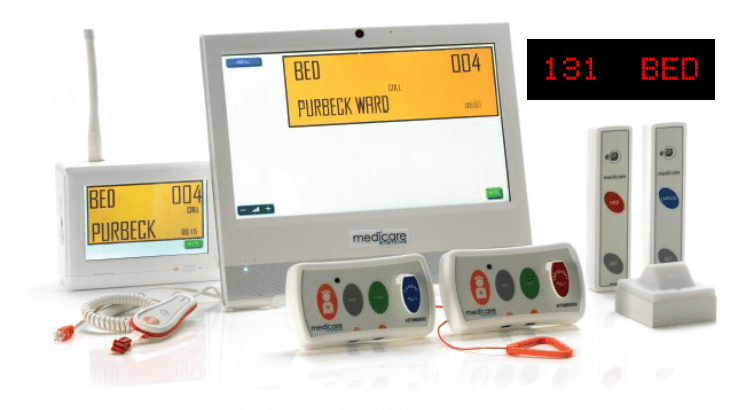
    The Medicare call points are available in two models, the Emergency and Cardiac Unit offering a red or blue pull on, push off switch and colour coded to meet HTM guidelines.

    The call points are housed in unique, elegant enclosures for maximum visibility and ease of use and both models have a landscape design to allow for fitting within bedhead trunking.

    The call points may well be subjected to food and drink spillages as well as other contaminants. Therefore, rather than using traditional buttons that trap infectious material, become stuck and unreliable, they use a wipe clean label with a Microban® anti-bacterial coating and the enclosure itself is embedded with anti-microbial additives. If anything is spilled onto the call point it can simply be wiped off and if the label is damaged it can be replaced in seconds, leaving the call point looking as good as new.

    Each call point (other than ceiling pull cords) has clearly marked buttons providing (depending on model) Call, Attendance, Assistance, Emergency, Cardiac and Reset. Each of these use the HTM guideline colour coding standard. The button label has a luminescent coating making it easily visible in the dark.

    The HTM 6500 is fitted with two sockets for pear push leads and / or auxiliary devices such as pressure mats, bed sensors and monitors. The nurse call points are powered by AA alkaline batteries which under normal conditions provide 2-3 years usage. Every bedroom call point has a built-in timer unit allowing bed and chair sensor pads to be added without the need for additional equipment.

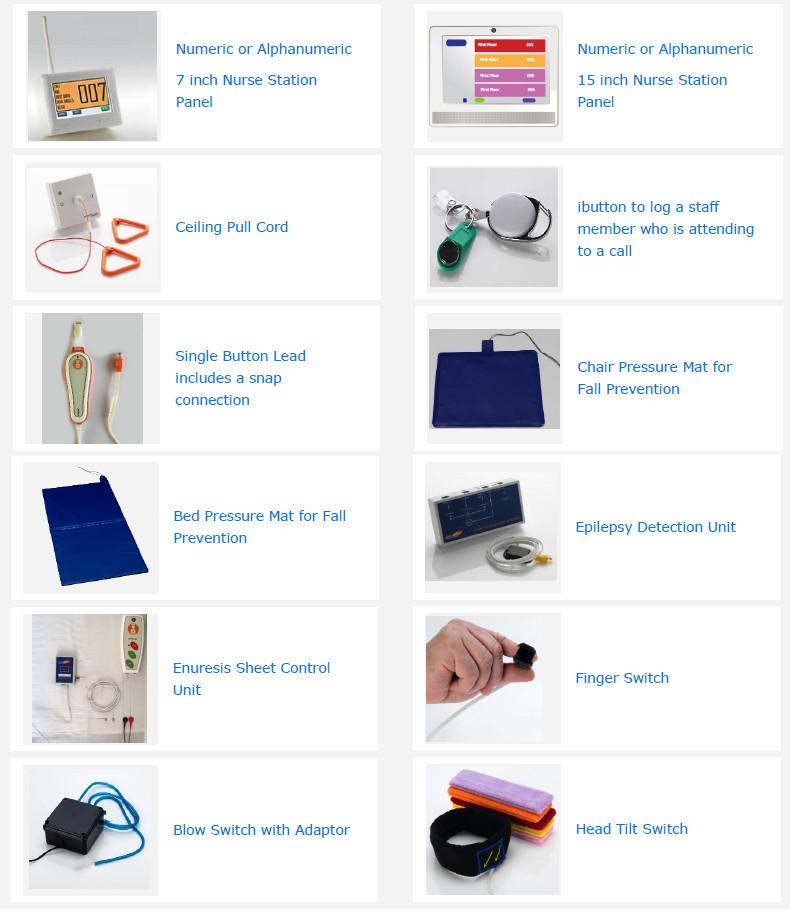
    7 inch Display Unit

    The Medicare nurse call display panels offer a multitude of options designed to be unobtrusive for patients and ward staff alike.

    The compact 7” HTM model allows for easy installation as either wall mounted or more mobile units fixed using a swivel bracket. This flexibility allows these compact units to be used in various locations like corridors and ward entrances, depending on the set-up requirements of the hospital.

    The display’s high visibility screen enables multiple calls to be viewed on the same display.

    There are many additional data options, and for larger hospital environments floor plans can be displayed on the screen to pin point the exact nurse call location.

    Features:

    • Mapping facilities
    • Medication reminders
    • Staff attendance logs
    • Built-in call history
    • Call acceptance
    • Day/Night modes
    • Variety of call tones

    15 inch Display Units

    15” display panels can be programmed to show just a bed / ward number or more detail depending on the exact needs of the patient. They can be flat wall mounted or on swivel brackets allowing for use around the hospital. The display’s high visibility screen also enables you to view multiple calls on the same display.

    We are able to provide displays with a variety of call tones and building floor plans on the screen with software providing specific location details of the call.

    All Medicare nurse call systems are designed to be flexible, and many options and features can be applied to suit your requirements.

    Messaging Feature:

    This feature allows you to display important information at preset times of the day. It can be used to alert or notify staff of any specific needs of the residents, such as medication required or checks / duties that need to be carried out at specific times.

    15″ Display Panels Provide:

    • Mapping facilities
    • Medication reminders
    • Staff attendance logs
    • Built-in call history
    • Call acceptance
    • Day/Night modes
    • Variety of call tones

    Over Door light

    The over door light can be programmed to a number of call points and will light up orange, green, flashing yellow, flashing red and flashing blue depending on the call type. Optional single colour (amber) variant available for HTM Hospital applications.

    Optional sounder when activated.

    Repeaters / Signal Booster

    This simple plugin booster enables receivers and transmitters to be installed anywhere within the building. Power requirements, non-switched socket outlet 240V AC.

    To learn more, contact us on sales@rincon.co.in
  • Wireless Nurse Call Systems in India

    Nurse call systems have revolutionised the way in which patients communicate with their care givers and hence the health care industry as a whole all over the world. With the advent of wireless nurse call systems in India, this improvement in communication has only risen further. Wires are no longer the limiting factor and the absence has only taken the health care industry into another league.

    We are pleased to introduce Wireless Nurse call systems from Medicare, UK which are HTM compliant and work on radio frequency. Thus you don’t need to worry about any kind of interference with medical equipment.

    From a patient’s perspective, nurse call stations no longer have a fixed location. The button can be fixed onto the bed head panel for easy access or carried around when patients are not confined to the bed. If the patient is confined to bed, we have the pear push button which can be clipped to the patient’s uniform or to the pillow cover. These features allow patients who rely on the help of nurses, when they are in dire need, to be able to effortlessly ask for help.

    The systems are splash proof and so can be fitted in the toilets as well. The Wireless nurse call system can also be attached to a lanyard, allowing patients to be able to go for a walk in the passage or outside, yet be comforted that help is just a press of the button away.

    For nurses / caregivers, the nurse call system allows for immediate response to a query. Nurses no longer have to be stationed at the main station to be able to know when help is required. There can be door lights outside the room to indicate if the patient inside has called. We can have workflows defined so that if the patient is not attended to in say 5 minutes, the call would be escalated to some other nurse station or maybe the Head of Nursing as the requirement may be.

    Where can one use Nurse Call Systems?

    Suggested areas of usage of Nurse call systems include but are not limited to:

    • Hospitals – The obvious usage is to call a nurse or call for assistance when the patient needs it.
    • Day clinics, nursing homes or old age centres need nurse call systems that are on the go. Patients here, are into their recovery process and this means starting to get by on their own, though still with direct access to medical staff. Wireless call buttons allow for these patients to be able to roam about freely and take in their leisurely walks by carrying it around with them. If they would need help getting back to their room, then a simple press on the call button would give them instant help.
    • At Home use is widely becoming an angle for care, whether for a person in recovery or for old age care. The simple system makes the installation of nurse call systems a breeze. This need no longer be a drawn out process of getting the wiring up and then hassling with the interiors.

    In the next few posts, we will talk about the different components of a Wireless Nurse Call system and their functions.

    To learn more, contact us on sales@rincon.co.in
  • Repost: Government de-licenses the use of very low frequency bands for the automotive industry

    MUMBAI: The government has de-licensed certain very low-frequency bands for the automotive industry, a decision that could help in making connected and safer vehicles in a country where more than 1.4 lakh people die every year in road accidents.

    Car makers can use this frequency through a radar-based system and offer advanced driver assistance features like blind spot monitoring, adaptive cruise control and lane departure warning.

    These features are already available in advanced markets. According to a notification dated September 16, issued by the wireless planning and coordination wing of the Ministry of Communication and Information Technology, the government has de-licenced use of devices or wireless microphones in the frequency bands of 36-38 MHz, 433-434.79 MHz, 302-351 kHz and 76-77 GHz.

    The move will not only help car manufacturers to improve the safety features of their projects in India, but also boost exports from the country to Europe, Japan and the US, where these features are standard. The likes of Ford, Volkswagen, Hyundai and Nissan export 30-50% of the cars they produce in India, including to Europe.

    In the absence of low-power frequencies, car makers in India could not test or install these safety features in cars meant for exports, people in the know said. In fact, some luxury-car makers had to spend money on de-activating those safety features in India. The frequency band was released after continuous dialogues among the Society of Indian Automobile Manufacturers Association (SIAM), car maker Maruti Suzuki, component manufacturer Bosch and the ministry over six to 12 months. The ministry de-licenced the band after all its concerns were addressed by the automakers.

    “This will enable us to capture export opportunities, particularly in advanced markets,” a Maruti spokesperson said. “This is truly using technology as an enabler for ‘Make in India for the World’.

    The entire Indian auto industry stands to benefit from this move.” Maruti, which was pushing for releasing the frequency, should be the biggest beneficiary as it intends to use the bands for the testing and installation of Autonomous Emergency Braking System (AEBS) in its upcoming premium hatchback Baleno, which will be exported to Europe and Japan.

    AEBS is a low-power radar-based system which detects obstacles and applies brake in emergency situations. Fitment of AEBS in passenger cars will be a required feature for better rating in the European New Car Assessment Programme and it is difficult to sell a car in that market without this system. It uses short-distance (160 m), low-power (55 dBm max) radar operating in the 76-77 GHz band.

    The original article appeared in the Economic Times and is written by Ketan Thakkar and Maulik Vyas. It is available here.

    The purpose of this article is to show that the frequency band 433 – 434.79 MHz is open now. This is the band used by Medicare Nurse Call Systems too.

    To learn more, contact us on sales@rincon.co.in