Tag: Nurse Call

  • Reblog: Adapting and evolving Nurse call systems as demand changes

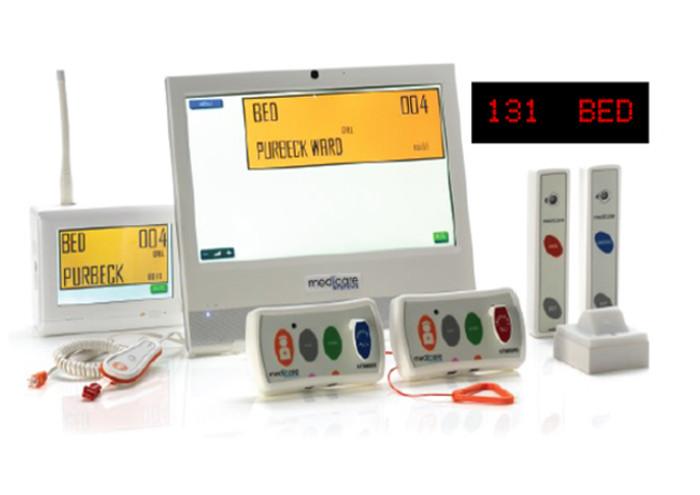
    As featured in Health Estates Journal, Medicare Systems, discusses some of the features and capabilities of modern nurse call systems – the functionality of which now extends well beyond their original purpose, explains what to look for when considering purchasing one, and looks ahead to what new features we can expect to be incorporated in the future.

    Nurse call systems have been a vital part of hospitals since the Victorian era. Today’s systems are an essential part of nursing, and bear little resemblance to their predecessors. Nurse call systems today need to be functional to withstand the demands of a fast-paced hospital environment. It would be fair to say that many systems are no longer simply a nurse call system; their enhanced technology allows hospitals and other healthcare facilities to access a wider range of features, transforming the way that such institutions operate, and including many advantages for nurses, both directly and indirectly.

    Medicare Systems’ MD, Derek Timoney, explains how ‘the information required these days for a nurse call system is far more than just an acknowledgment that the patient in bed 3 has pushed her call button’. He says: “The growth in technology, plus the needs of nursing staff and patients, have led to massive changes in the way the call system operates. We have seen systems with just audible or visual identification become systems with numerous functions, including emergency call, cardiac alert, and real-time data recording, along with the advent of wireless systems which can be installed in hours rather than days, all operating within the busy environment of today’s hospitals. Technology is all-pervasive in our modern-day lives, nowhere more so than the healthcare industry. Indeed, as Pamela Cipriano said in a 2009 article, ‘The technology enabled nurse’, ‘Technology is the greatest tool available to transform and innovate the delivery of nursing care’.”1

    What is a nurse call system?

    Firstly we should define what a nurse call system is? A nurse call system is, first and foremost, a highly cost-effective solution for monitoring the wellbeing of patients. It ensures that when they have a particular need – whether it is simply for a drink or something to eat, or a medical emergency, medical and nursing staff are alerted and can respond quickly However, modern nurse call systems need to offer considerably more if they are to compete in today’s market.

    Functionality

    The key to a contemporary nurse call system is being multifunctional, yet still retaining the simplicity of some of the earlier systems. Nurse call systems now have so much to offer in terms both of improving the patient experience and assisting the nurses caring for them.

    There are three points that are fundamental to any room unit:

    Performance – The buttons need to be clearly displayed and colour coded. Ask yourself, are the buttons too close together? You don’t want a nurse to press the wrong button by mistake. Each button/call should trigger a different tone for clarity between calls.

    Smart – While the functionality of your room unit is key, it also needs to look smart within the bay. The unit needs to be crisp and clear. Hygiene is paramount in hospitals, and ensuring that the nurse call units and system components are easy to clean is vital.

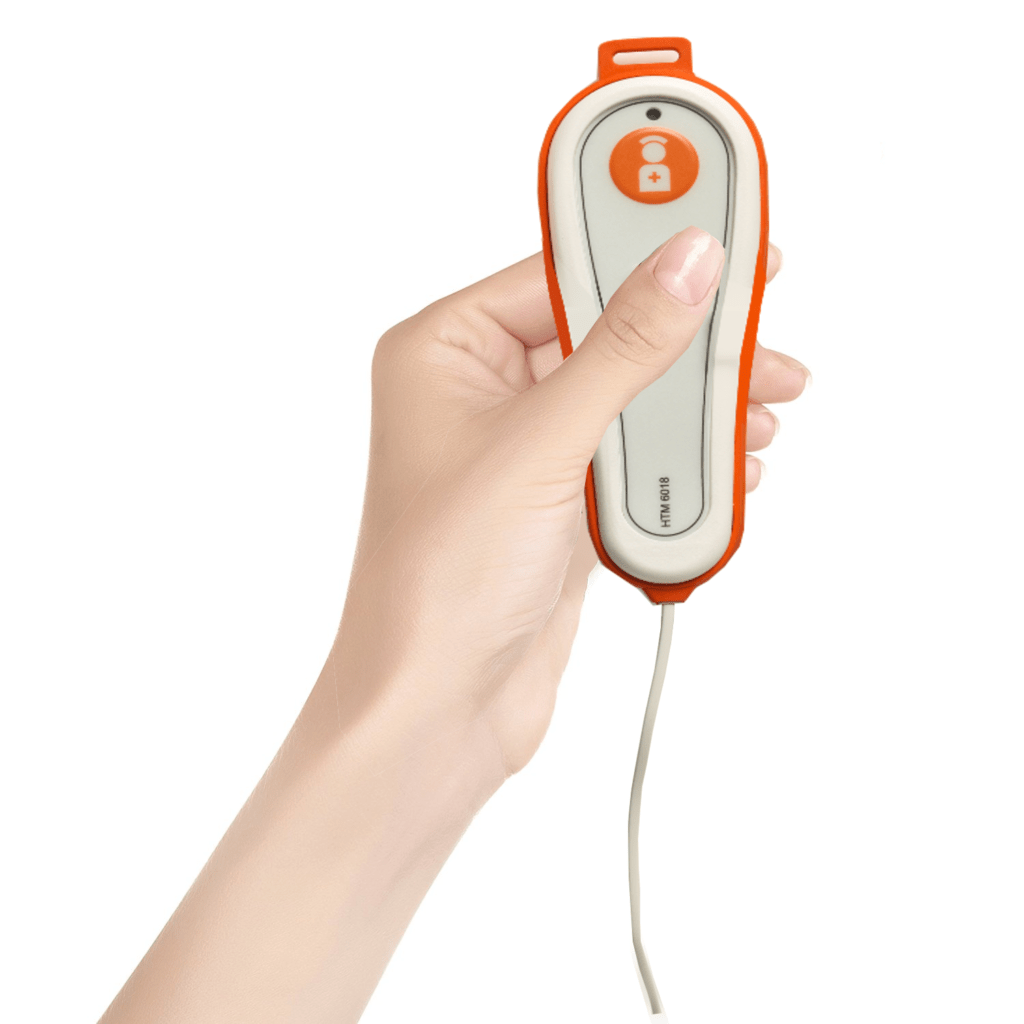
    Robust – A nurse call unit or components that will break at the slightest knock are no use to a hospital or other healthcare facility. Hospital environments can be extremely busy, and there is thus a strong chance that your unit could be dropped, so you need to ensure that the unit you choose will stand the test of time. Bedroom units include two sockets, one for the pear push lead and a second for auxiliary items. Your call point should be mounted on a bracket so that it can be moved if required, for safe, easy operation, or secured using a locking clip.

    Display panel requirements

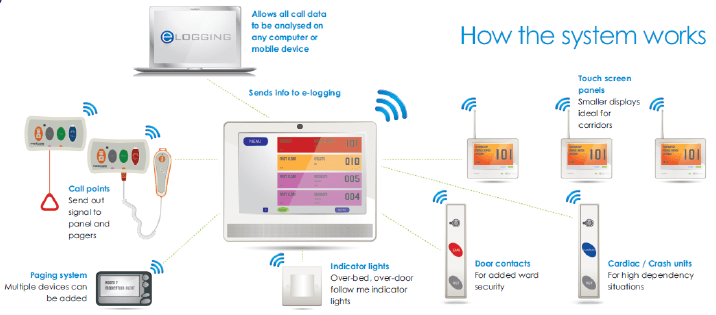
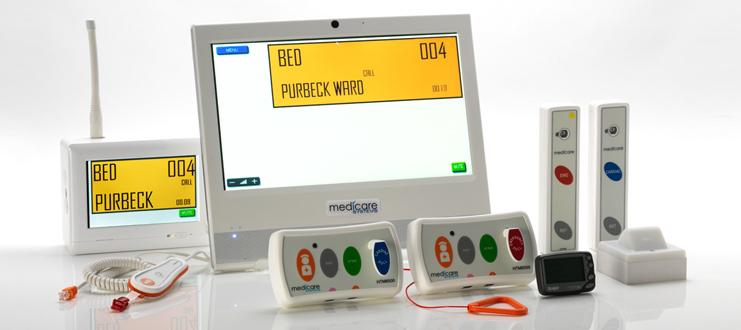
    Display panels should include the very latest in technology, offering multiple options to suit all environments. There must also be a variety of sizes available, and the option of a wall or desk-mounted display panel to provide the ability to view multiple calls on the same screen. Your display panel will be easily programmed to show just a room number or more detailed individual information specific to your needs. The panel will offer a variety of tones, depending on the call type, which will make it easier for nursing staff to establish the urgency of a call. Display panels will also typically show call logging – the primary aim of which is to monitor, record, and print reports on all calls and responses, providing evidential data for reports.

    Medicare Systems’ Call Logging facility makes reporting easy. The key with call logging data is that it needs to be simple, yet at the same time to provide all the necessary information, enabling the recipient to monitor and record all responses. This in return helps to ensure that hospitals and other healthcare facilities get all the information that they require to provide high levels of accountability and efficient delivery of patient care.

    Aesthetics

    Another key feature to consider within a nurse call system is the aesthetics. With technology and manufacturing moving forward there is no excuse for bulky and unsightly systems. The design of the nurse call system should be such that it is immediately clear how to access the key functions, particularly given that in an emergency situation there may be no time to think about which button needs to be pressed. Once staff have been trained, using the system should become second nature.

    When choosing a nurse call system, it is important to ensure that the panels are colour-coded to meet HTM guidelines, as follows:

    • Standard calls (orange).
    • Assistance calls (yellow).
    • Emergency calls (red).
    • Staff presence (green).
    • Call acceptance (grey).

    Call points should also employ HTM colouring as standard, with raised buttons to assist patients with poor eyesight.

    Wired vs. wireless?

    There is still an ongoing argument as to the respective merits of wired vs wireless within the nurse call. Each option has both its positives and negatives to consider (see Table 1), and indeed many manufacturers today offer both wired and wireless systems, to suit the particular application.

    ‘Landscape’ wireless room units

    One flexible solution is with newly designed landscape wireless room units. These are able to fit into bedhead trunking within hospital wards, creating the illusion of a traditional wired system fitting in with the hospital environment, yet simultaneously offering the cost effectiveness and time-saving benefits of a wireless system. Many now argue that wireless call systems offer maximum flexibility, in turn allowing for better care process management. The appropriate use of the system should free up time for staff and enable them to ‘work smarter’, while the greater the ‘future-proofing’ embedded, the better the system will be able to ‘flex’ and be expanded/added to in the future, to address changing demands.

    Cardiac/‘crash’ units

    There may be an area of the hospital which presents frequent high dependency situations, and here the ability to offer an emergency response is critical. Nurse call companies will offer a specific button for this, often a unit with a single HTM compliant blue button. A cardiac/crash unit would be ideal for an emergency department within the hospital.

    Door contact units

    Again, there may be specific areas of the hospital where you may need extra security for patients. A door contact unit is designed to provide an easy-to-operate monitoring system for internal and external doors. The unit will be easily armed and disarmed, often using a magnetic swipe fob or infra-red trigger, and will usually offer an emergency call button for added safety and security.

    Accessories

    With the development of ever more sophisticated and capable call systems, various additional features have been added over recent years. Nurse call manufacturers today offer a variety of accessories. These will typically interface with the installed system and aid even the most severely disabled patient in operating it, while a number of accessories and additional components are designed to provide vital alerts to nursing and clinical teams. For example, pressure mats are now available which will activate an alarm should a patient leave their bed or chair, while installing movement sensors will let staff know if a patient is on the move.

    Thanks to advanced understanding of illnesses today, there are many specifically designed accessories to address the needs of patients living with illnesses such as epilepsy and dementia – for example, specialised Epilepsy monitors, seizure alarms, and tremor alarms. There may be situations when a patient struggles with the ‘pear push’ button, for example if they have only limited use of their hands and require something a little more touch-sensitive. There is now a diverse range of switches and buttons available to aid every need – from extra-large, extra-sensitive buttons, to finger switches and even breath switches – to ensure that every patient need is met.

    Installation

    An important element when considering selecting a nurse call system is the potential disruption that can be caused during its installation. Thankfully, due to considerable advances in technology, wireless nurse call systems offer a simpler installation than their hard-wired counterparts. MD, Derek Timoney, explains: “A radio system with access to all points on the day could be installed in around five hours – there may typically be a couple of display panels in the ward, one at the nurses’ station, and one in the body of a ward. With ‘wireless’ systems we see all the required components installed in hours rather than days. With no wires to worry about, no fundamental changes are needed to the building, while very little manual labour is required. There is thus minimal disruption for either residents or staff, and generally no need to redecorate after the system has been installed.”

    Training

    As mentioned previously, a modern nurse call system should be straightforward to use. To ensure that all staff are confident and can use the system efficiently, free comprehensive training should be given. This is often provided on the day of installation, but a separate appointment should be made if staff members are not available on that specific day, or training could be provided online. Good aftersales support is also key – with an already overstretched service, hospitals and healthcare facilities need to know that there is someone on the end of the phone should they need it.

    Infection control

    Infection control is clearly a paramount factor within the hospital environment, and equipment should be designed and manufactured with infection control strongly in mind. For example, call points need to be able to be easily wiped clean. Medicare designs its call points with the addition of Microban to the labels, while an anti-microbial additive is also added to the plastic during manufacture to enhance infection control. Pear-push leads should also be manufactured with both these additives, and need to be designed so they can be dipped into the cleaning solutions normally used within the hospital environment to clean surfaces. This will help to eliminate the spread of any infection.

    ‘Breakout’ systems

    When a wired system in a hospital fails it often affects the whole ward, and getting the fault repaired can be a time consuming process, with it often taking days to find the cause of the problem. During this time a ward is often without a fully functioning nurse alert system, and this is where hospitals need to be prepared for a crisis. Introducing a wireless nurse call ‘breakout’ system is a quick and easy solution to what could otherwise be a significant problem. The breakout system should take around 20 minutes to install, and then be fully functional immediately. A ‘breakout’ system that is pre-programmed for the hospital environment offers an open and practical solution in times of a nurse call crisis. It should be HTM-compliant and quick and easy to programme.

    Research on the market

    Having looked at what should be considered when selecting a nurse call system, perhaps we should take a little time to consider the future of the nurse call market? Will ongoing development of nurse call systems further enhance the quality of care patients can receive?

    A report recently published by Markets and Markets2 about the global nurse call system market explains how an ageing population, the rising prevalence of chronic diseases, new product launches, technological advancements, and increasing healthcare expenditure, are among the major factors driving the growth of the nurse call market. The nurse call systems market is, it says, segmented into ‘buttons, integrated communication systems, mobile systems, and intercom systems’. It is predicted that the integrated communication systems segment will account for the largest share of the market, growing at an annual rate of 13.6% from 2018 to 2021.

    The technology ‘division’ of the nurse call system market is spilt into wired systems and wireless systems. In 2018, the report maintains, wireless systems are expected to account for the highest growth rate in the market – driven by low-cost and fast installation, plus the speed of transmission of radio communication.

    Future development

    The development of technology in today’s society means consumers are expecting more and more. Whether it’s mobile phones, computers, or televisions, we are constantly adapting and improving products to make designs smaller and functions more advanced. This is certainly very evident within the healthcare sector. When wireless nurse call systems were introduced, and as they developed, they naturally became more ‘intelligent’, and there is constant pressure to continue improving such equipment and to offer hospitals multifunctional systems.

    Del Gray, Medicare Systems’ technical director, explained: “These days call systems are no longer just alerts and alarms; they are an important part of the information technology employed in hospitals. Call systems have come a long way from the simple hand bell, and while their primary function remains the same, they offer so much more than just communication between staff and patients. People want more information, more data analysis, and more functionality.

    Accountability and traceability

    “Accountability and traceability are two increasingly key requirements, which is why we added features such as our call logging system. This feature allows hospitals to record all events and produce tailored evidential activity reports so that key performance indicators – such as staff response – can be monitored, or data provided if incidents need to be investigated. Routine or regularly required reports can be saved and automatically delivered to the required recipients by email, and maintenance is made easy by automated status reports. We have seen an increase in demand for location and tracking features, particularly within MHU, AMU, CCU, Maternity, and areas where the vulnerable staff or patients require monitoring. In these instances it is important to know who the individual that requires assistance or intervention is, and their location. Knowing the latter also ensures an efficient and timely response to events.”

    Enormous changes

    Both society and the healthcare sector have changed enormously, the latter particularly within recent years with the increasing pressures facing both NHS and private hospitals. Through all these changes nurse call systems have continued to develop and adapt. Increasing demand for information at the point of care has prompted the introduction of a host of new products and technologies designed to simplify the job of those at the frontline, but it’s important not to encumber the user, so integration of these services is key to both the efficient running of a care facility, and the effectiveness of staff under increasing pressure to deliver care within tight budgets. Looking at the progressive nature of the nurse call system, and the new technology developed year after year, the future for such systems, and for companies such as Medicare developing and pioneering new technologies, looks an exciting one.

    The original article can be found here.

    For more details contact us on sales@rincon.co.in
  • Wireless Nurse Call System -Advantages for Patients and Staff

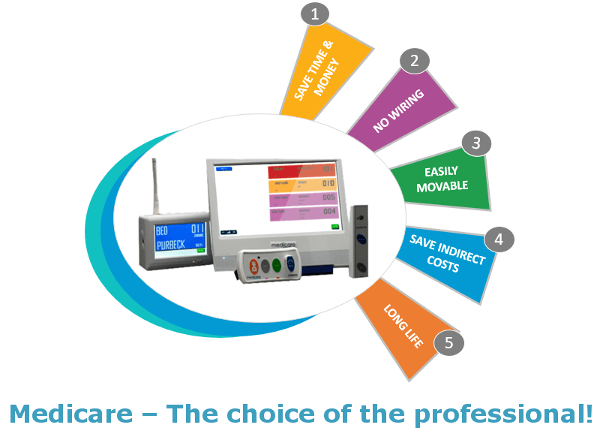
    Rincon brings to you Wireless Nurse Call Systems made by Medicare of UK. Whether your facilities are large or small, the wireless nurse call system will fulfil your needs. Some of the advantages of deploying a wireless nurse call system are described below.

    Wireless Nurse Call System Advantages:

    • Compatibility: One of the wireless nurse call system advantages is its compatibility. Whether you are looking to purchase the whole updated system or pieces to replace parts of an old system, our wireless nurse call system benefits are widespread enough to every need.
    • Easy of installation: Another of the many wireless nurse call system advantages is that the nurse call points and stations are simple to install at any desired location. The wireless characteristic of our system cuts out installation fees, and the pre-programming can be done easily and quickly. Patients can be assured of their safety anywhere, including showers and bathrooms.
    • Affordable, Convenient, Dependable: Along with the other wireless nurse call advantages, other noteworthy characteristics of the system include the affordability, convenience, and dependability of the system. We strive to offer you the best quality of our wireless nurse call system at a price you can afford. Noisy pagers will no longer be necessary thanks to the discreet calls this system can send straight to the nurse call stations.
    • Feature Packed: The wireless nurse call system benefits also include many widespread characteristics. A few of these characteristics include ranking calls in order of importance, compatibility with Windows 10, and alarm reset options.

    Take advantage of the numerous wireless nurse call system benefits today, and contact us on sales@rincon.co.in with any questions.
  • Reblog: The Benefit of Nurse Call Systems

    Wireless paging systems have made communication so much easier in a variety of industries but most especially in the hospital setting. In a place where mere seconds could mean the difference between life and death, having a reliable communications system in place is invaluable. The use of nurse call systems extends beyond the hospital environment also. These wireless systems can be used anywhere that there is an ill-stricken or elderly patient who needs constant monitoring. The benefits of having nurse call systems in place are numerous. Let’s take a further look at these benefits.

    The discreet nature of nurse call systems means that patients get help with minimal attention drawn to them. Communication between staff is also low key which aids in keeping the nurse call systems environment calm and quiet. The nurse’s call button can also be used to call other staff to a room if added help is needed with a patient, thereby not leaving the patient’s side in a time of need.

    Having the room and bed number come up, allows for the staff on duty to be able to go directly to the patient in need and not waste time looking around for the patient in question. This time-saving factor allows them to have more time to concentrate on paperwork and check-ups and only being called when needed. Nurses also have the opportunity to be a little more rested and less stressed allowing for better work output. Emergency doctors wearing the wrist watch receiver can proceed directly to a patient in distress instead of first having to check in at the nurse’s station.

    A nurse call system comes with software that records response times. This can be used by management to keep an eye on staff members and ensure that they have a rapid response to calls.

    Wireless nurse call systems are very cost effective to implement into any medical setting or home environment. In addition, maintenance is not needed very often.

    Completely wireless nurse call buttons mean that there are no unsightly wires hanging about, nor will there be any need to panic if any remodelling needs to be done in the future.

    It is simple to use. The patient and caregiver will each have access to their own call buttons. For patients, this could be a small button device placed next to the bedside or a lanyard which can be worn around the neck. Anytime help is needed, the button would simply have to be pressed to alert the caregiver or nurse. On the caregiver’s side, there is the option to wear the wrist watch or have the alert come through on a display monitor. This way, help is given when it is needed, and there is no need to constantly hover over the patient. In retirement homes, nurse call systems can be used even if patrons have no medical emergency. Each person here would get their own call button to keep on their person at all times, allowing for independence with round the clock assistance whenever needed.

    The original article can be found here.

    To learn more about Nurse Call Systems, contact us on sales@rincon.co.in

  • Repost: Government de-licenses the use of very low frequency bands for the automotive industry

    MUMBAI: The government has de-licensed certain very low-frequency bands for the automotive industry, a decision that could help in making connected and safer vehicles in a country where more than 1.4 lakh people die every year in road accidents.

    Car makers can use this frequency through a radar-based system and offer advanced driver assistance features like blind spot monitoring, adaptive cruise control and lane departure warning.

    These features are already available in advanced markets. According to a notification dated September 16, issued by the wireless planning and coordination wing of the Ministry of Communication and Information Technology, the government has de-licenced use of devices or wireless microphones in the frequency bands of 36-38 MHz, 433-434.79 MHz, 302-351 kHz and 76-77 GHz.

    The move will not only help car manufacturers to improve the safety features of their projects in India, but also boost exports from the country to Europe, Japan and the US, where these features are standard. The likes of Ford, Volkswagen, Hyundai and Nissan export 30-50% of the cars they produce in India, including to Europe.

    In the absence of low-power frequencies, car makers in India could not test or install these safety features in cars meant for exports, people in the know said. In fact, some luxury-car makers had to spend money on de-activating those safety features in India. The frequency band was released after continuous dialogues among the Society of Indian Automobile Manufacturers Association (SIAM), car maker Maruti Suzuki, component manufacturer Bosch and the ministry over six to 12 months. The ministry de-licenced the band after all its concerns were addressed by the automakers.

    “This will enable us to capture export opportunities, particularly in advanced markets,” a Maruti spokesperson said. “This is truly using technology as an enabler for ‘Make in India for the World’.

    The entire Indian auto industry stands to benefit from this move.” Maruti, which was pushing for releasing the frequency, should be the biggest beneficiary as it intends to use the bands for the testing and installation of Autonomous Emergency Braking System (AEBS) in its upcoming premium hatchback Baleno, which will be exported to Europe and Japan.

    AEBS is a low-power radar-based system which detects obstacles and applies brake in emergency situations. Fitment of AEBS in passenger cars will be a required feature for better rating in the European New Car Assessment Programme and it is difficult to sell a car in that market without this system. It uses short-distance (160 m), low-power (55 dBm max) radar operating in the 76-77 GHz band.

    The original article appeared in the Economic Times and is written by Ketan Thakkar and Maulik Vyas. It is available here.

    The purpose of this article is to show that the frequency band 433 – 434.79 MHz is open now. This is the band used by Medicare Nurse Call Systems too.

    To learn more, contact us on sales@rincon.co.in

  • Reblog: Modern nurse call systems are capable of providing much more than nurse call

    On the surface, a nurse call system seems like a straight-forward, almost universally understood concept. Indeed, when they hear the phrase “nurse call,” most people who have worked in healthcare will visualize the same things: dome lights, tones emanating through corridors, and patients using their pillow speakers to change television channels from their beds. They also will picture the chaos of a nurse station while someone speaks to a patient on a nurse call telephone handset.

    While these images all are aspects of nurse call, the modern needs, capabilities and uses of such systems today are often less understood.

    For many years, the technical capabilities of a nurse call system didn’t stray very far beyond what the relevant codes and best practices required. As a result, nurse call systems logically became associated with the hardware and software used to meet those requirements. Today, however, such systems go so far beyond the codes – and can play a role so important to the delivery of care – that the phrase “nurse call” hampers big-picture thinking about the advanced capabilities. Perhaps “caregiver communication and workflow system” more accurately describes where the technology is today.

    The traditional role of nurse call remains relevant, of course, and the basic devices remain fundamental to the healthcare environment. Codes and best practices still require the use of specific devices in specific rooms in specific occupancies. Evolutionary product improvements occur, but the underlying role of a nurse call system remains fundamentally unchanged: for a patient to alert and engage in communication with their caregiver. This aspect of the system is addressed by UL 1069 “Hospital Signaling and Nurse Call Equipment.” (UL 2560 covers similar equipment in senior living facilities.) UL 1069 covers the placement, notification and resetting of staff-initiated and patient-initiated signals intended to alert others to a need, and requires:

    • Audible and visual annunciation of calls at nurse stations
    • Call annunciation at the room’s dome light
    • Visual “call placed” indicator on the patient station
    • Dome light zone visual annunciation
    • Call reset / cancellation

    Facility Guidelines Institute (FGI) Guidelines for Design and Construction of Hospitals and Outpatient Facilities also addresses nurse call and includes specific device requirements based on room type. (While this article uses the word “required,” FGI is a best practices guideline or a code requirement depending on a particular state’s adoption or lack thereof.)

    Components of Traditional Nurse Call

    Master stations provide audible and visual annunciation of calls at the nurse station. A variety of equipment accommodates this:

    • A telephone handset device. Various sizes of LCD screens provide information about calls; some include touch screens.
    • A PC-based console with telephony capabilities. This includes OS-embedded appliance configurations and traditional PCs with large monitors to display high volumes of information.

    Patient stations are located at an inpatient bed and initiate communication to caregivers. The patient usually originates the communication by pressing a button on the pillow speaker, which also can provide television control, lighting control and control of window treatments and room temperature. Caregiver-initiated communications at the patient station include code blue and a request for nurse assistance. (FGI determines what types of communication are required for each room type.)

    The patient station also serves as the wiring hub for several other stations near the patient bed including:

    • Bed connector (wired and wireless options) between the patient bed and nurse call to monitor bed rail position and alert the master station to changes
    • Medical equipment connectors to monitor alarm conditions of bed-side medical equipment at the nurse call master station

    Other stations: Per FGI guidelines, other room types not containing an inpatient bed still require nurse call devices. These stations include:

    • Toilet stations. A pull cord attached to the station summons assistance in getting on or off the toilet and can be activated from a lying position on the floor should a patient fall.
    • Shower stations. These serve a similar purpose as the toilet station but are listed for the wet environment of the shower.
    • Caregiver-initiated stations. These are required by FGI in a range of room types and are used to initiate a request for assistance (i.e., nurse assist call) or to summon a response team (i.e., code blue call).

    Dome lights are placed outside any room that contains an initiating station. The dome light quickly alerts staff to the specific location of the call to expedite the response. Dome lights use multi-colored LEDs and can communicate a variety of information in different ways, including:

    • A unique color to distinguish the nature of the need
    • Various flashing patterns to provide additional information
    • Used in conjunction with staff-locator technology to indicate the type of caregiver in the room

    Dome lights are intended to be mounted so they are visible from the nurse station. When a room is not visible from the nurse station, zone dome lights are used to lead the caregiver in the direction of the call until the room’s light is visible.

    Duty / staff stations allow caregivers therein to be aware of a master station call when they are not at the master station. These are typically rooms where caregivers perform various duties and include nourishment stations, linen rooms, break rooms and similar spaces.

    Duty and staff stations serve similar purposes but there are differences. A duty station provides audible (but not voice) and visual indication that there has been a call initiated on the system. Typically there are three levels of call severity: normal, emergency and staff emergency. A staff station includes the functionality of the duty station and adds two-way voice communication.

    Some manufacturers have stopped producing separate duty and staff stations. Instead they produce a station with two-way voice functionality (traditionally known as a staff station) but market it as a duty/staff station to imply it meets both application needs. This is accurate, but it adds confusion to the difference between a staff and duty station.

    Infrastructure: Traditional nurse call historically has been viewed more like other specialty systems such as fire alarm, paging or security (prior to IP cameras) with its own specialty wiring requirements unrelated to the category cabling world, rather than as a network-based system.

    As part of the evolutionary improvements made in nurse call, even basic nurse call systems with feature sets no deeper than UL 1069 and FGI requirements now have system architectures that have more in common with category cabling than in the past.

    The typical nurse call system today consists of a controller or control panel that is directly on a TCP/IP network, connected using category cabling. The controllers are dispersed through the hospital and their quantity and location are determined based mostly on system capacity considerations. It is not unusual, given that these controller panels are native TCP/IP devices, for them to reside in the telecommunication rooms if the hospital adopts a convergence philosophy.

    A nurse call infrastructure usually uses category cabling downstream of the controller. In most cases the nurse call system dome light is the “wiring hub” for the collection of nurse call stations that are in the room to which the dome light belongs. After bringing category cabling to the first dome light, many brands continue to daisy chain additional dome lights on the same category cabling run. In most cases, it is not a star topology. Despite category cabling being used, this is usually not TCP/IP communications. Rather, it is simply the use of category cabling as the transport mechanism. Most dome lights have an input and output for the category cabling. It is more like a communication trunk line or bus than a conventional structured cabling architecture. The dome lights continue to be daisy chained until the manufacturer’s maximum number of devices or maximum bus length has been achieved. Some manufacturers have their own unique differentiators for the cabling infrastructure, so it is important to understand the intricacies of the product.

    Some manufacturers’ devices do have Ethernet communication over the category cabling. This typically occurs with master stations that use VoIP technology. It is very important to understand how the manufacturer uses Ethernet technology in their solution. Of primary concern is whether the particular Ethernet device is inside or outside of the UL 1069-rated umbrella; this has implications on the acceptability of various termination options of the category cabling in the telecommunications closet.

    The lesson here is that it is important to understand the details of a particular manufacturer’s system topology. Despite category cabling being used in many nurse call system applications, the likelihood is that most of it is not Ethernet communications. How the cabling is ultimately routed, terminated and bundled are project-level design decisions.

    Beyond UL 1069 and FGI

    Recent significant advancements have been made in nurse call, most of which go beyond UL 1069 and FGI requirements. This is where the revolutionary change is occurring, and why “nurse call” may not be a suitable name going forward.

    Driving much of this change is the Affordable Care Act, a game changer for providers in many ways, with nurse call playing a significant role as the healthcare system shifts from a “fee for service” to a “fee for outcomes” structure. Nurse call helps healthcare providers meet the challenges of this new reimbursement model in two primary ways: HCAHPS and operational efficiency.

    HCAHPS and patient satisfaction: In simple terms, HCAHPS – Hospital Consumer Assessment of Healthcare Providers and Systems – is a patient satisfaction survey. A portion of healthcare reimbursements are tied to HCAHPS scores. This means that healthcare, like other industries, is now being rated in terms of “customer service.” Healthcare customers – i.e., patients – may rate their service by answering such questions as:

    • How well did the hospital take care of my needs?
    • How fast did caregivers respond to me?
    • Did they help me when I needed help?
    • Did they bring me a drink when I wanted one?

    Countless examples could be provided. The bottom line is that nurse call systems serve as the primary communication tool between caregiver and patient – and can have a positive or negative influence on a patient’s level of satisfaction. Therefore, the choice of nurse call system, how it is used, and the system architecture serve a significant role in HCAHPS scores.

    A great deal of effort should be spent looking at how to use nurse call technology to decrease the time it takes for a patient to talk to a caregiver and for that patient to see the caregiver in their room. Specific nurse call systems today are engineered to be best suited for specific caregiver models and are no longer a commodity in which every vendor manufacturers the same box on the wall. Some of the most common caregiver models are:

    • Decentralized nursing communication: This is the conventional approach consisting of a unit-based master station at a conventional unit-based nurse station. Patient calls are routed to the unit-based master station and then triaged out to the assigned caregiver.
    • Centralized nursing communication: In ICT terms, think of this as a central phone system operator. One (or more) staff members are dedicated to answering patient calls in a centralized location with the calls coming in from multiple units, multiple floors, an entire building and even an entire campus. Patient calls are triaged out to the assigned caregiver’s mobile telephony devices from this centralized operator. Some convincing evidence from healthcare systems using this approach show meaningful increases in responsiveness to patients through a decrease in most types of response times.
    • Direct-to-caregiver: In this model, the master station takes a backseat and becomes the “fallback plan.” Patient calls are routed directly to the mobile telephony device of the assigned caregiver. The master station (still required by UL 1069 and FGI) is used should the caregiver not respond to the call within the required time. The challenge with this model is that responsiveness to one patient can become an interruption to another patient. In addition, some calls require an RN (i.e., pain medications) and some do not (i.e., “I need a drink.”). Ultimately, however, one caregiver must be chosen to receive the initial call – assuring that in a significant percentage of the cases, the initial caregiver answering the call will be the wrong caregiver for the need.

    Operational efficiency: Nurse call plays a significant role in automating, monitoring, reporting and simplifying processes in the hospital. Indeed, most nurse call manufacturers now talk about “workflow” in their marketing materials and sales presentations.

    Many current nurse call products that deal with workflow processing are hardware-focused solutions requiring a caregiver to go to a fixed location to initiate a workflow process. Some manufacturers take a different approach based on the highly mobile environment of healthcare. They believe workflow processing should be done while mobile, so they focus more on a software approach using the caregiver’s mobile devices in lieu of a fixed hardware location.

    Whether hardware- or software-driven, today’s nurse call can serve as the system that handles clinical workflows in a variety of ways:

    • Automating notification to housekeeping (when a patient room needs to be cleaned) and to the admission, discharge and transfer (ADT) system (when a room is ready for admission) to improve room churn
    • Automating notification when a patient is ready to be seen by a particular specialist, when a particular lab result is available, or when a patient is in need of transport staff, etc.
    • Automating the check-in process for rounding, requesting chaplain services, requesting a family member consultation, etc.
    • Powering the intelligence behind “bed boards,” the large monitors displaying dashboard information about the status of the room and the staff and patients within it

    Making the right (nurse) call

    The recent advances in modern nurse call systems mean that there are proper applications and misapplications of any specific nurse call solution depending on the unique project requirements.

    A well-informed selection process needs to exist in order to properly recognize and vet these nuances between systems.

    The end goal is for the selected nurse call system’s unique characteristics to meet the needs of a particular healthcare facility’s workflow and care delivery model. This will improve patient satisfaction, HCAHPS scores, operational efficiency, and ultimately the facility’s bottom line.

    The original article can be found here.

    To learn more about Nurse Call Systems, contact us on sales@rincon.co.in

  • Reblog: Value of the new nurse call systems in hospitals

    For many years hospitals have been working hard to eliminate communication challenges and improve nursing workflows. Whether it’s locating a nurse, or responding to a patient’s request for more pain medication — it has been notoriously time consuming and difficult to streamline these workflows. One of the approaches to resolving this is through the implementation of a unified nurse calling system. This solution offers a way for nurses and patients to interact, and for nurses to get real-time notification on patient status and respond to patient requests. Previously for some of these systems, excessive wiring in patient rooms and nurses’ areas was a must, which made installation expensive and hard quite cumbersome. Fortunately though, they did end up providing tremendous value, and thus were worth the costs in the end.

    Nurse calling systems have seen several changes throughout the years. Some of the early models were based on simple light indicators — some still being used in doctors offices today — where a patient has the option to press one of few color coded buttons, causing a board at the nurses’ station to light up, indicating the room number and the color pressed.

    But in today’s market, there have been many new solutions that can do more than just light exchange. Many are IP based systems that can exchange messages, voice and data. Some of the newer nurse calling systems offer several advantages, such as:

    • The ability to use RTLS (Real-time Location System) to locate a nurse on the floor
    • Two-way communication between patient-nurse or physician-nurse
    • Integration with heart monitors and other medical devices to alert nurses of a patient’s critical condition
    • Computerized dashboards that show real-time location of nurses, room status, patient info and current staff distributions
    • Wireless communication as the backbone to utilizing existing infrastructure without incurring additional wiring costs
    • IP based
    • Scalable, which enables the system to grow with demand
    • Ease of manageability and enabling IT departments to manage and support the solution
    • “There is an App for that” — well I have not seen a system with a mobile app yet, but I am certain there has to be one out there
    • Interoperability where the system can interact with other medical devices as well as HIS (Hospital Information System)

    It is very clear that new nurse calling systems will help improve patient care, as they are a good way to increase efficiency, drive positive outcomes, and help nurses provide better care for their patients.

    The original article can be found here.

    To learn more about Nurse Call Systems for usage in the healthcare vertical, contact us on sales@rincon.co.in

  • Benefits of Nurse Call Systems for the Healthcare Industry

    Nurse call systems are an increasingly prevalent piece of apparatus within care homes and nursing facilities and when you take a look at the benefits of this type of medical equipment, it quickly becomes apparent just how instrumental they are when it comes to improving patient safety and streamlining nurse’s workload and making them more efficient in general.

    But what are the main benefits of installing nurse call systems within healthcare facilities and why are they become such an essential tool for nurses and healthcare professionals?

    A Brief Overview of Nurse Call Systems

    In a nutshell, nurse call systems are a form of early warning system which allows an alarm to be raised when a patient of a hospital or resident of a care home requires medical assistance from a member of the nursing staff. It allows nurses to react in a much more timely fashion and gives them a much better overview of the facility as the vast majority of today’s wireless nurse call systems are multi-zonal and allow nurses to oversee their patient’s requirements much more efficiently. The main facilities in which this type of technology is typically deployed is that of:

    • Residential care homes
    • Hospitals
    • Hospices
    • Medical clinics

    All of the above healthcare facilities are likely to have some form of nurse call system installed on their premises as they are becoming ever more essential to help guarantee patient safety and also to provide peace of mind to the relatives of loved ones within the hospital or care home. Three of the biggest advantages that emerge through the use of nurse call systems include:

    1. Cost – Nurse call systems are a highly cost-effective solution for monitoring the wellbeing of patient’s and ensures that their requirements are met as fast as possible to help avoid any unnecessary suffering or discomfort. This type of technology allows nurses to monitor different zones within a hospital environment and this can help reduce costs in terms of staffing.
    2. Speed – When it comes to looking after patients or residents in hospitals and care homes, there is nothing more important than responding to emergency rapidly and nurse call systems are a piece of technology which admirably facilitate this.
    3. Versatility – This form of technology is highly versatile and can be adaptable to most situations within a hospital or care home facility. Nurse call systems will act as the sort of early warning system that is necessary to improve patient safety records and ensure that patients are treated as quickly as possible.

    The original article can be found here.

    To learn more about Nurse Call Systems for usage in the healthcare vertical, contact us on sales@rincon.co.in

  • Nurse Call Systems – Wired or Wireless?

    Healthcare units are always facing the vexed question – Should they go in for a wired or wireless nurse call system? Which is better and why?

    If you ask a manufacturer, he will no doubt offer a somewhat biased opinion towards the product he is selling.

    Each system has its advantages and disadvantages depending on the situation.

    We will try and give you the pros & cons of both types of system enabling you to make an informed decision.

    If you are installing into a new facility, go for wired. If you need to install into an existing, operating premises then go for wireless. Having stated that, let us delve a bit deeper.

    The wired system calls for the hassle and the upheaval required to install cables. If you can withstand that, then wired is probably the best option. You could opt for hiding the cables in the walls and flooring or use a trunking system. Hiding the cables is a neater option, but this call for chasing the walls, holes for the boxes etc. Also if you have to lay the cables through the floor, God forbid, it can be a huge mess. The cables have to run through the corridors through the false ceiling,

    What happens if you have to refurbish the room at a later date or move the bed? Also while the laying of cables is being carried out, it renders the room useless. Wireless systems score heavily here against wired systems.

    Most wireless systems can be installed and commissioned in as little as a single day. Once the system is designed and installed properly, there is no need for boosting radio signal strength.

    If you were to opt for trunking over wires, you will obviate the need for chasing walls. However, the other problems continue as before. Trunking stands out like a sore thumb and makes it unappetising visually.

    To learn more about Nurse Call Systems for usage in the healthcare vertical, contact us on sales@rincon.co.in