Tag: NurseCallSystem

  • When Time Becomes the Hidden Cost in Nurse Call System Planning

    Most hospitals compare wired and wireless nurse call systems by looking at hardware, price lists and features. What often gets overlooked is time. Not the response time of the system, but the time it takes to plan, coordinate and install a wired setup inside a live or under-construction hospital.
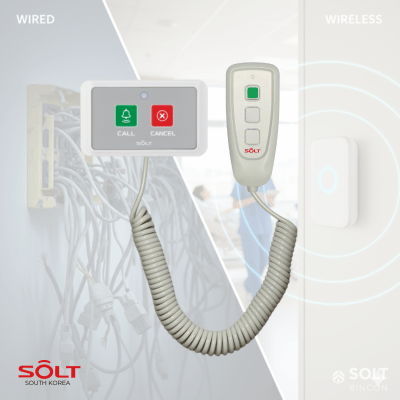
    A wired nurse call system is deeply dependent on construction timelines. Conduits must be planned at the time of laying the slab, long before the walls even exist. Engineering drawings need to be perfect because once the concrete sets, there is no turning back without breaking something open. As the building comes up, every corridor and every room must be aligned with cable routes. Teams have to be on site during multiple stages—slab, brickwork, plaster, finishing and painting—just to ensure the system is installed correctly.

    All this means coordinating numerous people across different teams. It also means delays if the wiring is not ready on time or if another contractor has used the same conduit by mistake. By the time the system is ready, the project may already have lost weeks on planning, supervision and labour.

    A wireless nurse call system avoids these bottlenecks. There is no need to run cables in advance, no need to freeze room layouts early and no pressure to finish before the painters arrive. Units can be installed once the walls are ready and the beds are placed. If a room layout changes, the system can adapt immediately without breaking plaster.

    In a hospital, time spent on construction delays is time taken away from operational readiness. A fast, flexible and installation friendly system puts the hospital in control of its schedule instead of depending on construction teams and site conditions.

    Wireless does not only save labour. It saves time, planning effort and unnecessary complexity.

    Conclusion:

    While both wired and wireless nurse call systems have their merits, wireless technology is increasingly shaping the future of hospital communication. If your facility values growth, efficiency and resilience, a wireless nurse call system is worth the investment.

    If you would like to explore a wireless nurse call system that works with your timeline rather than against it, call +91 9321064487 or email sales@rincon.co.in.

  • Wireless Doesn’t Always Mean WiFi: Why RF is a Better Choice for Nurse Call Systems

    When most people hear the word  wireless, they immediately think of WiFi. It’s what connects our phones, laptops and smart TVs. But in hospitals, when it comes to something as critical as a nurse call system, WiFi might not be the best option.

    That’s where Radio Frequency (RF) technology comes in. While both WiFi and RF operate wirelessly, their use cases and reliability differ significantly—especially in clinical settings.

    What’s the difference?

    WiFi is designed to handle heavy data like video calls, browsing and media streaming. It works on high frequencies like 2.4 GHz and 5 GHz, which can often get congested and interfere with other systems. RF technology used in nurse call systems, typically around 433 MHz, is designed for short, quick, reliable signal transmission—exactly what’s needed in an emergency.

    Why RF is better for nurse call systems
    • Independence from IT networks:  RF systems don’t rely on internet or LAN connections, so they continue working even if the hospital network is down.

    • No interference:  The 433 MHz frequency avoids overlapping with medical equipment and IT systems, making it safe and stable.

    • Reliable coverage:  RF signals penetrate walls and medical infrastructure better than WiFi, ensuring consistent performance.

    • Lower power consumption:  Devices using RF consume less power, making battery-operated systems more durable.

    • Simpler and cost-effective:  RF systems are easy to install without the complexity of routers or cybersecurity concerns.

    Conclusion:

    For hospitals,  wireless doesn’t always mean WiFi. When patient safety depends on quick response times,  RF-based wireless nurse call systems  offer a dependable, low-maintenance solution that just works.

  • The System Has Failed! – What Happened Next Will Restore Your Faith in Teamwork

    It was 7:42 PM. The office lights were off, laptops shut, team members halfway home—or halfway through dinner. That’s when the phone rang.

    “We need urgent help. Our nurse call system has failed. A full ward is down.”

    No preamble. No time for pleasantries. Just a hospital in distress, patients at risk, and a communication lifeline snapped in one of the city’s most reputed medical institutions.

    There Was No Time to Lose

    Within minutes, our internal Slack support group lit up. Teams across functions—logistics, support, coordination—were activated. Instructions flew fast, responses were faster. Everyone knew what had to be done. No meetings. No emails. Just action.

    By noon the next day, SOLT Wireless Nurse Call Systems were packed and ready. By sundown, the ward that had gone silent the night before was alive again—with fully functioning, responsive wireless call points beside every bed and in every bathroom.

    No cables. No construction. No delays.

    Not Just a System—A Lifeline

    When patients press a call button, they’re not just asking for water, pain relief or a blanket. Sometimes, they’re pressing it for their life. When a nurse can’t hear that call, it’s not a missed message—it’s a missed moment that matters.

    That’s what this story reminds us of. It’s about how technology + teamwork can create magic under pressure. And how wireless systems like SOLT can step in when the wired world lets us down.

    Want to know how the whole operation unfolded?

    👉 Read the full case study here

    Why does this matter?

    • Hospitals can’t afford communication downtime. Not for a minute.
    • SOLT Wireless Nurse Call Systems are not just quick to install—they’re reliable, scalable and built for emergencies.

    Highlights:

    • Fully operational ward in under 24 hours

    • No rewiring, no structural changes

    • Seamless deployment with minimal disruption

    • Patients and staff reconnected with zero fuss

    If you’re still relying on ageing wired systems, maybe it’s time to ask:

    Can your hospital afford a communication breakdown?

    Contact us today. We’re here if you ever need us—in an emergency, or better still, before one happens.