Tag: Patient Safety

  • “Silent Guardians: How Pressure Mats Are Easing Nurses’ Hidden Struggles”

    Scene: A quiet hospital ward, 3:00 a.m.

    Anjali adjusted her scrubs, her eyes scanning the dimly lit corridor. The faint beeping of monitors echoed in the background as she approached the nurses’ station. There sat Ravi, his shoulders slumped and dark circles shadowing his tired eyes.

    Anjali: “Ravi, are you okay? You look completely wiped out.”

    Ravi: (exhaling deeply) “It’s Mrs. Sharma again, Room 204. She tried to get out of bed on her own last night. I caught her just in time. But it’s always the same—what if I hadn’t been there? What if I miss something next time?”

    Anjali nodded, understanding the weight of his words. As nurses, they carried more than just their responsibilities; they carried the relentless worry of what could go wrong.

    Close-up of a healthcare professional in blue scrubs with a stethoscope and clipboard.

    A Silent Epidemic in Caregiving

    Ravi’s fear wasn’t misplaced. For caregivers, the struggle is as much emotional as it is physical. The worry isn’t a passing thought—it’s a constant, gnawing presence. According to the World Health Organization (WHO):

    • 1 in 4 senior citizens falls every year globally.
    • Falls are the second leading cause of accidental injury deaths worldwide.
    • Over 37 million falls annually result in injuries requiring medical attention.

    In hospitals, a large number of these falls happen when patients try to leave their beds unaided—leading to fractures, head injuries, or worse.

    For nurses like Ravi, every fall feels personal. They second-guess themselves, wondering if they could have done more. The emotional toll builds silently, leading to stress, exhaustion, and even burnout
    A Quiet Revolution: Pressure Mats

    Enter pressure mats—a solution so subtle yet transformative that it changes the narrative for both patients and caregivers.

    That morning, as Ravi sipped his coffee, Dr. Kapoor, the hospital administrator, joined the conversation.

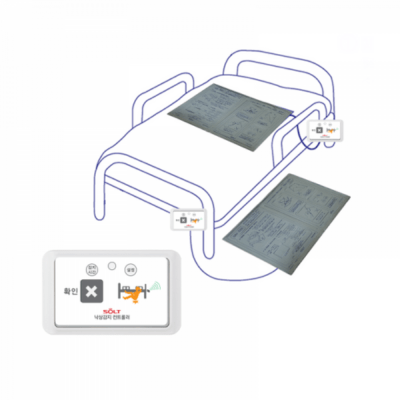
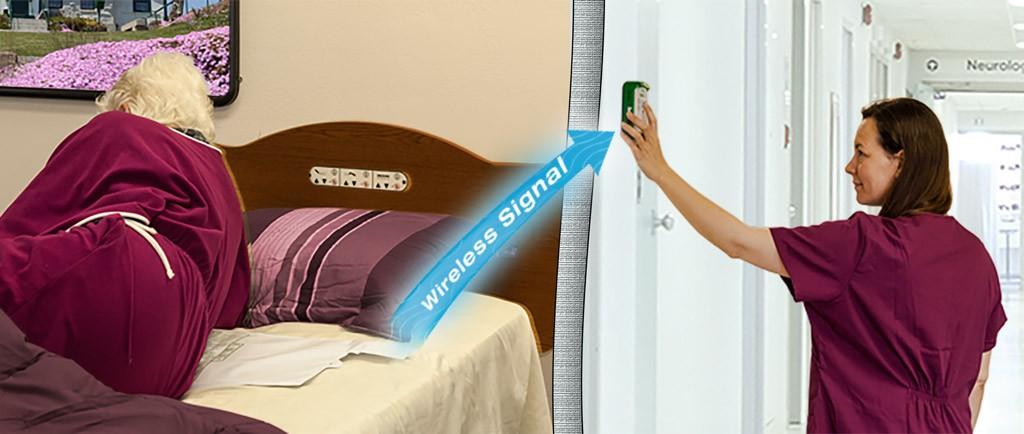
    Dr. Kapoor: “You’re not alone in feeling this way, Ravi. That’s why we’ve introduced pressure mats. Placed under a patient’s bed or at key exit points, these devices detect movement and immediately send an alert through the SOLT Wireless Nurse Call System. It’s like having an extra set of hands for every patient.” Ravi leaned forward, intrigued.

    Ravi: “So, the moment Mrs. Sharma tries to get out of bed, we’d know immediately?”

    Dr. Kapoor: “Exactly. The alerts ensure you’re there when she needs you most. It’s not just about preventing falls; it’s about lifting that constant weight of worry off your shoulders.”

    The Ripple Effect of Reassurance

    Within weeks of introducing the pressure mats, Ravi felt the difference—not just in his work but in himself.

    • Peace of Mind: “I can finally focus on patient care without the anxiety of constantly watching over my shoulder,” he shared.
    • Timely Interventions: Alerts allowed Ravi and his team to act swiftly, preventing accidents before they happened.
    • Emotional Relief: The once-heavy cloud of stress lifted, replaced by a quiet confidence that the system had their back.

    Dr. Kapoor echoed these sentiments.

    Dr. Kapoor: “These mats are more than tools. They’re a lifeline—for the patients who are safer and for the nurses whose well-being is just as important. Integrated with the SOLT Wireless Nurse Call System, they make caregiving smarter and more compassionate.”

    A Lifeline, Not Just a Device

    For the elderly, a fall is more than a physical injury—it’s a loss of confidence and independence. For nurses, the emotional toll of these incidents can be profound. Pressure mats bridge this gap, creating an environment where safety meets empathy.

    With senior citizens at high risk and caregivers bearing the emotional burden of their safety, these mats are more than equipment. They are silent guardians, ensuring every patient is looked after and every caregiver is supported.

    If you’re looking to transform your facility, SOLT Pressure Mats offer more than peace of mind—they offer a chance to redefine caregiving.
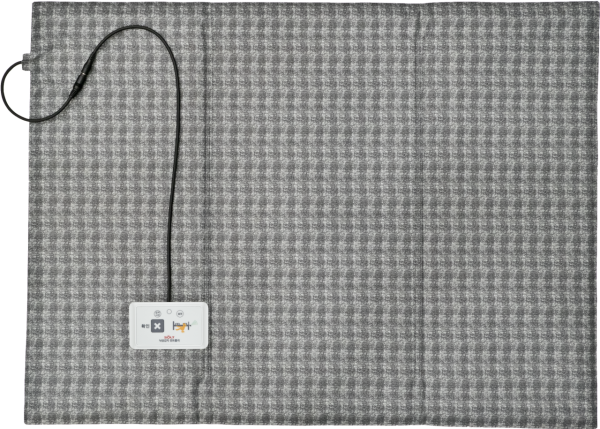
    PressureMatx1280
    SOLT – Pressure Mat

    This is not just a product. It’s a promise: to protect, to reassure, and to care. Contact us to know how SOLT Pressure Mats can make the difference.
  • Reblog: Fall prevention safety bundle: Collaboration leads to fewer falls

    At St. Joseph’s Hospital and Health Center in Syracuse, NY, we’re committed to providing a safe, comfortable, caring environment for our patients. We believe all patients deserve to be cared for in the most humane way possible to preserve their dignity and individual rights. This means ensuring our patients’ physical safety, including preventing injuries from falls, during a hospital stay.

    Central to our fall prevention program is the hospital’s patient safety care bundle. We found that bundling (standardizing) fall prevention practices prevents more falls than nonbundling or variable approaches. We also learned that involving all unit and house-wide staff in this approach inspires greater buy-in and participation and fosters best practices.

    Our bundling journey

    St. Joseph’s didn’t always use bundling to prevent falls. Our journey began in 2010 when I was asked to lead a task force to review and revise the hospital’s fall prevention program. After reviewing many articles in the nursing literature, our task force decided to take different concepts that proved effective and combine them into the bundled approach.

    All clinical and nonclinical staff were taught how to use the new bundle. Rapid-cycle piloting in select care areas was implemented. Following a process and outcome review and revision of the bundling approach, full implementation followed throughout our facilities. St. Joseph’s bundled approach to fall prevention includes safety huddles, hourly rounding, use of the Morse scale, individual care plans, and post-fall debriefings.

    Safety huddle: To consistently identify patient safety needs for all shifts, each unit has a safety component as part of its shift-change huddle. The safety huddle must be documented on a form designed by the unit.

    Hourly rounding: Nurses round on patients hourly. The RN uses a consistent, caring conversation, which starts with an introduction, such as, “Mrs. Jones, I’m Marty, your nurse, and I’m here to check on you.” Unless necessary, sleeping patients aren’t awakened. Rounds are documented in the electronic documentation system. The RN admitting new patients explains that hourly rounding is done to anticipate their needs and ensure their safety.

    Morse scale: The Morse fall scale assessment tool, which is individualized for each patient, assesses for the following measures:

    • history of falls
    • secondary diagnosis
    • ambulatory aid
    • I.V.s/normal saline lock
    • gait/transfer
    • mental status.

    According to St. Joseph’s fall prevention protocol, the Morse scale is used upon admission of every inpatient 14 and older, once during every day shift, when a patient’s level of care changes, upon transfer, and after a fall.

    Individualized care interventions: The following interventions are implemented based on individual patient needs:

    Falls that take place while the patient is hospitalized are documented on the plan of care under the Morse scale section. When physical therapy or medication review is requested, it’s documented in the plan of care under the safety and activity section and communicated during handoff.

    Nurses have the option to ask for a gerontology review, which includes consultation with an expert gerontology RN and a pharmacist, and a physical therapy screen.

    Door signs or door magnets alerting staff to the patient’s risk of falls must be used when the patient’s Morse scale score is ≥ 85 (considered high risk), when staff believe the patient is at risk of falling despite a lower fall assessment score, and when patients have an epidural infusion until they’re able to ambulate independently.

    Bed exit and chair alarms* must be used for patients who overestimate or forget their limitations and for those with an impaired gait transfer (as documented in the Morse assessment). Patients with bed exit alarms also must have a chair alarm when out of bed. Any patient with a bed exit alarm, chair alarm, or door magnet is not to be left alone on the commode or in the bathroom.

    Post-fall defusing: Immediately after a fall, we hold a debriefing with the staff involved with the patient’s care. At the debriefing, similar to the huddle concept, we review and discuss the event to help formulate a collaborative approach for immediate care, treatment, and review and prevention of potential future falls.

    Practice implications

    Since our implementation of the bundled approach to fall prevention, we have seen a decrease in the number of falls and a reduction in the severity of injury when falls do occur. (See Reduction in falls.) Perhaps most important, though, is that an all-staff approach to quality care inspires greater buy-in and participation, which fosters best-practice outcomes.

    Case study

    A man in his late 80s was admitted to the medical-surgical unit after several falls at home, including one that resulted in a hip fracture. He had a urinary tract infection (UTI) and was confused and sleep deprived. His family reported that he’d fallen many times at home. Our challenge was to keep him safe while treating his UTI and giving him the rest he needed to get well.

    The patient’s admitting nurse evaluated him with a Morse scale of more than 85, so a magnet indicating this designation was placed on his door and every shift was notified of his fall risk every day. In addition to the door magnet, our interventions included a bed alarm when the patient was in bed, a chair alarm, hip protectors to add extra protection if he fell, and floor mats* on each side of the bed.

    As a result of our interventions, the patient got much-needed rest, his UTI resolved, his cognition improved, and he was able to return home. We gave the hip protectors to the family for use at home.

    Marty Pond, MS, RN-BC–Gerontology is the NICHE Coordinator and Falls Chairperson, St. Joseph’s Hospital and Health Center, Syracuse, New York.

    The original article can be found here.

    To learn more, contact us on sales@rincon.co.in