With the ever increasing number in Hospitals, nursing home and home healthcare facilities, there is a growing need for better patient response time along with eliminating nurse fatigue. Products can also be integrating the devices with different diagnostic solutions and technologies.
A Nurse Call system collects the information that matters, identifies opportunities to improve care and delivers actionable insight to caregivers and patients, all supported by clinicians every step of the way.
The system also transmits immediate notifications and alerts. By integrating staff locating and nurse call systems, drastically reduces the time wasted and increases efficiency by automating workflow processes.
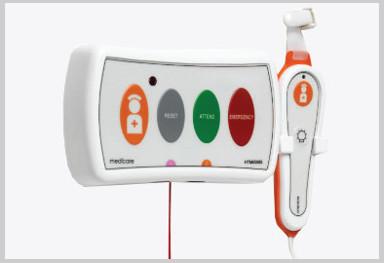
When a staff member enters a room, the system automatically detects and records their presence while canceling the call alternatively the staff member can reset the button manually. To help with potential liability and billing issues, the solution can also document exactly how long a staff member is in a patient room.
Patient safety and satisfaction:
Proactive alerts about the patient, room and bed status can be sent directly to caregivers, through nurse call or wireless devices, to provide the real‐time information needed to drive patient safety and satisfaction.
Caregiver productivity:
Nurse Call provides patient information to caregivers where and when they need it, giving them more time to deliver direct, quality care. Innovations such as the graphical touch screen patient station, automated patient surveillance and integrated staff locating may help improve caregiver adoption of technology.
What is a nurse call system?
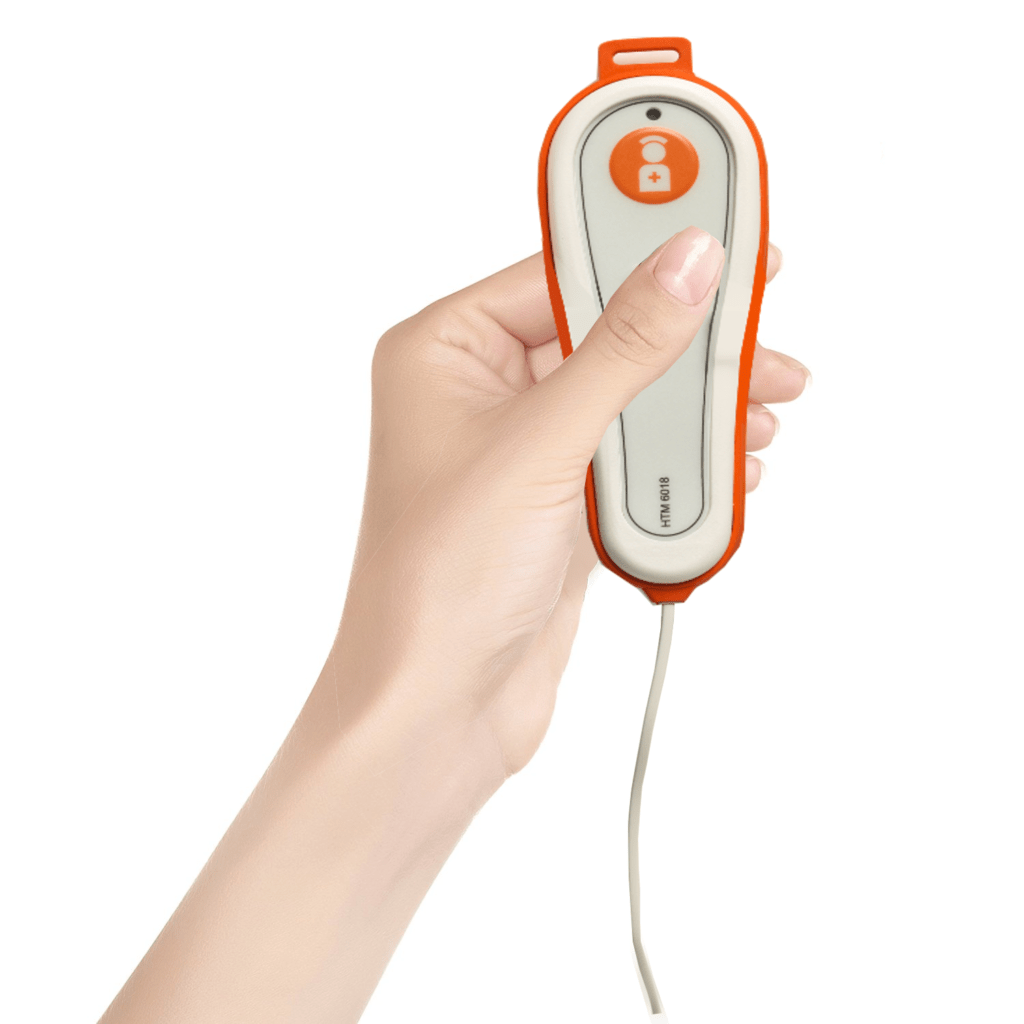
A nurse call system is an alert mechanism by which ailing patients in hospitals or homes for the aged or such can inform nurses or other health care givers remotely of their need for help. It consists of a button placed somewhere on or around the hospital bed which when pressed, alerts the staff at the nurse’s station, and usually, a nurse or nurse assistant responds to such a call. Some systems also allow the patient to speak directly to the staff; others simply beep or buzz at the station, requiring a staff member to actually visit the patient’s room to determine the patient’s needs.
[icon type=”glyphicon glyphicon-asterisk”] Benefits of Nurse call system:
[wc_accordion collapse=”1″ leaveopen=”0″ layout=”box”]
[wc_accordion_section title=”Benefits to patients”]
- Enables the patient who is confined to bed and has no other way of communicating with staff to alert a nurse of the need for any kind of assistance
- Enables a patient who is able to get out of bed, but for whom this may be hazardous, exhausting, or otherwise difficult to alert a nurse of the need for any type of assistance
- Provides the patient an increased sense of security
- The call button can also be used by a health care staff member already with the patient to call for another when such assistance is needed, or by visitors to call for help on behalf of the patient
- Can call for services without disturbing nurses on wired and wireless call devices
- Handsets can control the entertainment system.
[/wc_accordion_section]
[wc_accordion_section title=”Benefits to caregivers”]
- Spend more time with the patients rather than co-ordination work
- Give help where it’s needed most
- When the caregivers don’t have time, someone else does
- Read the display from across the room
- A calmer environment for both caregivers and their patients
- Patient handsets for every need
- Safely monitoring all medical alarms
- Keeping track of confused patients
- Making work easier with workflow support
- Log all events
- A simple way to connect to different systems
- Wander control keeps track of confused patients
- Different workflows are supported, including escalation chains
- Logging and viewing for easy overview, or in-depth analysis of events.
[/wc_accordion_section]
[/wc_accordion]
[panel style=”panel-default”]
[panel-header]
Application Areas
[/panel-header]
[panel-content]
Nurse Call systems are used in many environments, including but not limited to:
- Hospital Wards
- Nursing Homes
- Hydrotherapy Units
- Swimming Pools and Gyms
- Operating Theaters
- Day Clinics
- Private Patient Rooms
- High Dependency Unit
- Consulting Rooms
- Disabled Toilets
- X-ray Departments
- Temporary Buildings
[/panel-content]
[/panel]
We offer both wireless as well as wired nurse call systems depending on the requirements of our customers. Please contact us for a detailed discussion on which system would be the right fit for your needs.