Tag: Radio Frequency

  • Understanding Radio Frequency Technology in Hospitals: Risks, Safety, and Applications

    Radio frequency (RF) technology plays a vital role in modern healthcare, enabling wireless communication between devices for seamless operations. However, concerns about its safety and potential interference with medical equipment often arise, particularly in hospital environments.

    This blog explains how RF technology is used in hospitals, addresses its safety, and highlights why the SOLT Wireless Nurse Call System is an ideal choice for healthcare and beyond.

    What is Radio Frequency?

    Radio frequency refers to the range of electromagnetic waves used for wireless communication. Operating between 3 kHz and 300 GHz, RF enables data transmission without physical connections.

    Where is RF Technology Used?

    RF technology is integral to many aspects of daily life, including:

    • Telecommunication: Mobile phones and Wi-Fi rely on RF to transmit data.
    • Entertainment: Television and radio broadcasts use RF.
    • Smart Devices: Remote controls and smart home devices like voice assistants depend on RF.
    • Healthcare: Wireless systems in hospitals, such as patient monitors and nurse call systems, use RF to enhance efficiency.

    While some RF bands, like 433 MHz, are open for general use (e.g., car key fobs), others, such as those used by telecom providers, are tightly regulated and auctioned by governments.

    Is RF Safe for Humans?

    RF exposure from most consumer and hospital devices is safe, as it operates at low power levels and complies with strict safety guidelines.

    • Safe Levels: Devices operating under 300 GHz are considered non-ionizing, meaning they don’t damage DNA or tissues.
    • Harmful Levels: High-power RF, such as industrial equipment, can cause thermal effects like tissue heating.
    • Regulations: Standards set by organizations like the FCC ensure devices remain well within safe exposure limits.

    How is RF Used in Hospitals?

    RF technology supports various critical functions in hospitals, enhancing patient care and operational efficiency:

    1. Wireless Patient Monitoring Systems
      • Devices like heart monitors transmit real-time data to central systems for continuous patient observation.
    2. Infusion Pumps
      • Wireless pumps share accurate medication details and patient data, improving care efficiency.
    3. Nurse Call Systems
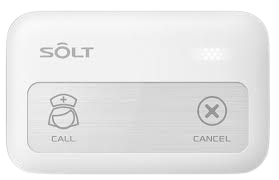
      • Wireless systems, such as the SOLT Wireless Nurse Call System, allow patients to alert caregivers instantly, ensuring timely responses.
    4. Wi-Fi and IoT Devices
      • Smart beds and diagnostic tools leverage RF for streamlined operations.
    5. Communication Systems
      • RF-based pagers and wearable devices enable quick coordination across hospital departments.

    Why 433 MHz is Ideal for Hospitals?

    The SOLT Wireless Nurse Call System operates on the 433 MHz frequency band, making it a safe and reliable choice for healthcare environments:

    • Non-Interference: This band avoids overlap with frequencies used by critical medical equipment.
    • Robust Connectivity: Reliable communication even in environments with multiple RF systems.
    • Low Power: Operates at minimal power levels, adhering to global safety standards.

    Why Choose SOLT Wireless Nurse Call Systems?

    Effective communication is essential in healthcare. SOLT Wireless Nurse Call Systems provide:

    • Instant Alerts: Real-time notifications for timely caregiver responses.
    • Flexible Installation: Wireless setup eliminates the need for extensive cabling, adapting to any hospital layout.
    • Advanced Features: Includes Code Blue alerts and public address system integration, making it future-ready for modern hospitals.

    Beyond Hospitals: RF Technology in Other Settings

    The safe 433 MHz frequency also makes our systems suitable for:

    • Luxury Homes: Enhance convenience and safety with our Butler Call System.
    • Restaurants and Hotels: Improve customer service and staff coordination with wireless call systems.
    • Corporate Offices: Streamline operations with efficient communication systems.

    Conclusion: RF Technology for a Safer Tomorrow

    RF technology is indispensable in healthcare, powering systems that improve patient care and streamline operations. The SOLT Wireless Nurse Call System, operating on the safe 433 MHz frequency, ensures reliable communication without interfering with critical medical devices.

    Whether in hospitals or other settings, our RF-based systems provide unparalleled safety, efficiency, and performance.

    🔗 Learn more about SOLT Wireless Nurse Call Systems here. Read More

    Let’s create a safer, more efficient healthcare environment with trusted RF solutions.

  • RF-Based Wireless Nurse Call Systems: Choosing, Installing, and Embracing the Latest Technology

    Alia: Hey Samir, have you heard about nurse call systems? I’ve been researching them lately, and they seem to be a game-changer in healthcare facilities.

    Samir: Yes, I have! They provide vital communication between patients and healthcare staff. But I must admit, I’m not entirely sure how to choose the right one.

    Alia: Well, let’s dive into it together! A nurse call system is a communication solution that enables patients to alert nurses or caregivers when they need assistance. When selecting a system, consider factors like ease of use, reliability, and scalability to meet your facility’s needs.

    Samir: That makes sense. But what about wireless nurse call systems? Are they different?

    Alia: Absolutely! Wireless nurse call systems utilize radio frequency (RF) technology, allowing for seamless communication without the need for wiring. They provide flexibility and mobility, allowing healthcare providers to respond promptly to patient calls from anywhere within the facility.

    Samir: That sounds fantastic! So, what are the common elements of a nurse call system?

    Alia: Great question! A nurse call system typically consists of a call button or pull cord for patients, a central control panel for staff, and alerting devices such as wearables or light indicators.

    Samir: It seems like a comprehensive solution. But how would one install a nurse call system?

    Alia: The installation process may vary based on the specific system and facility requirements. Typically, it involves placing call buttons in patient rooms, strategically positioning control panels at nursing stations, and configuring the alerting devices. It’s essential to work closely with the system provider to ensure proper installation and testing for optimal performance.

    Samir: Got it! But, Alia, I’m curious. Does the system use the latest technology?

    Alia: Absolutely! Technology is continually evolving, and nurse call systems have embraced the latest advancements. These innovations improve response times, enhance staff efficiency, and ultimately elevate patient care.

    Samir: That’s impressive! It’s fascinating to see how technology is transforming healthcare. I’m convinced that implementing an RF-based wireless nurse call system can truly make a difference.

    Alia: Absolutely, Samir! It’s all about empowering healthcare providers to deliver the best care possible. With the right nurse call system, we can enhance patient safety, improve communication, and create a more efficient workflow for everyone involved.Remember, each facility’s needs may vary, so consulting with an expert and exploring different options is essential. Together, let’s embrace the power of technology to revolutionize patient care and make a positive impact in healthcare environments.

  • Wireless Nurse Call Systems in India

    Nurse call systems have revolutionised the way in which patients communicate with their care givers and hence the health care industry as a whole all over the world. With the advent of wireless nurse call systems in India, this improvement in communication has only risen further. Wires are no longer the limiting factor and the absence has only taken the health care industry into another league.

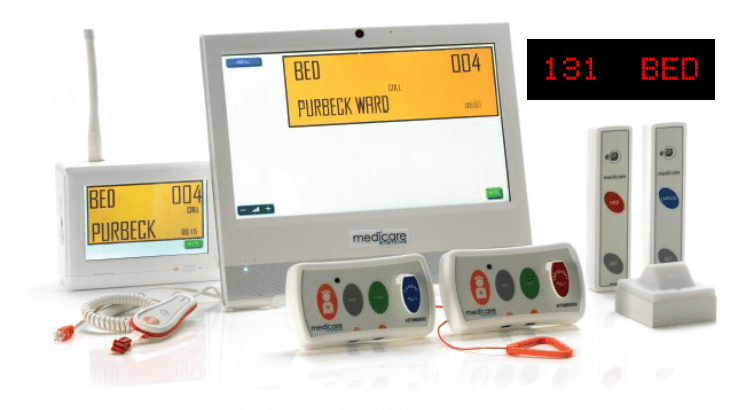
    We are pleased to introduce Wireless Nurse call systems from Medicare, UK which are HTM compliant and work on radio frequency. Thus you don’t need to worry about any kind of interference with medical equipment.

    From a patient’s perspective, nurse call stations no longer have a fixed location. The button can be fixed onto the bed head panel for easy access or carried around when patients are not confined to the bed. If the patient is confined to bed, we have the pear push button which can be clipped to the patient’s uniform or to the pillow cover. These features allow patients who rely on the help of nurses, when they are in dire need, to be able to effortlessly ask for help.

    The systems are splash proof and so can be fitted in the toilets as well. The Wireless nurse call system can also be attached to a lanyard, allowing patients to be able to go for a walk in the passage or outside, yet be comforted that help is just a press of the button away.

    For nurses / caregivers, the nurse call system allows for immediate response to a query. Nurses no longer have to be stationed at the main station to be able to know when help is required. There can be door lights outside the room to indicate if the patient inside has called. We can have workflows defined so that if the patient is not attended to in say 5 minutes, the call would be escalated to some other nurse station or maybe the Head of Nursing as the requirement may be.

    Where can one use Nurse Call Systems?

    Suggested areas of usage of Nurse call systems include but are not limited to:

    • Hospitals – The obvious usage is to call a nurse or call for assistance when the patient needs it.
    • Day clinics, nursing homes or old age centres need nurse call systems that are on the go. Patients here, are into their recovery process and this means starting to get by on their own, though still with direct access to medical staff. Wireless call buttons allow for these patients to be able to roam about freely and take in their leisurely walks by carrying it around with them. If they would need help getting back to their room, then a simple press on the call button would give them instant help.
    • At Home use is widely becoming an angle for care, whether for a person in recovery or for old age care. The simple system makes the installation of nurse call systems a breeze. This need no longer be a drawn out process of getting the wiring up and then hassling with the interiors.

    In the next few posts, we will talk about the different components of a Wireless Nurse Call system and their functions.

    To learn more, contact us on sales@rincon.co.in