Tag: Sensitive information

  • Reblog: Are law firms required to use secure solutions for sending documents?

    Finding the right balance between cost-effectiveness, security features, and adherence to data governance regulations is the key to choosing the right file exchange solution for your law firm.

    New data management and communications technologies are leading an increasing number of law firms to exchange documents online. Although this new approach saves a significant amount of time and money, the fact remains that some risks are still involved.

    With strict regulations governing document sharing and storage in the legal field, it’s important to consider what tools to use to that sensitive information doesn’t fall into the wrong hands when choosing a solution to send and receive your files.

    What the Code of Ethics for Lawyers Says About the Exchange of Confidential Information

    According to the Code of Ethics for Lawyers, all legal professionals are required to take reasonable steps to ensure that the sensitive or confidential information of their clients cannot be accessed or intercepted by an unauthorized third party. This of course includes documents that are sent from or hosted in the Cloud.

    This means that before using Cloud-based file transfer software, lawyers must perform thorough checks that will guarantee the security of the data being exchanged.

    Security Measures Recommended for Sending Legal Documents

    Here are a few tips to help lawyers adopt safe behaviors when they exchange sensitive documents or files, based on best practices suggested by several North American regulatory bodies.

    When using Cloud services, it’s recommended that they have at least one facility in your country of origin. Often, Cloud Service providers use multiple facilities to guarantee uptime in the event of issues like a natural disaster. But if all a provider’s facilities are overseas, it could make things difficult when trying to communicate with them (and in-turn, your clients) if or when disaster does strike.

    Next, law firms should always inform their clients when using a software or Cloud-based file exchange solution. This allows your practice to get client approval before sending any information, and can often positively affect your credibility. Everyone appreciates knowing that their data is in good hands whether its in transit or at rest.

    Finally, it’s also advisable for legal professionals to keep a backup copy of sensitive information stored in the Cloud. This way, the data will be available even in the event of a system outage or a dispute with the Cloud service provider.

    How can lawyers ensure they choose secure file exchange software?

    Legal professionals who want to send files online are faced with a tough choice. While many software solutions exist, not all of them offer the same data protection and privacy features. However, certain certifications can be reassuring.

    For example, ISO 27001 is a model for information security. Among other things, it serves as a benchmark for protecting sensitive and confidential information. It is considered a standard that oversees other legal requirements and rules and ensures that the measures taken to ensure information security are continually updated. This is an essential precaution to cope with the constant and rapidly changing nature of cyber threats.

    A secure file exchange solution tailored to lawyers’ needs

    Lawyers must be very careful when choosing an exchange platform since it is mandatory for them to use every means possible to ensure their clients’ information security.

    They can nevertheless count on the data solutions offered by XMedius. ISO 27001-certified, our trusted company has unique expertise in information security. We are the company to contact if you want to avoid any issues with confidentiality. Questions? Feel free to reach out to one of our knowledgeable experts today.

    The original article can be found here.

    For more information e-mail us on sales@rincon.co.in and we will be glad to assist you.

  • Reblog: Information security: is it a critical issue for companies?

    Security incidents related to sensitive information have the potential to negatively impact targeted businesses in a variety of ways.

    In recent years, many global businesses have fallen victim to hacks and been robbed of sensitive information about their customers. The impact of these incidents has the potential to negatively affect the targeted businesses in a variety of ways.

    It is therefore more relevant than ever to wonder whether information security should be a critical issue for companies.

    Here are some lines of thought that indicate it should.

    Information a company possesses can be a competitive advantage

    Anyone who runs a business also owns any information about the business itself. This includes information about the products or services it offers, business and financial plans, as well as information about the buyers of the goods or services.

    Some of this business data is used for risk mitigation, revenue optimization and overall improvement of an organization’s core business. By the mere fact that this data can generate future benefits, it becomes an asset that must be protected from the competition. Any information that can be used to grow a business should therefore remain secure and confidential.

    A sensitive data leak can destroy a company’s reputation

    Most companies aim to sell goods or services. Customers transmit sensitive information to them, even with a simple one-time purchase using a credit card. Of course, no serious company would intentionally abuse personal information about its customers. However, a simple unintentional data leak could easily affect their reputation.

    Personal information leaks and security breaches pose a real threat to businesses of all sizes. Moreover, when they happen, there is more than just money at stake. Imperfect data security puts all your customers at risk, and therefore the future of the business as well. Indeed, a good reputation takes years to build while it can be destroyed in just a few seconds.

    More and more governments are putting laws in place to ensure information security

    In addition to negatively affecting a company’s reputation, a leak of sensitive customer information can also have legal and financial ramifications. Many governments now have legislation that holds organizations accountable for the personal data they possess. Those found guilty of negligence at this level can face severe penalties.

    The European Union’s GDPR (General Data Protection Regulation) is a good example. Employed in Europe since 2018, its mission is “to give citizens control over their personal data, while simplifying the regulatory environment for businesses”.

    Get the best advice on data security

    For a company, ensuring perfect data security is no easy goal. However, compared to the undesirable consequences of an information leak, it is certainly worth considering information security as an important issue and securing your business data.

    To support organizations in adopting safe practices when sharing or storing sensitive data, XMedius offers tailored support to meet the specific needs of numerous industries.

    The original article can be found here.

    For more information e-mail us on sales@rincon.co.in and we will be glad to assist you.
  • Reblog: The GDPR primer: 5 Tips for getting your organization ready

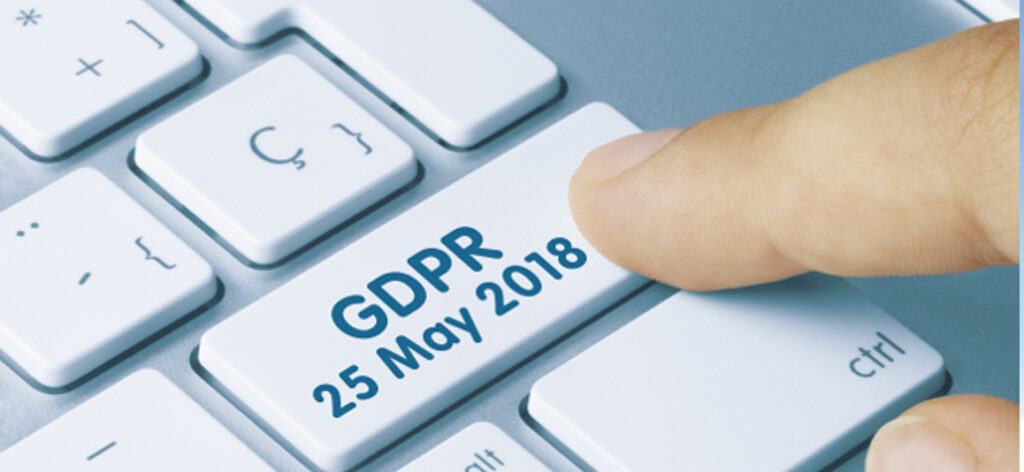
    As the General Data Protection Regulation (GDPR) comes into effect on May 25th, many global organizations are still not fully aware of how this European legislation will affect their day-to-day operations.

    The General Data Protection Regulation (GDPR) will come into full effect in a few days. It will introduce tough new privacy requirements for companies in the EU, as well as anyone who handles EU data. The new set of laws imposed by the GDPR will give consumers significantly more control over the ways in which their data is collected, distributed, kept, and destroyed.

    To successfully prepare for GDPR, companies of all sizes need to establish a solid foundation for meeting compliance before the new laws come into play. We’ve compiled a list of tips you can follow that will help you align your business practices and processes with GDPR regulations. Our list is not exhaustive, but can help businesses put a few preparations into place in advance.

    1. Raise Awareness

    Businesses handling personal data both in and outside of the EU must begin by developing a full understanding of the GDPR and exactly what it entails. It’s vital to recognize that GDPR applies to organizations everywhere in the world as long as they handle data containing any personal information about EU citizens, no matter where the data is stored. Make it a priority to circulate training videos or documentation containing detailed information on GDPR regulations around your organization so that everyone can begin to understand how it applies to your business processes.

    2. Develop a coherent privacy policy

    Organizations will need to clearly communicate with customers the purpose for which they are collecting their data under GDPR, so writing privacy policies that are easily understandable should become a top priority. Consumers need to be aware of their rights to disclose or refuse disclosure of personal information and understand the specific purpose for which it will be used. The GDPR also outlines that any information that’s collected for a stated purpose can only be used for that purpose after obtaining consent.

    Most companies practice transparency, but it’s important to make sure that privacy policies that contain a lot of fine print must be brought to the forefront and made legible and easy to understand or you could be faced with a fine. The fines for data breaches are huge – In cases of violation, the GDPR gives EU regulators the authority to impose fines of between 2 and 4 percent of a company’s global revenues.

    3. Prepare your data breach policy

    GDPR is no different than many regulations in that it requires you to inform consumers about data breaches that may affect their personal information – but with one catch – you have to do it within 72 hours. It’s one of the tightest timelines out there in the compliance world and may require that you revise your current data breach policy. Ensure that your insurance policies and internal procedures for incident reporting reflect the new law.

    4. Assess existing technology risks

    When strict regulations come into play, organizations need to reexamine the solutions they use to send and receive consumer information – it’s important to assess which solutions may need to be upgraded or replaced. If your HR, finance, or other departments are currently using inherently non-secure means of transmitting sensitive data between countries, it’s time to reassess your options. A cloud fax solution, for example, eliminates several of the security risks that come with using traditional fax machines.

    Cloud fax software enables employees to send and receive sensitive documents directly from their workstations, which means no more printed documents left lying around potentially falling into the wrong hands or being otherwise misplaced. Full knowledge of your organization’s technology risks can present opportunities to leverage existing solutions that will get rid of any security gaps in your infrastructure and help enable GDPR compliance.

    5. Investigate innovative new technologies

    GDPR will require companies handling personal data to develop strong data discovery and incident detection processes so that they can keep track of where their information is, and is being sent, at all times. Not everyone has a data controller on staff, and refining these processes doesn’t have to be a complicated task. Consider secure file exchange solutions that automate some of the workload for you.

    Solutions with features such as a built-in audit trail function eliminate guesswork by keeping a timestamped record of all files and documents that are transferred, whether inbound or outbound. Not only does can this boost organizational workflow, you’ll have a chronological record of system activities in case you’re ever up for audit. It’s all too common for organizations to transfer consumer’s personal information without the proper safeguards in place, which is why looking into new technologies that can improve your processes is so crucial.

    By understanding the GDPR in advance, you’ll get a stronger grasp of its requirements and be well on your way to mitigating any risks associated with how you handle personal data. Looking to boost security when sending and receiving sensitive information? Speak with an expert today to learn about solutions that will help take your organization’s security and compliance to the next level.

    The original article can be found here.

    E-mail us on sales@rincon.co.in for more information and we will be glad to assist you.

  • Reblog: How Vigilant are You about Cybersecurity?

    Cybersecurity is a hot topic, as it should be. With growing amounts of personal data being stored online, we should all be taking security of our online presence seriously. It seems, however, that while Americans do not trust modern institutions to protect their data, they are neither vigilant in their private security measures nor do they consider cybersecurity a top worry.

    According to the Pew Research Center, approximately half of all Americans do not trust public or private institutions, including the federal government and social media sites, to protect their data. This mistrust is not entirely unfounded. The survey done by the center revealed that 64% of adults in the US have been impacted by a major data breach.

    Data breaches include fraudulent charges on credit cards, sensitive information (like account numbers) being compromised, email or social media accounts being taken over, attempts at taking out loans or lines of credit in their names, and more.

    Fourteen percent of adults in US reported having received notices that their Social Security number had been compromised.

    Nearly half of all Americans also reported feeling that their personal information is less secure than it was five years ago. Only 18% feel that their information has gotten more secure in recent years.

    Unfortunately, while cyber crimes are a concern and risk to personal data security, far too many Americans are failing to follow secure practices online.

    Only 12% of internet users report ever using password management software, and among those, only 3% say they rely on this password technique most. In fact, 65% of users say their primary method to remember passwords is simply to memorize them in their heads. Another 18% say they primarily write down their passwords on a piece of paper.

    Moreover, 41% of adults have shared the password to one of their online accounts with a friend or family member and 39% say they use the same or very similar passwords for many of their online accounts.

    And a full quarter of adults say they use passwords that are less secure than they’d like. Their explanation? They need to remember the passwords, so they can’t be too complex.

    The statistics don’t look any better on mobile devices. Twenty-eight percent of smartphone owners say that they do not use security features such as a screen lock to access their phone and 54% of adults report using public Wi-Fi networks that may not be secure. Among those 54%, one-in-five users reported using those networks to perform sensitive activities such as online banking.

    Given the attitude towards cybersecurity, it’s no wonder Americans are so lax about personal online security. Americans simply don’t worry much about the issue. Even Americans who have been the victim of data breaches are generally no more likely than the average American to take any additional cybersecurity measures.

    The fact is, complacency regarding cybersecurity is a risk and there are simple measures to take that can vastly improve the security of your online presence. We wouldn’t trust a bank that simply memorized our information or that didn’t have proper security measures surrounding it’s vaults where our money and safety-deposit boxes are kept, so why shouldn’t we demand the same security online, both of ourselves and of the institutions that keep our information?

    As we allow more of our personal information online, we must stay vigilant about personal, corporate, and government cybersecurity measures.

    The original article can be found here.

    To learn more, contact us on sales@rincon.co.in