Tag: Video conference

  • Repost: 5 Typical Examples of Video Conferencing in Different Fields

    As an effective collaboration tool, video conferencing is becoming more and more important for businesses of all types and sizes. Generally speaking, video conferencing can be used to host video meetings, online training, webinars and video presentations in various industries such as enterprise, government, education, training, healthcare, law, finance, military and etc. Here we will fully illustrate five typical examples of video conferencing in different fields, especially in business, education, healthcare, training and court.

    1. Example of video conferencing in business

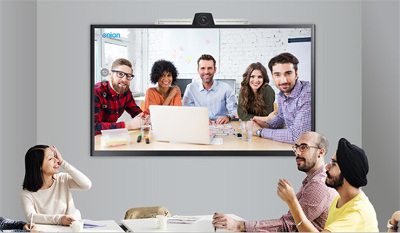
    A large enterprise has established many offices in more than ten different countries all over the globe. It will be difficult for the company’s decision-maker to quickly inform the managers in dispersed offices the important decision simultaneously. By implementing a video conferencing solution, the enterprise can easily host a virtual video meeting. Participants can also express their ideas during the conference. Hence, it makes the face-to-face communication more productive and efficient.
    2. Example of video conferencing in education

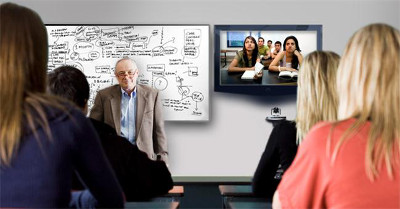
    A famous university has set up some adult education courses and wants to permit remote students to positively take part in the class activities. In order to solve this problem, the university has adopted the advanced video conferencing tool. It thus has improved the access for distance learning and the whole education process. By doing so, students can not only hear the lecture, but also clearly see what’s happening in the classroom. Then they also have chances to engage in the activities.
    3. Example of video conferencing in healthcare

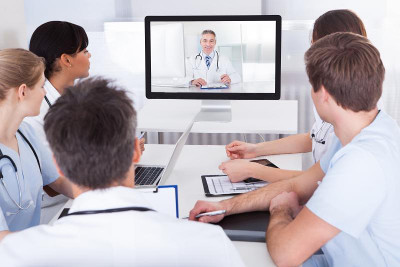
    Hospitals are obviously vital to patients, so it is necessary for hospitals or other healthcare institutions to upgrade its medical equipment with new technology such as video conferencing. A London hospital has utilized video conferencing system which makes it possible for medical specialists to make remote diagnosis of serious illness from patients in different locations. Video conferencing in healthcare thus breaks the space barriers and provides more convenient for patients around the world.
    4. Example of video conferencing in training

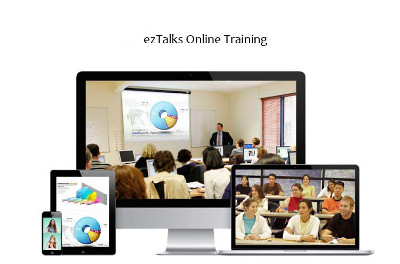
    A major training institution plans to conduct a large training course, but some of trainees cannot come for some reason. The training course can’t be terminated or rescheduled for the small part of people. On this occasion, the training institution has employed a video conferencing solution. So those who can’t come to the site can also have an online training. Besides, the recording feature of video conferencing software enables them to replay the whole course later.
    5. Example of video conferencing in court

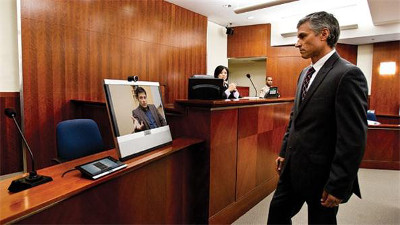
    Apart from the application of video conferencing in business, education, healthcare and training, video conferencing can also be used in court. For instance, in a big criminal case, an important witness won’t want to present personally in the Virginia court for this or that reason some reason. Such as fearing of testifying in the court, concerning about personal security, worrying about privacy exposure, or just because of geographical restrictions. Under such circumstance, the Virginia court has installed video conferencing system, which makes the witness virtually present in the court and guarantees the trial process done as scheduled.
    The above are just five typical video conferencing examples used in business, education, healthcare, training and court, respectively. And of course, there are far more real-life examples. When you select a right video conferencing tool and start to use it for your business, you will definitely find that the benefits and advantages of video conferencing is beyond your imagination.

    The original article can be found here.

    To learn more contact us sales@rincon.co.in
  • Reblog: Video Conferencing

    Video conferencing uses two-way interactive audio-video technology to connect users when a live, face-to-face interaction is necessary.

    Video devices can include videoconferencing units, peripheral cameras, videoscopes, or web cameras. Display devices include computer monitors, plasma/LED TV, LCD projectors, and even tablet computers. Video conferencing can provide cost-effective access to care for patients who are institutionalized or incarcerated;

    Video conferencing has historically been the most common application of telemedicine/telehealth care, and is an effective health care and consultation tool for a variety of applications, including:

    Emergency Room/Intensive Care Unit Support

    • Video conferencing connects emergency providers with medical specialists who otherwise would not be available for consults;
    • Remote ICU monitoring programs at hospitals provide 24-hour backup, supervision, and support to ICU medical staffs by utilizing a combination of real-time video to observe patients, interactive video communications with on-site ICU providers, and digital patient monitoring equipment.

    Consults

    • Primary care providers can consult with medical specialists who are not available locally;
    • Providers can discuss patient cases, regardless of location, and without the need for travel;
    • Medical specialists can examine patients in remote locations when distance is a barrier, as is the case when patients live in rural and underserved urban areas. This includes situations where the physician needs to directly observe the patient;
    • Psychiatric consults can effectively be provided through live video for individuals who do not have local access, or who may otherwise be reluctant to keep appointments in person at a psychiatric provider’s office;
    • Patients with limited mobility can receive medical consultations at home, or in their local primary care provider’s office;
    • Language translators can provide video interpretation services to multiple locations, a cost-effective expansion of these programs.

    Health Education

    • Video conferencing allows health care professionals to conduct continuing education programs with attendees in multiple locations;
    • Patients can use these technologies to take disease management courses or receive other important health information.

    Video Conferencing Successes

    Recent studies have shown that video conferencing directly improves access to health care, and can improve the quality of care that could lead to improved health outcomes. These technologies also have the potential to make the health care system more cost effective. For example:

    • The objective of this 2016 study titled, “Telehealth and Autism: Treating Challenging Behavior at a Lower Cost“, was to determine if an autism treatment delivered via live videoconferencing could be implemented effectively and at a lower cost compared to in-person interventions. To test this, they compared outcome and cost data for Applied Behavioral Analysis (ABA) procedures using in-home therapy, clinic-based telehealth, and home-based telehealth. Their results found all three service delivery models to be successful in reducing problem behavior. Related to cost, they found home telehealth to be least costly, but both forms of telehealth were significantly less expensive than in-home therapy.
    • “Patients’ Satisfaction with and Preference for Telehealth Visits”, a 2015 study, investigated patient satisfaction with a live-video telehealth program offered at a CVS MinuteClinic. Researchers surveyed 1,734 patients to assess their satisfaction with seeing diagnostic images, hearing and seeing the remote practitioner, the assisting nurse, quality of care, convenience, and understanding. They were also asked to rank telehealth visits as they compared to traditional visits. The survey results found high satisfaction and acceptability for telehealth, and some patients preferred telehealth services over a traditional in-person visit.

    To learn more contact us sales@rincon.co.in
  • Reblog: 6 Ways to Use Telemedicine Video Conferencing

    Telemedicine has been used for more than four decades to improve patient and physician access to healthcare services, according to the American Telemedicine Association. It also has the potential to reduce the cost and improve the quality of healthcare – while meeting a growing consumer demand for telemedical services. With such a strong set of benefits, it’s no surprise telemedicine represents a powerful business opportunity for value-added resellers in the video conferencing space.

    Telemedicine Basics

    Simply put, telemedicine is the exchange of medical information through electronic communications. With telemedicine, doctors, clinics and patients might use two-way video, email, smartphones or wireless communication to share information.

    Telemedicine Video Conferencing

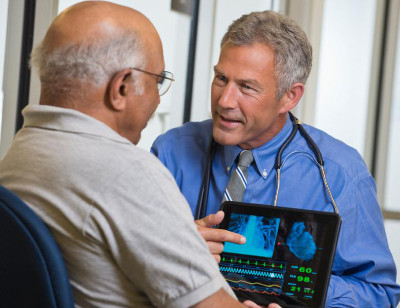
    Video conferencing has fast become one of the most popular tools in telemedicine. The face-to-face capabilities of video conferencing is an ideal fit for the healthcare industry, where patients want convenience and better access but also crave connection and understanding. A growing number of physicians and patients are making use of conferencing technology for live interactive video, sharing video clips for later review, forwarding diagnostic images and more.

    When working with healthcare customers, it’s important to help them see the many different possibilities of video conferencing telemedicine. Consider the following ways the technology can be used:

    1. Improving access for remote patients.

    The No. 1 benefit of video conferencing in medicine is arguably improved access. According to the American Telemedicine Association, telemedicine has the ability to increase healthcare service to millions of new patients, from those in remote rural areas to those in crowded urban environments. Video conferencing can even be useful in disaster areas, reaching those affected by earthquakes, tsunamis and more. These patients can quickly and easily connect with doctors from around the world by taking advantage of technology that can be made available at local hospitals, clinics or relief stations.

    2. Connecting physicians from around the world.

    Video conferencing also has the ability to connect physicians with colleagues, health facilities and experts from around the world. This facilitates an unprecedented level of collaboration and knowledge-sharing that can only benefit the global health community.

    3. Providing medical education.

    Health professionals can use video conferencing to broaden their educational reach as well. Students, fellow physicians and patient advocacy groups can connect via video for seminars, meetings and even ongoing classes to share information that would otherwise be out of reach for some.

    4. Enabling more effective critical care.

    Some people struggle to travel any distance to see their doctor. Patients who are very ill, handicapped, elderly or in the late stages of pregnancy could benefit greatly from video access to health professionals. There is also great potential in pediatrics, as many children’s ailments are common and straightforward enough to be diagnosed remotely – without forcing parents to drag their sick kids to the doctor.

    5. Making mental healthcare more accessible.

    Certain fields of healthcare are even more well-suited to video conferencing than others. With a focus on doctor-patient interaction, mental health services are ideal for telemedicine through video conferencing. Doctors can connect with patients using video, which helps to broaden their reach and save patients time and money.

    6. Specialist referral services.

    Video conferencing can also expedite the specialist referral process. Using video, a primary care or allied health professional can consult with a patient or specialist, which helps them to arrive at a diagnosis and recommend a referral more quickly and recommend a referral more quickly.

    What are some of the other potential areas for video conferencing in the telemedicine field? What has been your experience with video conferencing in hospitals and other healthcare facilities?

    The original article can be found here.

    To learn more contact us sales@rincon.co.in