Tag: Wireless

  • Wireless Doesn’t Always Mean WiFi: Why RF is a Better Choice for Nurse Call Systems

    When most people hear the word  wireless, they immediately think of WiFi. It’s what connects our phones, laptops and smart TVs. But in hospitals, when it comes to something as critical as a nurse call system, WiFi might not be the best option.

    That’s where Radio Frequency (RF) technology comes in. While both WiFi and RF operate wirelessly, their use cases and reliability differ significantly—especially in clinical settings.

    What’s the difference?

    WiFi is designed to handle heavy data like video calls, browsing and media streaming. It works on high frequencies like 2.4 GHz and 5 GHz, which can often get congested and interfere with other systems. RF technology used in nurse call systems, typically around 433 MHz, is designed for short, quick, reliable signal transmission—exactly what’s needed in an emergency.

    Why RF is better for nurse call systems
    • Independence from IT networks:  RF systems don’t rely on internet or LAN connections, so they continue working even if the hospital network is down.

    • No interference:  The 433 MHz frequency avoids overlapping with medical equipment and IT systems, making it safe and stable.

    • Reliable coverage:  RF signals penetrate walls and medical infrastructure better than WiFi, ensuring consistent performance.

    • Lower power consumption:  Devices using RF consume less power, making battery-operated systems more durable.

    • Simpler and cost-effective:  RF systems are easy to install without the complexity of routers or cybersecurity concerns.

    Conclusion:

    For hospitals,  wireless doesn’t always mean WiFi. When patient safety depends on quick response times,  RF-based wireless nurse call systems  offer a dependable, low-maintenance solution that just works.
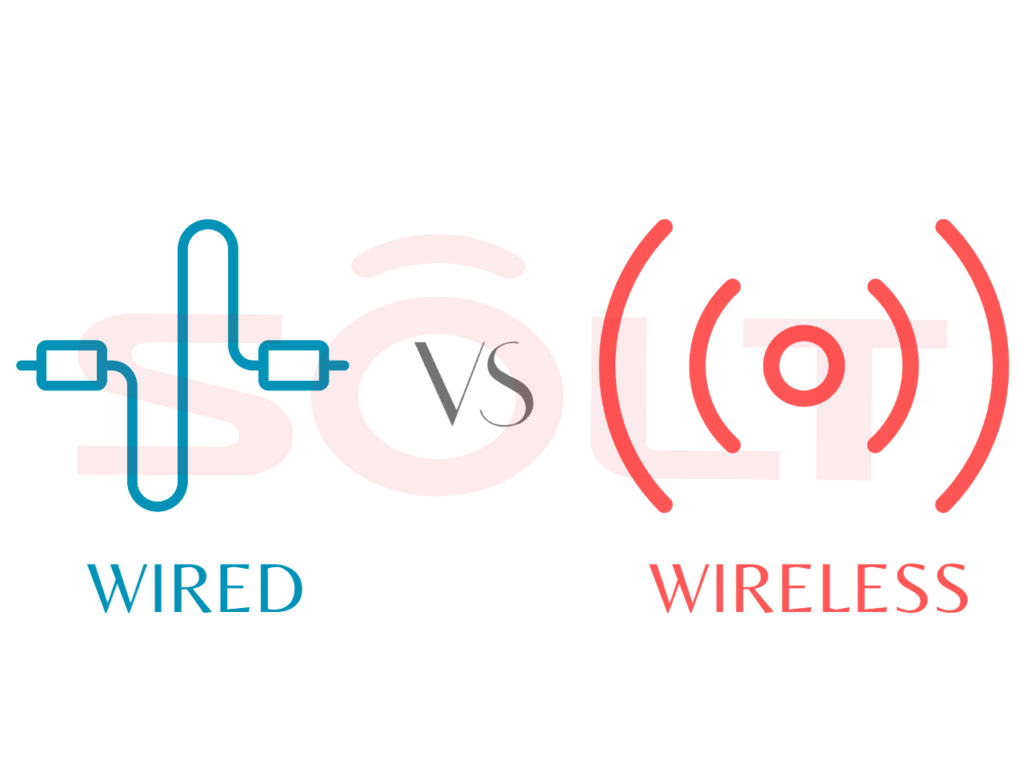
  • Revolutionizing Patient Care: Hospitals Switch to Wireless Nurse Call Systems

    Hospitals are constantly looking for ways to improve patient care and streamline operations. One area in which many hospitals are making changes is in their nurse call systems. In the past, wired nurse call systems were the norm, but now many hospitals are switching to wireless systems.

    Wired nurse call systems use physical buttons or cords that patients or staff can press to alert nurses to their needs. These systems have been in use for many years and have been a reliable way for patients to communicate with the nursing staff. However, wired systems have several drawbacks. They can be expensive to install and maintain.

    Wireless nurse call systems, on the other hand, use radio frequency technology to transmit signals from patients’ rooms to nursing stations. These systems are much more flexible and easier to install than wired systems. They also do not require any physical wiring which saves in terms of costs and maintenance later on.

    Wireless nurse call systems are also more scalable than wired systems. Hospitals can easily add or remove call points as needed, which makes it much easier to adjust to changes in patient volume or staffing levels.

    Many hospitals in India have switched to wireless nurse call systems, and more are expected to follow suit in the coming years. The benefits of these systems are clear, and they are becoming increasingly popular as hospitals look for ways to improve patient care and streamline operations.

    In conclusion, hospitals switching from wired nurse call systems to wireless nurse call systems is a trend that is taking place across the world. The wireless nurse call systems are more flexible, easy to install, and integrated with other hospital systems. Hospitals are also finding that these systems are more scalable, allowing for better coordination of patient care and improved communication between staff.

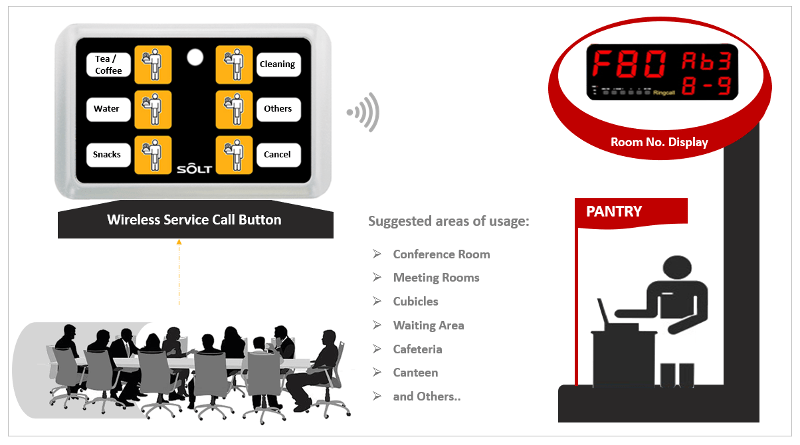
  • Want a coffee while in the conference room?

    Sitting with visitors in the meeting, you call up the pantry to order for your guests. Unfortunately, no one is there in the pantry. You continue with your meeting and completely forget to order. Sounds familiar? We have a better solution. A wireless call bell system which notifies the correct people about your needs such as pantry, housekeeping etc.

    Benefits

    • Wireless
    • Quiet operations for call and response
    • Multiple Call Points
    • Quick and Easy Installation
    • Scalable
  • Affordable Emergency Call Bell System

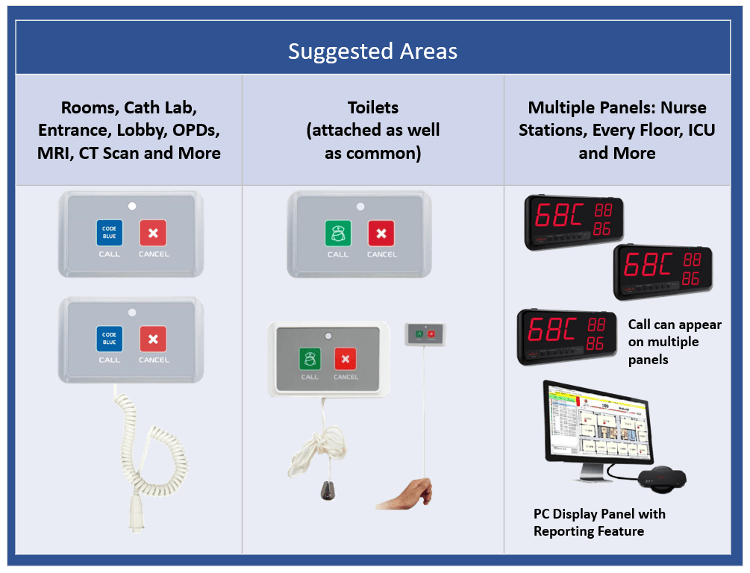
    Wireless Emergency Call Bell System for Code Blue and Toilets

    Features

    • Low power technology
    • Easy to configure
    • Cost effective
    • Versatile, flexible and easy to use
    • Plug and play technology
    • Long life with low maintenance
  • Wireless Nurse Call Systems For HOSPITALS

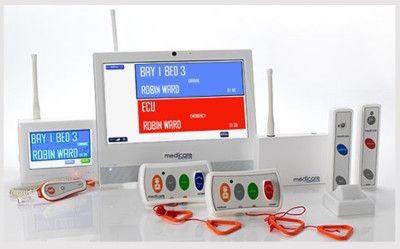
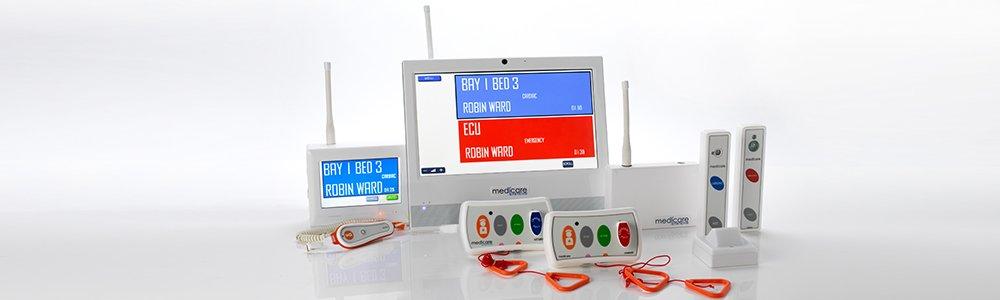
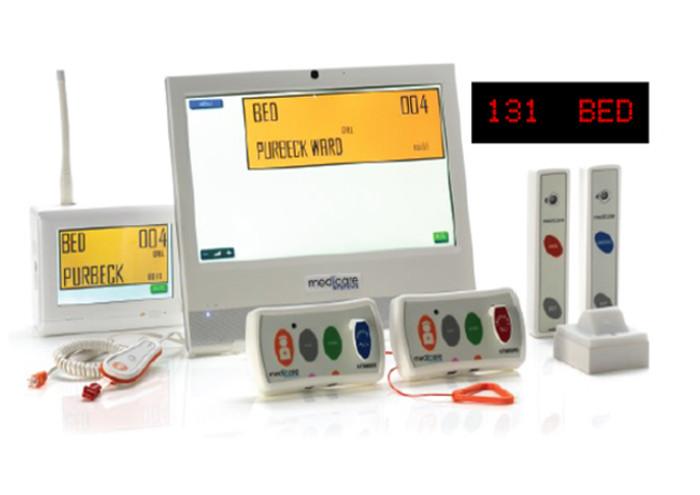
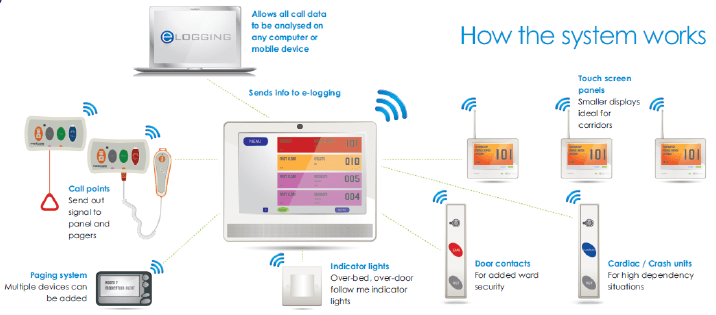
    Esperti Services and Solutions LLP. are pleased to bring to you Wireless nurse call systems from Medicare, UK. From initial consultation through to installation and after-sales support, we offer a professional and friendly service. The system is wireless and consists of display panels, call points and other alarms to meet your requirements.

    Features

    • HTM compliant
    • Low power technology
    • Easy to configure
    • Cost-effective
    • Versatile, flexible and easy to use
    • Unique attendance feature
    • Finger tap buttons
    • Plug and play technology
    • Low maintenance
    • Comprehensive training.
  • Hospital System

    The HTM6500E Wireless Nurse Call System, is complete with an Emergency or Cardiac pull switch. The system can be surface mounted or flush mounted onto a standard 2-gang electrical back box within the trunking.

    The System is easy to install, durable, cost effective and versatile in any Hospital Ward, Theatre or Unit. The systems over door and follow me lights all come with optional sounders built in. Online training videos make it an easy to maintain the system for estates and facilities teams, reducing cost of engineers and call outs.

    As limited budgets and ageing nurse call systems within old buildings can prove to be an issue. The system has been designed to meet the HTM08-03 standard and also be cost effective, versatile and easy to install. The HTM6500E System offers the latest technology and is IP capable. It can be surfaced mounted to avoid issues with asbestos in walls and ceilings or recessed into 2-gang back boxes within trunking. The system is easy to maintain, look after and modify.

    Get in touch with our product specialist and learn how you can get started with Nurse Call System. To know more contact us on sales@rincon.co.in

  • Let’s go Wireless using Medicare Nurse Call System

    If you have realised the total cost of your wired Nurse Call System, it is now time to plan and replace it with Medicare Wireless Radio Nurse Call Systems.

    Quick to fit, HTM standards compliant and excellent value for money, the Medicare HTM series Nurse Call system is designed for ease of use, and built to withstand the demands of the busiest hospital environment.

    From initial consultation through to installation and after-sales support, we offer a professional and friendly service, from scoping through to after-sales support.

    Benefits:
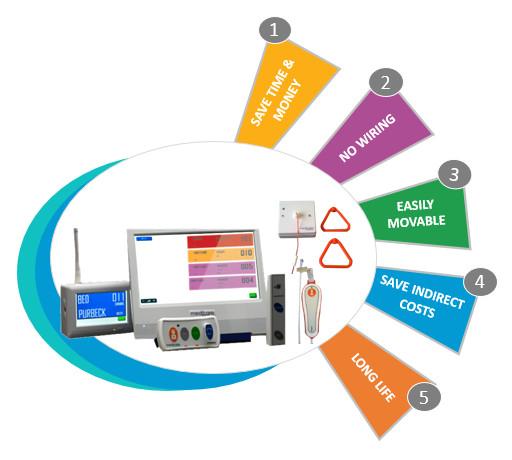
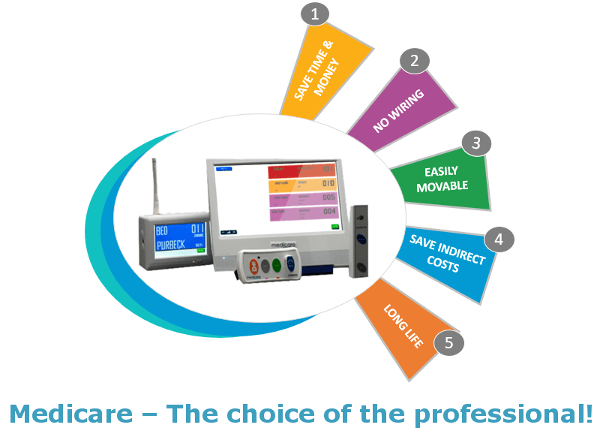
    • No Wiring so save on Material and Maintenance
    • Buy Just in Time
    • Easy Programming
    • Low Inventory Cost
    • Maximum up time
    • Installation in 2-3 days
    • Easy to move in changed room layout
    • Reporting and Escalation helps improve Quality

    Where can one use Nurse Call Systems?

    Suggested areas of usage of Nurse call systems include but are not limited to:

    Hospitals – The obvious usage is to call a nurse or call for assistance when the patient needs it.
    Day clinics, nursing homes or old age centres need nurse call systems that are on the go. Patients here, are into their recovery process and this means starting to get by on their own, though still with direct access to medical staff. Wireless call buttons allow for these patients to be able to roam about freely and take in their leisurely walks by carrying it around with them. If they would need help getting back to their room, then a simple press on the call button would give them instant help.

    At Home use is widely becoming an angle for care, whether for a person in recovery or for old age care. The simple system makes the installation of nurse call systems a breeze. This need no longer be a drawn out process of getting the wiring up and then hassling with the interiors.

    To learn more, contact us on sales@rincon.co.in

  • Wireless Nurse Call System -Advantages for Patients and Staff

    Rincon brings to you Wireless Nurse Call Systems made by Medicare of UK. Whether your facilities are large or small, the wireless nurse call system will fulfil your needs. Some of the advantages of deploying a wireless nurse call system are described below.

    Wireless Nurse Call System Advantages:

    • Compatibility: One of the wireless nurse call system advantages is its compatibility. Whether you are looking to purchase the whole updated system or pieces to replace parts of an old system, our wireless nurse call system benefits are widespread enough to every need.
    • Easy of installation: Another of the many wireless nurse call system advantages is that the nurse call points and stations are simple to install at any desired location. The wireless characteristic of our system cuts out installation fees, and the pre-programming can be done easily and quickly. Patients can be assured of their safety anywhere, including showers and bathrooms.
    • Affordable, Convenient, Dependable: Along with the other wireless nurse call advantages, other noteworthy characteristics of the system include the affordability, convenience, and dependability of the system. We strive to offer you the best quality of our wireless nurse call system at a price you can afford. Noisy pagers will no longer be necessary thanks to the discreet calls this system can send straight to the nurse call stations.
    • Feature Packed: The wireless nurse call system benefits also include many widespread characteristics. A few of these characteristics include ranking calls in order of importance, compatibility with Windows 10, and alarm reset options.

    Take advantage of the numerous wireless nurse call system benefits today, and contact us on sales@rincon.co.in with any questions.

  • Reblog: The Benefit of Nurse Call Systems

    Wireless paging systems have made communication so much easier in a variety of industries but most especially in the hospital setting. In a place where mere seconds could mean the difference between life and death, having a reliable communications system in place is invaluable. The use of nurse call systems extends beyond the hospital environment also. These wireless systems can be used anywhere that there is an ill-stricken or elderly patient who needs constant monitoring. The benefits of having nurse call systems in place are numerous. Let’s take a further look at these benefits.

    The discreet nature of nurse call systems means that patients get help with minimal attention drawn to them. Communication between staff is also low key which aids in keeping the nurse call systems environment calm and quiet. The nurse’s call button can also be used to call other staff to a room if added help is needed with a patient, thereby not leaving the patient’s side in a time of need.

    Having the room and bed number come up, allows for the staff on duty to be able to go directly to the patient in need and not waste time looking around for the patient in question. This time-saving factor allows them to have more time to concentrate on paperwork and check-ups and only being called when needed. Nurses also have the opportunity to be a little more rested and less stressed allowing for better work output. Emergency doctors wearing the wrist watch receiver can proceed directly to a patient in distress instead of first having to check in at the nurse’s station.

    A nurse call system comes with software that records response times. This can be used by management to keep an eye on staff members and ensure that they have a rapid response to calls.

    Wireless nurse call systems are very cost effective to implement into any medical setting or home environment. In addition, maintenance is not needed very often.

    Completely wireless nurse call buttons mean that there are no unsightly wires hanging about, nor will there be any need to panic if any remodelling needs to be done in the future.

    It is simple to use. The patient and caregiver will each have access to their own call buttons. For patients, this could be a small button device placed next to the bedside or a lanyard which can be worn around the neck. Anytime help is needed, the button would simply have to be pressed to alert the caregiver or nurse. On the caregiver’s side, there is the option to wear the wrist watch or have the alert come through on a display monitor. This way, help is given when it is needed, and there is no need to constantly hover over the patient. In retirement homes, nurse call systems can be used even if patrons have no medical emergency. Each person here would get their own call button to keep on their person at all times, allowing for independence with round the clock assistance whenever needed.

    The original article can be found here.

    To learn more about Nurse Call Systems, contact us on sales@rincon.co.in

  • Repost: Government de-licenses the use of very low frequency bands for the automotive industry

    MUMBAI: The government has de-licensed certain very low-frequency bands for the automotive industry, a decision that could help in making connected and safer vehicles in a country where more than 1.4 lakh people die every year in road accidents.

    Car makers can use this frequency through a radar-based system and offer advanced driver assistance features like blind spot monitoring, adaptive cruise control and lane departure warning.

    These features are already available in advanced markets. According to a notification dated September 16, issued by the wireless planning and coordination wing of the Ministry of Communication and Information Technology, the government has de-licenced use of devices or wireless microphones in the frequency bands of 36-38 MHz, 433-434.79 MHz, 302-351 kHz and 76-77 GHz.

    The move will not only help car manufacturers to improve the safety features of their projects in India, but also boost exports from the country to Europe, Japan and the US, where these features are standard. The likes of Ford, Volkswagen, Hyundai and Nissan export 30-50% of the cars they produce in India, including to Europe.

    In the absence of low-power frequencies, car makers in India could not test or install these safety features in cars meant for exports, people in the know said. In fact, some luxury-car makers had to spend money on de-activating those safety features in India. The frequency band was released after continuous dialogues among the Society of Indian Automobile Manufacturers Association (SIAM), car maker Maruti Suzuki, component manufacturer Bosch and the ministry over six to 12 months. The ministry de-licenced the band after all its concerns were addressed by the automakers.

    “This will enable us to capture export opportunities, particularly in advanced markets,” a Maruti spokesperson said. “This is truly using technology as an enabler for ‘Make in India for the World’.

    The entire Indian auto industry stands to benefit from this move.” Maruti, which was pushing for releasing the frequency, should be the biggest beneficiary as it intends to use the bands for the testing and installation of Autonomous Emergency Braking System (AEBS) in its upcoming premium hatchback Baleno, which will be exported to Europe and Japan.

    AEBS is a low-power radar-based system which detects obstacles and applies brake in emergency situations. Fitment of AEBS in passenger cars will be a required feature for better rating in the European New Car Assessment Programme and it is difficult to sell a car in that market without this system. It uses short-distance (160 m), low-power (55 dBm max) radar operating in the 76-77 GHz band.

    The original article appeared in the Economic Times and is written by Ketan Thakkar and Maulik Vyas. It is available here.

    The purpose of this article is to show that the frequency band 433 – 434.79 MHz is open now. This is the band used by Medicare Nurse Call Systems too.

    To learn more, contact us on sales@rincon.co.in