Tag: Compliance

  • ISO Certification – Can a Document Management System help?

    iso9001

    ISO 9001 certification is a must-have for most manufacturing and service companies.  The certification is increasingly required in subcontracts, especially by European multinationals.
    It helps in:
    • Increased marketability
    • Reduction of operational expenses
    • Better management control
    • Increased customer satisfaction
    • Improved internal communication
    • Improved customer service
    • Reduction of product-liability risks
    • Increased attractiveness to investors
    To achieve ISO 9001 certification, a manufacturer must collect, update and share its large library of ISO documents with single point access to the latest documentation.  This is a humongous task using paper-based documents and processes. Digitising the document processes would help simplify and streamline the certification process.
    Some of the processes that must be standardized and documented in ISO 9001 include:
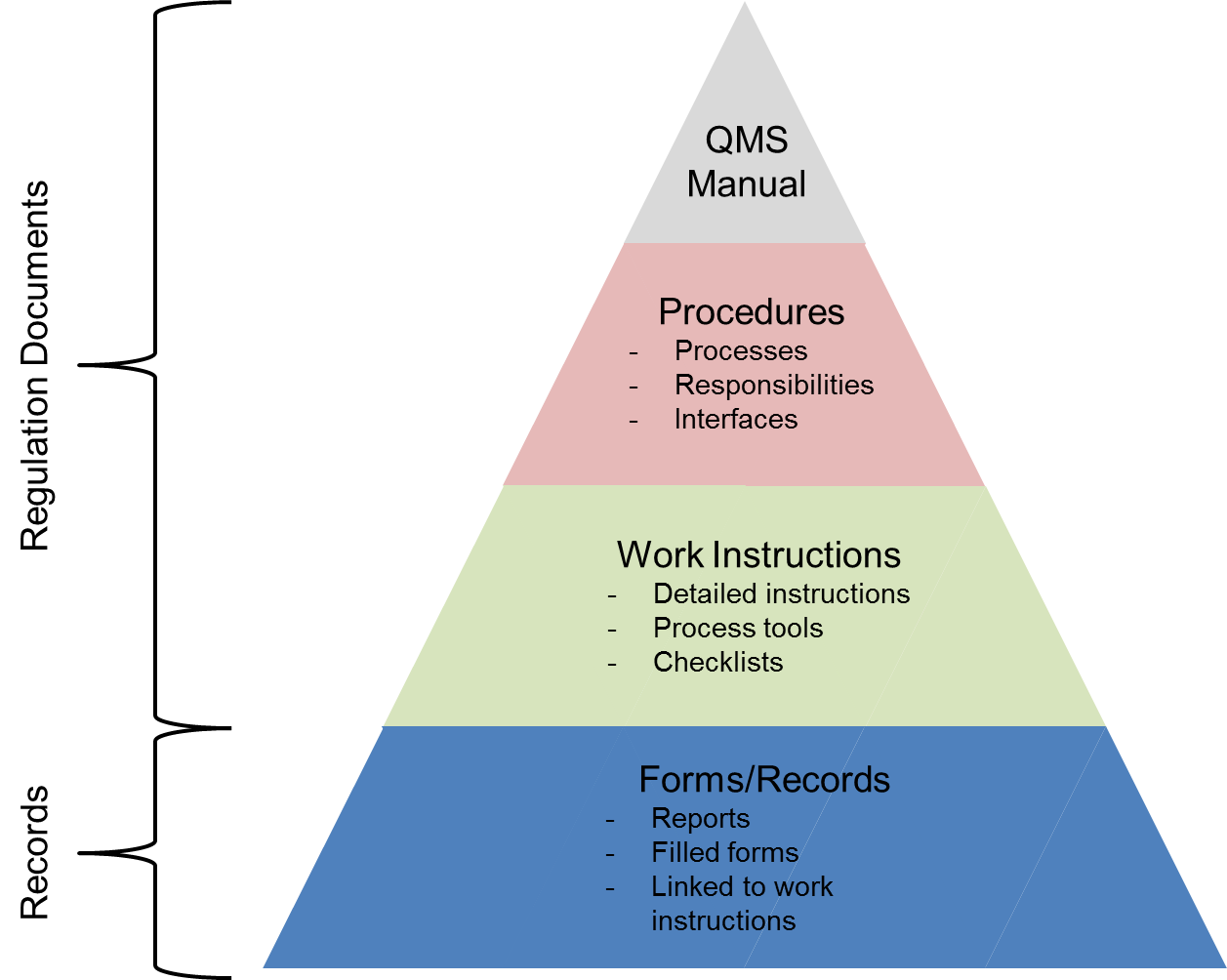
    • Quality Manual – The quality manual defines how each requirement of the rather generic ISO 9001:2008 standard is applied at the company.
    • Quality Procedures – The quality procedures are the essence of the ISO 9001 documentation. The ISO 9001 quality procedures explicitly describe how certain key processes within the company must be performed and who is responsible for them.
    • Quality Policy – The quality policy is the company’s policy defining its stance towards quality and customer satisfaction.
    • Quality Objectives – The quality objectives define measurable goals relative to the company’s quality management system.
    • Process Flowchart – The process flowchart is a description of how the various processes of the ISO 9001 QMS interact with each other.
    • Work Instructions – Work instructions are the most detailed and most company-specific of all ISO 9001 documents. Work instructions describe in detail how particular tasks must be performed. Work instructions are typically written by the people who perform the actual work.
    • Records – Records are different from the above documents, all of which provide directions on how to conduct business. Records, on the other hand, are evidence of things done. ISO 9001:2008 contains numerous explicit requirements on records plus requirements for many more undefined records.
    Most organizations are unaware that even if they previously went through the ISO 9001 certification process, things are changing. A new ISO 9001 standard has been published in September 2015. This means that the ISO 9001:2008 standard will become obsolete on September 14, 2018, and that all ISO 9001:2008 certifications issued in late 2015 and beyond bear an expiry date of September 14, 2018.
    There has never been a better opportunity than now to examine the underlying document management practices associated with ISO 9001 certification. Certifying against the new standard provides an opportunity to view ISO 9001 not only as a paper documentation exercise, but as an opportunity for digitizing document processes – and in the process transforming the business. Leading organizations are increasingly realising that if approached strategically through a document management system, compliance-mandated digital documents can provide a foundation for more effective processes throughout the business and provide insights that are critical to digital transformation.
    If you are considering the implementation of a document management system for your business, but you are still on the fence when it comes to selecting the right solution, please e-mail us on sales@rincon.co.in and we will be glad to assist you.

  • Why do Housing Finance Companies use Document Management Systems?

    mortgagedocuments

    A Housing Finance Company (HFC) processes loans at multiple locations, and retains all related documents at the local / zonal office. Each files received consists of multiple documents and should be filed and processed swiftly considering the competitive environment.
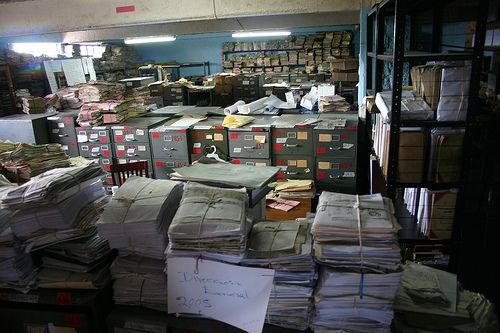
    In the manual process, documents need to be stored physically in the office resulting in wastage of expensive real estate. Additional paperwork needs to be stored in the right place with the other documents so as to make it easily accessible. This results in a lot of time and money spent on handling paper. Finding the correct document is akin to finding a needle in a haystack especially at the time of audits or at the time of a default.
    With a document management system in place,
    • All documents are scanned and archived on a central server thereby making it available to users anywhere (provided they have the requisite rights and permissions).
    • Expensive real estate can be put to better use and documents can be stored off site.
    • The concerned people have access to the records from anywhere they work using the web or mobile interface.
    • Improve workflow, response times and efficiency
    • Reduce costs
    If you are considering the implementation of a document management system for your business, but you are still on the fence when it comes to selecting the right solution, please e-mail us on sales@rincon.co.in and we will be glad to assist you.
  • Document Management system for Property Management organisations

    paperpiles

    A Property Management organisation is one that looks after the management of personal property, equipment, tooling and physical capital assets that are acquired and used to build, repair and maintain end item deliverables. Property management involves the processes, systems and manpower required to manage the life cycle of all acquired property as defined above including acquisition, control, accountability, responsibility, maintenance, utilization and disposition.

    These organisations have to manage leases, contracts, notices, and other property records in a property document management system that keeps important property documents secure and makes them easily retrievable.

    With a document management system in place, property managers, property owners, and property management staff can use it to improve efficiency and make informed decisions regarding the leasing and ownership of property.

    A document management system keeps all records, including important plans and facilities documents, ready for access. Authorised persons can access files outside the office using Web and Mobile access. Users are able to search and retrieve documents on the fly thereby enabling them to make faster and more accurate decisions.

    If you are considering the implementation of a document management system for your business, but you are still on the fence when it comes to selecting the right solution, please e-mail us on sales@rincon.co.in and we will be glad to assist you.
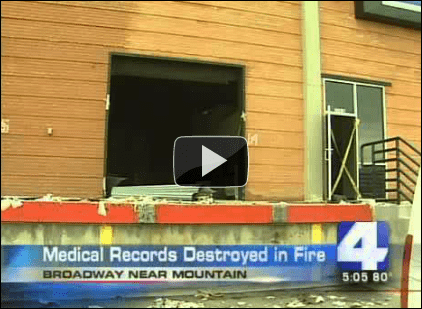
  • Video: Millions of Medical Records lost in fire

    Video: Millions of Medical Records lost in fire

    [youtube]http://www.youtube.com/watch?v=rL7RQzBUMrM[/youtube]

    UNM hospitals based out of Albuquerque, New Mexico, USA lost medical records of 1 Lakh patients due to a fire in a warehouse complex. This was the warehouse where they had stored the records. This only goes to show how vulnerable hospitals are to such losses in the absence of a proper records management solution. Get smart. Get a good EDMS solution. Contact us on sales@rincon.co.in or call us on +91 22 61461616

  • Video: Copy Machines Can Store Your Private Info

    Video: Copy Machines Can Store Your Private Info

    [youtube]http://www.youtube.com/watch?v=zTsBw-0bgmg[/youtube]

    The dangers of identity theft are well-publicized. We’ve all been asked to shred our documents, be on the lookout for phishing scams etc. But there is a new potential threat to our identity lurking in warehouses. We’re talking about copy machines.

    “Copy machines today are just like computers,” explained Boston security expert Robert Siciliano. “They have hard drives and can store data that can be extracted.”

    The video says it all.