Tag: Healthcare

  • Enhancing Patient Comfort with Cutting-Edge Wireless Nurse Call Bell Systems

    In a hospital, patient comfort is just as important as medical care. Patients deserve to feel safe and cared for during their stay. That’s why we’ve introduced our state-of-the-art wireless nurse call bell system to hospitals worldwide.

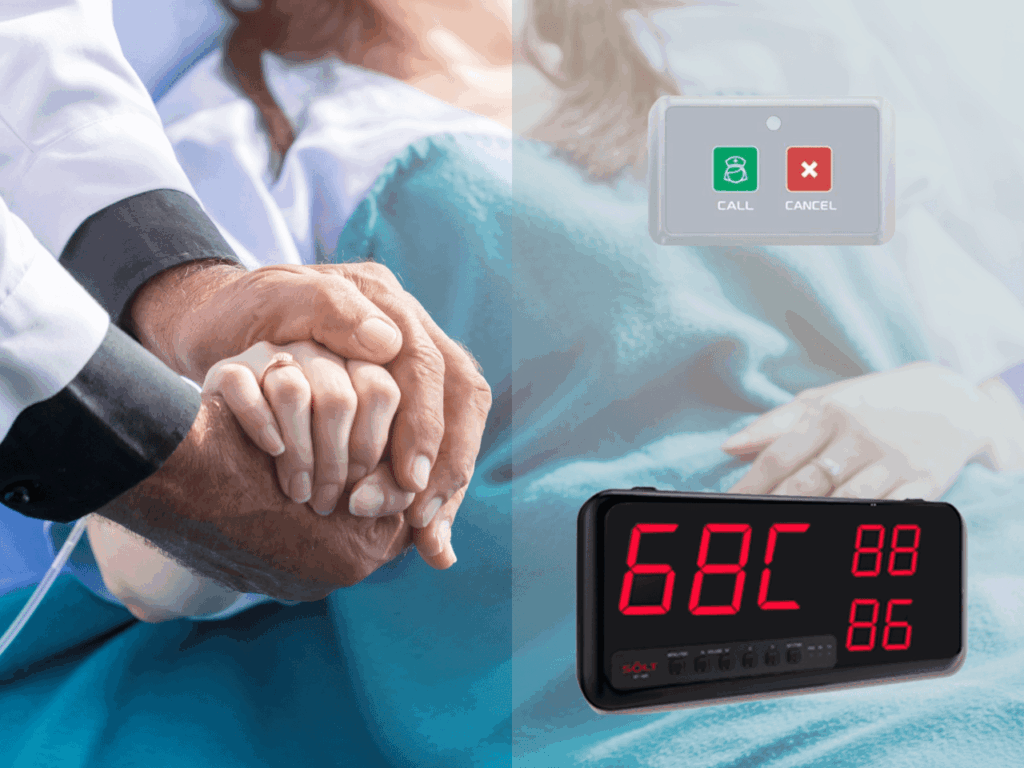
    Our wireless nurse call bell system is designed to make patients’ stay as comfortable and stress-free as possible. Patients can press a call button to request assistance from nurses and medical staff, and the notification is sent directly to their pager or smartphone. This means that patients don’t have to wait long for assistance and can relax in the knowledge that help is on the way.

    Not only does this system enhance patient comfort, but it also improves the efficiency of medical staff. Nurses can prioritize their workload and allocate their time effectively, responding quickly to calls for assistance. This means that medical staff can provide better care to patients, ensuring they feel safe and cared for during their stay.

    Investing in our wireless nurse call bell system is an investment in your patients’ comfort and satisfaction. By providing them with a reliable and efficient call system, you’re demonstrating your commitment to their wellbeing. This will improve your hospital’s reputation, increase patient satisfaction, and ultimately lead to more successful outcomes.

    Don’t settle for outdated call systems that can cause unnecessary patient discomfort and delay. Choose our cutting-edge wireless nurse call bell system and experience the benefits of modern medical technology today.

    Contact us at +91 9321064487 or sales@rincon.co.in.

  • Improving Patient Care with Wireless Nurse Call Bell Systems

    In a hospital, every second counts when it comes to patient care. Nurses and other medical staff need to be able to respond to patient needs quickly and efficiently. That’s where wireless nurse call bell systems come in.

    A wireless nurse call bell system is an innovative technology that allows patients to call for assistance at the press of a button. The system comprises a set of call buttons placed strategically in patient rooms and other areas of the hospital. When a patient presses the call button, a notification is sent to the nurse’s pager or smartphone, alerting them to the patient’s needs.

    This system has revolutionized the way hospitals respond to patient needs. It ensures that medical staff can respond promptly to calls for assistance, reducing patient wait times and improving the overall patient experience. The wireless nurse call bell system is not only beneficial for patients but also helps medical staff work more efficiently and effectively.

    With a wireless nurse call bell system, medical staff can provide better care to their patients. They can respond to emergencies quickly and attend to patients’ needs promptly. The system also allows nurses to prioritize their workloads and allocate their time effectively.

    In conclusion, wireless nurse call bell systems are a game-changer for hospitals. They improve patient care, enhance the overall patient experience, and enable medical staff to work more efficiently. Hospitals that invest in this technology will benefit from increased patient satisfaction and improved medical staff productivity.

    Contact us at +91 9321064487 or sales@rincon.co.in.

  • Nurse Call System

    Nurse Call System

    With the ever increasing number in Hospitals, nursing home and home healthcare facilities, there is a growing need for better patient response time along with eliminating nurse fatigue. Products can also be integrating the devices with different diagnostic solutions and technologies.

    A Nurse Call system collects the information that matters, identifies opportunities to improve care and delivers actionable insight to caregivers and patients, all supported by clinicians every step of the way.

    The system also transmits immediate notifications and alerts. By integrating staff locating and nurse call systems, drastically reduces the time wasted and increases efficiency by automating workflow processes.

    When a staff member enters a room, the system automatically detects and records their presence while canceling the call alternatively the staff member can reset the button manually. To help with potential liability and billing issues, the solution can also document exactly how long a staff member is in a patient room.

    Patient safety and satisfaction:

    Proactive alerts about the patient, room and bed status can be sent directly to caregivers, through nurse call or wireless devices, to provide the real‐time information needed to drive patient safety and satisfaction.

    Caregiver productivity:

    Nurse Call provides patient information to caregivers where and when they need it, giving them more time to deliver direct, quality care. Innovations such as the graphical touch screen patient station, automated patient surveillance and integrated staff locating may help improve caregiver adoption of technology.

    What is a nurse call system?

    A nurse call system is an alert mechanism by which ailing patients in hospitals or homes for the aged or such can inform nurses or other health care givers remotely of their need for help. It consists of a button placed somewhere on or around the hospital bed which when pressed, alerts the staff at the nurse’s station, and usually, a nurse or nurse assistant responds to such a call. Some systems also allow the patient to speak directly to the staff; others simply beep or buzz at the station, requiring a staff member to actually visit the patient’s room to determine the patient’s needs.

    [icon type=”glyphicon glyphicon-asterisk”] Benefits of Nurse call system:

    [wc_accordion collapse=”1″ leaveopen=”0″ layout=”box”]
    [wc_accordion_section title=”Benefits to patients”]

    • Enables the patient who is confined to bed and has no other way of communicating with staff to alert a nurse of the need for any kind of assistance
    • Enables a patient who is able to get out of bed, but for whom this may be hazardous, exhausting, or otherwise difficult to alert a nurse of the need for any type of assistance
    • Provides the patient an increased sense of security
    • The call button can also be used by a health care staff member already with the patient to call for another when such assistance is needed, or by visitors to call for help on behalf of the patient
    • Can call for services without disturbing nurses on wired and wireless call devices
    • Handsets can control the entertainment system.

    [/wc_accordion_section]
    [wc_accordion_section title=”Benefits to caregivers”]

    • Spend more time with the patients rather than co-ordination work
    • Give help where it’s needed most
    • When the caregivers don’t have time, someone else does
    • Read the display from across the room
    • A calmer environment for both caregivers and their patients
    • Patient handsets for every need
    • Safely monitoring all medical alarms
    • Keeping track of confused patients
    • Making work easier with workflow support
    • Log all events
    • A simple way to connect to different systems
    • Wander control keeps track of confused patients
    • Different workflows are supported, including escalation chains
    • Logging and viewing for easy overview, or in-depth analysis of events.

    [/wc_accordion_section]
    [/wc_accordion]

    [panel style=”panel-default”]
    [panel-header]
    Application Areas
    [/panel-header]
    [panel-content]
    Nurse Call systems are used in many environments, including but not limited to:

    • Hospital Wards
    • Nursing Homes
    • Hydrotherapy Units
    • Swimming Pools and Gyms
    • Operating Theaters
    • Day Clinics
    • Private Patient Rooms
    • High Dependency Unit
    • Consulting Rooms
    • Disabled Toilets
    • X-ray Departments
    • Temporary Buildings
      [/panel-content]
      [/panel]

    We offer both wireless as well as wired nurse call systems depending on the requirements of our customers. Please contact us for a detailed discussion on which system would be the right fit for your needs.

  • Medicare Nurse Call – iButton System

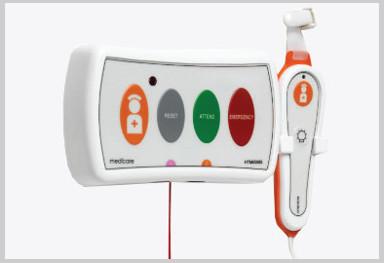
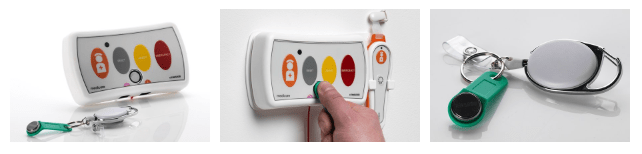
    The HTM6500iB system is a nurse call system that provide specific data to meet CQC standards and allows the monitoring of care, whilst fundamentally providing an alarm system to raise an alarm for help and assistance when required the HTM6500iB system provides versatility and many other options.

    The system benefits from being addressable so not only recording response times it can also record the staff member who has attended to help and provide care or assistance. Like the HTM6500S system the call points also have two sockets under the call point providing connections for both a pear push lead and assistive technology should you have the requirement.

    One of our clients had the problem of proving that care was being provided as the patient suffered from memory loss and often said that they were left alone for hours on end. The HTM6500iB system helped document and record the amount of care given providing evidence of nightly visits and attendance times whilst providing care.

    Get in touch with our product specialist and learn how you can get started with Nurse Call System. To know more contact us on sales@rincon.co.in

  • Patient Tracking Solutions

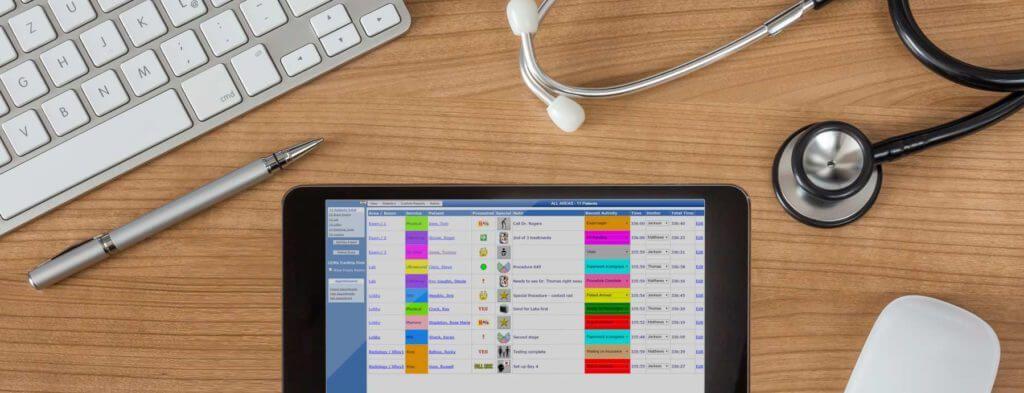
    PatientTrak offers world class patient tracking solutions which can be used in any healthcare setting needing to manage the patient flow process. From single provider practices to large hospital groups, to multi-facility healthcare organizations, our systems are both affordable and scalable.

    Health Clinic, Outpatient, and Hospital Unit Patient Tracking System – Import appointments from your scheduling system and track user defined “activities”, such as check-in time to treatment time, for example. Manage room usage by identifying those rooms which are under/over utilized. Set manual or automatic alerts and generate custom reports for analysis of patient flow. Standard reports include Average Wait & Treatment Times, Peak Times by Area, Time Between Activities, and more.

    Registration, Patient Tracking, and Productivity System – Manage the registration process effectively. Identify the average time it takes to register patients and track which resources are registering patients more efficiently. Eliminate phone calls to other departments and easily manage patient “handoffs” to Outpatient Services. Improve patient satisfaction by reducing wait time, eliminating patient misplacement or oversights, and monitoring lobby and departmental waiting queues. Notifications can be sent based on user defined criteria, such as for those patients who have been waiting for excessive amounts of time. Identify bottlenecks in the registration and patient access services processes. Standard reports include Patient Count, Peak Times, Desk Usage, and more.

    Emergency Department, Walk-In-Clinic, and Urgent Care Center Patient Tracking System – As patients arrive they are entered into the PatientTrak system, immediately recording wait time, chief complaint, and status. User defined “activities” allow your hospital to track times of any desired function or task, assisting in the improvement of patient flow. You may set custom alerts and send email notifications to better identify and inform of long patient wait times and delays. Standard reports include Length of Stay, Patient Count, Peak Times, and more.

  • Reblog: 4 Things You Might Not Know About HIPAA Compliance

    [thumbnail target=”_self” src=”https://www.rincon.co.in/site/wp-content/uploads/2019/01/Healthcare-1024×560.jpg”]

    HIPAA is an incredibly influential part of the US healthcare regulatory landscape. Because its focus is the security of electronic personal information, it’s no surprise that the law and its requirements continue to evolve as the tech landscape changes.

    While this is ultimately a good thing, ensuring that the law makes sense in regards to the resources available and challenges faced in healthcare IT, it can also make HIPAA compliance a bit of a moving target. What doesn’t change, however, is the extreme consequences of a security breach.

    1. It’s Not the Fines That Get You

    A HIPAA breach can deliver a serious blow to your organization’s financials, but the costs may not be coming from where you think. The requirement to publicize that the breach occurred can cause more damage than a government fine.

    [well type=””]

    “If you do the math and you look at an organization that has 10,000 records, that’s between $2 million and $4 million worth of risk. 25,000 records? Up to $10 million in risk. And 100,000 records mean $40 million in risk. Now, I’m saying risk because it’s not the cost of the breach itself. A study shows that about one-third of these numbers is the actual cost of the breach.

    The cost of the breach includes notifying patients and hiring lawyers. If it’s a big breach, you have to set up an 800-number and have people answering it. You may have to do credit monitoring. That’s about a third of these costs. What’s the other two-thirds? It’s the loss of business.”

    Mike Semel

    President & Chief Compliance Officer, Semel Consulting

    [/well]

    2. Inattention is No Excuse, Even If Nothing Bad Happens

    The law requires organizations to secure information from prying eyes, whether those eyes are there or not. Organizations are required to make sure all their systems are properly maintained, even if that means installing a completely new operating system (which may itself require new hardware).

    [well type=””]

    “HIPAA says that you have to have devices that are currently supported with patches and updates in order to be compliant.”

    Mike Semel

    President & Chief Compliance Officer, Semel Consulting

    [/well]

    3. HIPAA Breaches Can Even Come from Within

    It’s important to remember that HIPAA violations aren’t always caused by malicious outsiders, your own employees can be a source of trouble, either intentionally or unintentionally. It’s essential to remember that HIPAA requires only relevant staff have access to any given record. If a nurse looks at the diagnosis for a celebrity staying in another ward, that’s a violation. If your radiology department email’s a patient’s x-ray results to the wrong doctor, that’s a violation.

    Regular training and oversight are key to protecting your organization against threats from within, in addition to keeping bad actors out.

    4. A Key to Better Health Data Security Can Be Simplicity

    Because many data security solutions are cumbersome, it is common for staff to circumvent them by relying on insecure (but more user-friendly) consumer file-exchange solutions instead. The best way to keep this from happening? Make your security rules easier rather than weaker.

    If sending a document via Fax-Over-IP or a secure file exchange solution is as easy as sending an unsecured email, your employees are much more likely to do it. By making proper compliance the path of least resistance, you streamline workflows, reduce staff frustration, and better protect your organization.

    Ready to streamline regulatory compliance with XMedius secure document exchange solutions?

    The original article can be found here.

    For more information e-mail us on sales@rincon.co.in and we will be glad to assist you.
  • Reblog: The enduring appeal of fax -Why it refuses to go away

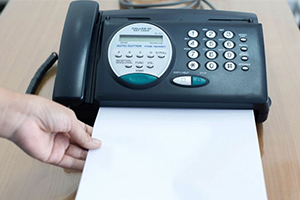
    As different forms of business to business communication have come and gone over the years, there is one which refuses to go away. In fact, for many industry sectors, it continues to be an essential channel of communication.

    Time and time again, we’ve read articles predicting its final demise.

    Yet fax continues to hold its own, surviving and thriving in certain sectors where other forms of communication don’t provide the same level of simplicity, proof of delivery or, in some cases, levels of security.

    Anecdotal evidence from Japan is that faxing is still very common, and that virtually every office and workplace is equipped with the ability to send and receive faxes. Faxing is still in use for everyday communications such as replying to party invitations.

    We should add at this point that Japan is a special case, with a complex alphabet which makes hand writing messages preferable on many occasions. Perhaps there is even a cultural attachment to the personal aspect of sending a fax, but even so, evidence of the enduring qualities of fax comes from around the world.

    A 2017 survey of German companies with at least 20 employees found that:

    • 70% of respondents said they sent fax messages ‘often’ or ‘very often’
    • Amongst businesses with less than 50 employees, this figure rose to 77%

    The message is clear – if you want to do business with Germany or Japan, you need to include fax in your mix of communications channels.

    Yet this phenomenon is not confined to just these countries. A 2017 IDC (International Data Corporation) survey of senior decision makers in financial services, healthcare, government and manufacturing, across North America, Western Europe and Asia Pacific, found that the use of faxes was actually on the rise.

    • 82% of respondents had seen their use of faxes rise or stay the same compared with the previous year
    • The volume of faxes being sent had risen by 27%
    • Across the 3 regions, the average predicted growth in fax volume over the next 2 years was 25%

    Whilst it might be assumed that the healthcare and legal sectors make more use of faxes due to the paper trail they leave, the projected growth was spread across all sectors:

    • Finance – 20%
    • Healthcare – 25%
    • Government – 27%
    • Manufacturing – 29%

    Other reasons for the ongoing global appeal of faxing are varied:

    Compliance

    Sectors such as healthcare, legal, finance and government demand high levels of data and communications compliance, for example in maintaining a clear paper trail for certain processes and transactions.

    Many jurisdictions only accept signatures on faxed documents as being legally binding, and the fact that sending a fax produces an instant acknowledgement and record of receipt, contributes to the sense of reliability as a communications medium.

    Simplicity

    The simplicity of faxing is also an advantage in sectors such as manufacturing, when getting the right documents signed by the right people in a hurry is frequently advantageous.

    Many businesses still rely on keeping individual copies of receipts, invoices and contracts, and faxing is still the simplest means of ensuring that papers such as these go to exactly the right person, without being lost amongst the avalanche of emails received on a daily basis.

    Security

    Across all sectors, the security offered by faxing can be a huge advantage.

    Faxes can’t be tampered with once sent; nor can they carry a hidden virus.

    This advantage was underlined when Sony Pictures suffered an embarrassing cyber-attack in 2014, during which thousands of private emails were published online. In 2016, the chief executive of Sony, Michael Lynton, revealed that in response to the attack, he now writes out sensitive messages by hand and sends them by fax.

    The handwritten approach may seem a bit over the top for some, but the security and peace of mind offered by faxing is clear.

    In summary

    Fax remains a vital component of business communications across many industries. The benefits fax provides ensures its enduring appeal as a communications vehicle, that other comm’s methods such as email simply can’t match.

    Our ever-popular Zetafax network fax solution continues to meet on-going demand, offering the advantages of faxing combined with the flexibility of online hosting. It is used by more than 65,000 customers worldwide and improves on manual faxing through factors such as:

    • Cost cutting automation
    • Automated archiving
    • Support for Fax over Internet Protocol (FoIP)
    • Integration with other applications

    For more information e-mail us on sales@rincon.co.in and we will be glad to assist you.

    The original article can be found here.

  • Reblog: Is Fax Dead in Healthcare?

    The word “fax” has some pretty outdated connotations within today’s highly mobile and technologically savvy workforce. When people think fax, it may invoke a flashback of standing in front of a jammed machine as they attempt another go at sending a single page for the 6th time, or trying to get an urgent document over to a waiting recipient, only to discover that the receiving fax machine is out of ink. Regardless of the reputation fax has for being obsolete tech, the reality is that fax usage in many industries is still rising, not dropping, and faxing itself no longer means having to rely on outdated machines.

    If you’ve pondered the question “Who still faxes in 2018?” the straightforward answer is that many businesses rely on fax for their day-to-day operations.

    In The International Data Corporation’s (IDC) 2017 fax survey, 82% of respondents in the Finance, Healthcare, Manufacturing, Legal, and Government sectors saw fax usage go up or remain consistent compared to the previous year. The average growth of fax usage across the board was 27%, with a quarter of companies in these sectors reporting growth between 50-74% – a very far cry from the statement that “fax is dead”!

    Fax is far from dead. Not only is it still widely used, it has evolved into a digitized medium that integrates seamlessly with interfaces that most of us use regularly, like email. While fax machines may remain for a little while longer, their use is no longer synonymous with faxing itself. Fax-over-internet-protocol (FoIP) technology has revolutionized communications, allowing for increased security, mobility, and ease-of-use. Read on for an overview of how and why fax has remained commonplace in the healthcare industry.

    The Role of Compliance in Healthcare Faxing

    The healthcare industry’s wide use of fax has a lot to do with regulatory compliance, namely with the Health Insurance Portability and Accountability Act, or HIPAA, which was passed by the US Congress in 1996. Navigating the details of regulatory compliance can get overwhelming: when it comes to secure data transmission, what does HIPAA actually say? The HIPAA Privacy Rule was enacted in 2001, shedding a little more light on exactly how healthcare organizations should protect patient data. It urges healthcare professionals to take “reasonable safeguards” when sharing patient files between hospitals, labs, doctors’ offices, and insurance providers.

    The US Department of Health and Human Services (HHS) clearly names fax as an essential method of transmitting medical records, test results, and anything else containing personally identifiable information (PII). This is not to say that email isn’t widely used as well, but there are tremendous security risks that come along with using email to send and receive sensitive files.

    A quick “healthcare data breach” search in Google will reveal the startling number of phishing scams and email hacks that take place in the industry almost every day. While there are secure email servers galore available on the market, these platforms are often reserved for larger healthcare corporations or hospital networks since they are often too costly or complicated for the average healthcare provider.

    EHR/EMR Systems and Paperless Faxing

    The advent of Electronic Health Record and Electronic Medical Record (EHR/EMR) systems have completely changed the healthcare records management landscape. Not only is electronic record management in accordance with HIPAA’s efforts to digitize the healthcare environment, it provides a safer means for storing data. Electronic record keeping also allows healthcare professionals to minimize human error while taking full advantage of cost savings.

    As technology advances, EHR/EMR systems vendors now offer on-site or cloud data hosting options, and the systems themselves provide improved coordination between healthcare providers, even granting patients the ability to access their records online. They’ve progressively become more prevalent in healthcare facilities of all sizes – It’s estimated that 77% of today’s healthcare providers have moved their records into the digital sphere.

    Fax-over-Internet-Protocol (FoIP) technology has also evolved over time, with many vendors offering seamless integration with today’s EHR/EMR systems. From a user perspective, sending a fax is now as simple as pushing a button on the interface they already use every day. This eliminates the need for paper filing and simplifies the data transmission process since documents no longer need to be printed or scanned to before users hit send.

    Healthcare Carries the Highest Digital Fax Adoption Rate

    Healthcare showed 9% growth in digital fax usage in 2017. Right now, in healthcare facilities across North America, GPs, surgeons, nurses and other staff are putting a sensitive document in a fax tray, pressing send, and listening to the cringey audio-frequency tones that signify their information being transmitted one page per minute. Of course, not all medical records are sent through fax machines – many healthcare organizations have digitized their faxing or are in the process of doing so. In fact, the healthcare industry leads the pack for transitioning to modern FoIP technology, representing a whopping 30% contribution to the fax services global market in 2017.

    Confirmations of Receipt: From Paper Trail to Audit Trail

    The fact that faxing gives organizations confirmation of receipt is a major reason that it remains a prevalent form of communication. For years, the confirmation page (the printout that lets users know that their message has been completely received) has served as a faster and cheaper equivalent of sending registered mail. Most email systems come equipped with a read receipt feature, but these typically still give recipients the choice to opt out.

    For healthcare organizations who send and receive large volumes of sensitive data daily, confirmations of receipt offer several benefits:

    • They eliminate both administrative and IT guesswork (follow-up calls, manual logging)
    • They facilitate easy records keeping

    When it comes to dealing with sensitive patient information, confirmations of receipt are necessary from both an administrative and regulatory compliance perspective. Today, medical staff have a few ways of maintaining a paper trail of how, when, and to whom patient data is exchanged. While physical paper filing might be a slightly outdated practice, it remains a reliable system for some healthcare organizations. Many use document scanners or multifunction printers (MFPs) to scan confirmations of receipt and file them electronically.

    Healthcare facilities who have implemented FoIP solutions, however, often do so for their built-in records keeping features. XMediusFAX, for example, is designed to keep an audit trail of all fax transmissions, maintaining detailed records that can generate reports any time. Not only does this free up time for healthcare administration, it alleviates healthcare IT of having to use additional software to log communications.

    FoIP for Savings

    In addition to security and compliance benefits, switching to FoIP can bring significant savings as well. Switching organizations regularly reduce costs by eliminating expensive analog fax lines and paper filing/waste. IT departments love being able to get rid of high-maintenance fax machines in favor of more reliable software and MFP integration.

    Beyond the IT and accounting departments, FoIP is a win for the rest of the staff too. Staff members across Healthcare report significant time savings between reducing/eliminating trips to machines, no longer waiting for acknowledgement receipts, and incoming faxes automatically being routed directly to them, wherever they are.

    Fax Isn’t Dead, It’s Evolving

    Discover how fax software can improve the security and compliance of your healthcare document transmissions. Speak with one of our knowledgeable experts today about how FoIP solutions could work for you.

    The original article can be found here.

    For more information e-mail us on sales@rincon.co.in and we will be glad to assist you.
  • Rincon Participating In Hospital Planning & Infrastructure Exhibition

    Save The Date: 11th to 13th October 2018

    Bombay Exhibition Center, Mumbai, at Booth No. C-22, 9:30am onwards

    Rincon India Solutions Pvt. Ltd., a leading solutions provider for document automation in the healthcare vertical is pleased to announce its participation in The Hospital Planning & Infrastructure International Exhibition and Summit. This exhibition is being held from October 11 to 13, 2018 at NESCO, Goregaon in Mumbai.

    Team Rincon will showcase their solutions in the area of:

    • Insurance Desk automation
    • Patient Records Management
    • Scanning Services

    These solutions have been successfully deployed across various hospitals in India.

    About the Conference

    Hospital Planning & Infrastructure, South Asia’s leading Exhibition on Hospital Infrastructure, Design & Planning is back with its fifth edition from October 11 to 13, 2018 at Bombay Exhibition Centre, Mumbai. The Expo is a focused Trade Show & Summit which brings together experienced Industry buyers including Key Budget Holders, Investors & Policy Makers who represent the real power behind the development of a World-Class Hospital Infrastructure in South Asia.

    For more information e-mail us on: sales@rincon.co.in

  • Reblog: Best Practices for Protecting Client File Privacy in the Legal Sector

    There are ways to protect the sensitive data contained in client files and reduce data loss around the legal office with software updates, document digitization, and FoIP solutions.

    The legal sector is comprised of law firms of all sizes, independent legal practitioners, and legal departments within organizations. Although this describes a vast array of legal offices, what ties them all together is that the legal workforce is responsible for high volumes of sensitive client information. Client files often contain the full gamut of personally identifiable information (PII) – from medical records to banking history and credit card numbers – placing the legal sector in the unique position of being under several compliance regulations when it comes to handling said data.

    Whereas regulations like HIPAA govern the exchange, storage, and auditing of PII for the healthcare industry, and regulations like SOX do the same for the financial sector, organizations in the legal sector can be subject to fines and penalties from both of these regulatory bodies and more. In a recent blog, we took a look at the inherent risks involved in transmitting client info via email. Taking the time to understand the threats linked with email use is a great first step, but email risks are only the tip of the iceberg when it comes to the possibilities of a data breach. If you work in the legal sector, this article aims to look at the broader picture and provide a few best practices you can apply around the office to keep client files safe.

    Perform an IT Audit and Update your Software

    Is your legal practice still using Windows XP? Despite the rising prevalence of data breaches due to unpatched and/or unsupported software with highly exploitable vulnerabilities, many companies still don’t see the need to upgrade to newer systems. After the WannaCry attacks in May, 2017, Microsoft provided legacy Windows platforms that were no longer receiving standard support, including Windows XP, Windows 8, and Windows Server 2003 with a security update. It was revealed that at the time of the attack, there were over 100 million legacy windows systems still in use around the world.

    Regardless of your current operating system, outdated technology puts your legal practice, and all the sensitive data within, at huge risk. You can have strong data governance policies in place and all your other organizational ducks in a row, but if you’re running an outdated OS, hackers can and will exploit such vulnerabilities. Don’t let this happen to you.

    Digitize Legal Records

    Transitioning to a completely paperless legal office may seem like a daunting task. Look around and you’ll likely see paper documents all over the place: client letters, court filings, case notes and more. Regulations like HIPAA for the healthcare industry are pushing organizations in the direction of electronically managing and filing records containing PII for several reasons. Paper file management is time consuming, costly, and leaves too much room for human error in a time where data breaches are so prevalent. Surprisingly though, a significant amount of legal practices still resorts to paper filing for their legal records, mostly because up until recently, practices involved in litigations have been required to print, bind, and share thick stacks of paper related to court cases.

    Luckily, many courts today are adopting electronic filing and services. This enables legal practices to transmit documents directly to a court’s case management system where it can be distributed to any other parties involved.

    Transitioning to a paperless environment doesn’t happen overnight, but most of today’s paralegal training incorporates digital filing and systems management, making it easier for law firms of all sizes to hire the right help. Legal practices that print and collate files for long-term storage may want to consider secure cloud-based storage and sharing services. Even in-house servers take up way less space than your average paper filing cabinet, and greatly reduce the likelihood of unauthorized parties accessing client files.

    Make your Document Transmissions Paperless

    The fax machine is the most paper-intensive communication technology still in use, and it’s still going strong in the legal sector. Not only is it costly to maintain a fax machine, its leaves the details of client files up for grabs, whether documents are left lying around in plain sight, or the fax machine at the receiving end of your transmissions is left unattended. Email and scanning technology have their own list of security risks and have therefore not made outdated fax technology obsolete. A range of fax services, including fax over internet protocol (FoIP) solutions have made a tremendous impact on organizational efficiency in recent years, allowing users to send and receive secure faxes directly from their PCs, laptops, and mobile devices. This means no more printing is required, and the legal workforce can securely send their documents while on-the-go – a relief for those rushing to make their next courtroom appearance.

    Want to learn more about FoIP and secure file exchange solutions that can simplify document management, improve compliance, and boost security for your client files? E-mail us on sales@rincon.co.in for more information and we will be glad to assist you.
    The original article can be found here.