Tag: security

  • Migrating your Fax Server to XMEDIUSFAX

    Fax-over-IP is a critical component in the communications infrastructure of many organizations. It is optimized to secure and streamline their document workflows, and it helps them to achieve compliance with the security and privacy regulations that apply to their respective industry sectors.

    XMediusFAX® is an ideal FoIP solution. It is a single-source, software-only technology and includes its own patented T.38 protocol, the most reliable protocol for transmitting faxes over a VoIP network. Better yet, XMediusFAX® doesn’t require a third party to enable your fax infrastructure and our R&D team has fully mastered the software and can intervene quickly if any assistance is needed. Furthermore, XMediusFAX® features shared High Availability (HA) channels that replicate information in real time. Both of its servers are active, so should one fail, the other takes over until the malfunctioning server resumes its normal workload. This ensures an uninterrupted workflow.

    Because of all these critical benefits, the XMediusFAX® solution attracts a range of organizations that are interested in implementing a superior FoIP solution.

    However, switching over from another solution can raise some concerns. One that prospective customers most often express involves migrating and preserving their existing data. In response to this concern, the XMedius team has developed a tool to help our new customers migrate from their current database* to an XMediusFAX® server while preserving all of their fax records and user information.

    Would you like more information about the migration offer of your current Fax-over-IP solution to ours?

    *Conditions Apply

    E-mail us on sales@rincon.co.in for more information and we will be glad to assist you.

  • Reblog: 5 factors to consider while choosing a 3rd party video conferencing tool for your telemedicine app

    Building a healthcare solution is a complicated process, and a myriad of regulatory requirements often add time and costs to the product.

    For this reason, experienced health-tech developers like Kays Harbor rely on their ability to integrate relevant 3rd party solutions which can expedite the development of your healthcare software without the need to reinvent the wheel, at the same time adhering to the strict regulatory requirements.

    One such area where we suggest our clients to opt for a 3rd party tool is the video conferencing module when it comes to developing a telemedicine solution. With so many third-party video conferencing products available in the market, it could be a challenging task to decide which solution to incorporate in your product.

    While you are doing your research around the available options in the market, do keep the following 5 points in mind that guide you to towards the right 3rd party video conferencing tool for your needs.

    When choosing a video conferencing tool for your telemedicine solution, make sure you look out for these five factors:

    1. Check if it is HIPAA compliant

    In all probabilities, you would have kept HIPAA compliance in mind while you are building the telemedicine solution. You don’t want to undo the hard work your developers have put into your product by integrating a non-compliant 3rd party solution.

    a. Privacy and security compliance

    The third-party product must be compliant with HIPAA’s Privacy and Security Rules, especially in relation to the increased requirements relative to the HITECH Act.

    b. Complete protection of PHI

    While your portion of the telemedicine solution has been built in a way that it doesn’t access the protected health information (PHI) being transmitted, you must ensure that 3rd party VC tool you are integrating also protects the PHI. As you are considered under HIPAA to be a covered entity and you are using another party’s service to assist in transmitting PHI, therefore HIPAA requires a business associate agreement to be in place to protect all parties.

    c. The tool should allow peer-to-peer sessions

    To remain compliant, the video conferencing tool you choose should create a portal from endpoint to endpoint, thus ensuring that PHI is never stored or received in any way by your own telemedicine solution. This essentially means the video conferencing tool acts as a closed portal through which information passes, preventing the interception or leakage of data between points A and B. It should only broker the connection between securely verified participants and allow for the administration and management of the list of such users.

    d. Choose a tool that integrates encryption

    While the Security Rule doesn’t require data encryption in cases where it can be shown to not be reasonable or appropriate, the video conferencing tool you choose should encrypt the data that it generates. If there is a breach for any reason,proper encryption provides a safe harbor and you would not need to provide notification of the breach as otherwise required by HIPAA’s Breach Rule (as defined in the HITECH Act).

    e. The video conferencing solution should allow HIPAA compliant local file storage

    You should choose a tool that allows your users to save the PHI created to your own hardware, which should itself be HIPAA compliant. The tool should not itself store any data within its infrastructure or be allowed to access the said data, to protect yourself and your clients.

    2. Video and Audio performance

    The video conferencing tool you choose to integrate into your telemedicine solution should add versatility and adaptability to the way your users connect to one another.

    a. Crystal clear clarity regardless of connection quality

    The tool you choose should provide high quality audio and visual performance regardless of the user’s connection speed, or disparate connection speeds between users. The tool should offer compatibility with and the ability to thrive on bandwidths of all types.

    b. Efficiency on multiple displays

    Your users may be running telemedicine sessions over different device types and screen sizes. The 3rd party video conferencing solution should be able to render seamlessly irrespective of the screen size and resolution, without any severe effect on the video/audio quality.

    c. A customizable interface helps build trust

    The tool you choose should allow users to customize the video feed with options such as being able to resize video, allow the feed to appear frameless to improve the personal connection between the doctor and patient, allow users to arrange multiple feeds, and other similar display functionality.

    3. Purpose-specific features

    Depending on the purpose and functionality of your telemedicine solution, there can be several custom features you might want to incorporate in your product. In that scenario, your 3rd party video conferencing tool should be flexible enough to allow you to easily build such functionalities on top of it. Consider the following custom features and decide for yourself.

    a. Pause and annotate live video

    You might need a tool that allows the doctor to pause the video, annotate records, or even draw on the monitor to share information with the patient.

    b. Patient queue

    If your telemedicine tool is being used to allow doctors to perform virtual consultations, it might be necessary to choose a video conferencing solution that keeps a queue of patients to manage appointments and contacts at a glance.

    c. Multimedia functionality

    In order to allow users to share documents, records, educational material or other information with other participants, you might need a tool that allows the ability to patch in alternate content feeds.

    d. Multi-User feeds and chat

    There are video conferencing tools that allow your users to add in other users to video conversations in situations where appropriate, such as consults with families or when participants are in multiple locations.

    4. Customization

    To create the most versatile telemedicine solution, your video conferencing component must include a significant degree of customizability and be compatible with the other components of your product.

    a. User interface and portal

    The 3rd party tool should be flexible and customizable enough so that it doesn’t appear to be a separate module from the rest of your telemedicine solution’s interface. It should also include many relevant UI options, such as the ability to access client records, scheduling tools, and workflow and productivity tools, to maximize integration and usability.

    b. Information is easily accessible

    Data created by the video conferencing tool should easily integrate into the existing data captured by the rest of your telemedicine solution and be compatible with software and hardware in use in the medical field. Ensure any data created during a session is converted to text or data files that can be uploaded into users’ existing EMR / EHR systems and that videos can be saved in accessible and HIPAA-compliant formats.

    5. Compatibility with your own systems

    The most important factor in choosing which videoconferencing tool to integrate into your telemedicine solution is determining with which systems the tool should be compatible.

    a. Browser compatibility

    As you have specific browser requirements and functionality built into your tool and your users likely have their own preferences, you want a tool that is compatible with as many browser platforms as possible, including but not limited to Safari, Chrome, and Firefox.

    b. Technology compatibility

    Even more important is knowing the hardware preferences of your intended client base. The tool you choose must include compatibility with your intended target operating systems, be it Windows or Mac. If mobility is a concern, consider compatibility with Android and iOS. Finally, does the tool include compatibility with JavaScript and other software solutions that might be integrated into your telemedicine solution?

    The original article can be found here.

    To learn more contact us sales@rincon.co.in

  • Reblog: Document Management Systems: A Buyer’s Guide

    If you are in the market for a document management system in 2017, one of the first questions you have to answer is whether you want to house the system inside your business, or have it hosted in the cloud. While both options provide a framework for storing and organizing your electronic documents, each has its own advantages and disadvantages.

    Our guide will help you understand the differences between self-hosted and cloud-hosted document management systems, as well as the features they include and the benefits they offer. In addition, our guide offers tips on what to look for when choosing a document management system.

    What Is a Document Management System?

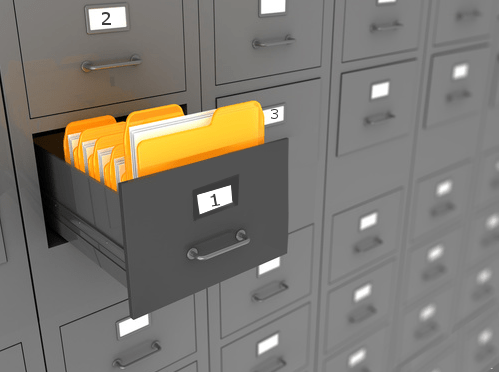
    • Document management systems are electronic filing cabinets that provide a framework for organizing all digital and paper documents.
    • These systems work in tandem with scanners, which convert paper documents into digital versions.
    • Through sophisticated search engines, document management systems allow for quick access to any document or file.

    The functions you can use these systems for include:

    • Storing various document types, including word-processing files, emails, PDFs and spreadsheets
    • Searching an entire library of files by individual keyword
    • Restricting access to certain documents
    • Monitoring who is viewing documents and when
    • Tracking edits being made to documents
    • Retrieving previous versions of edited documents
    • Controlling and regulating when out-of-date documents can be deleted
    • Accessing, editing and sharing documents via mobile devices

    What the experts say: Jeff Pickard, CEO of Lucion Technologies, a provider of document management solutions, said these systems help businesses organize all of their paper and digital files in one central location, where everyone in the office has access.

    “It’s a challenge for companies to keep up with all the paperwork and electronic files that come into a home office or business every day,” Pickard told Business News Daily. “It generally starts slowly — an email here, a receipt there, incoming invoices and customer correspondence. And before you know it, you’ve got a mountain of paper and no way to find the documents you need.”

    Now that you know what a document management system is, you have to decide which type — a self-hosted or cloud-based solution — best fits your needs. Both systems offer the same features, however they do have several key differences.

    Self-Hosted Document Management System

    • All of the software is stored inside your business on your company’s own servers.
    • Self-hosted systems allow you to store as many documents and files as your server allows.
    • The software comes with a one-time cost that’s based, in part, on the number of users. Self-hosted systems typically cost at least several thousand dollars. Some systems charge an initial fee for the software, as well as license fees for each user. In addition, some charge an installation fee.
    • With self-hosted systems, there is also an optional yearly charge for ongoing support and software upgrades.

    Pros: The biggest benefit of a self-hosted document management system is that you are always in control of your system and not relying on anyone else to keep it up and running. You’re not dependent on the Internet, either. If you your online connection goes down, you still have access to all of your documents.

    Cons: The downside comes in the large up-front costs, as well as the extra yearly expense of having to pay for software updates. In addition, it’s also up to you to make sure you have a proper backup system in place, since your files aren’t being automatically saved in the cloud. Another possible negative is that not all self-hosted systems work with both Windows and Mac computers. Many are compatible with only one or the other.

    Cloud-Hosted Document Management System

    • All of the software is hosted by your provider and accessed online.
    • You can log into these systems from any computer or mobile device connected to the Internet.
    • You pay a monthly fee for each user. Costs can range from a few dollars to close to $100 per user, depending on the provider, the number of features you choose and amount of storage you want.
    • The system’s provider, for no additional cost, handles all of the software upgrades and maintenance.

    Pros: The biggest benefits are that you don’t need an IT team to install the software and keep it running properly, and that there aren’t any large up-front costs. You also can tap into these systems from anywhere that has online access, and you never have to worry about backing up your files since they are automatically saved in the cloud.

    Cons: The downside is that you are at the mercy of your provider to keep the system up and running. If your provider has a problem with its data center, it could prevent you from accessing your files until the situation is resolved. In addition, if your Internet connection fails, you won’t be able to get to your files. Cloud solutions also have a storage limit.

    Document Management System FAQs

    Still unsure about exactly what a document management system does? No problem. Here are some questions and answers that may provide some more clarity.

    Q. Are document management systems valuable only to large organizations, or can small businesses benefit from these too?

    A. Although they may not have the extensive number of files that larger organizations do, small businesses can still benefit from using document management systems, according to Jesse Wood, CEO of eFileCabinet.

    “A document management system is a great way for businesses to become more effective in their respective industries, regardless of the size of the company or how many clients it has,” Wood said.

    Q. I often see references to document management systems, document management software and document management solutions. What are the differences?

    A. Despite the different names, they all accomplish the same tasks. Mary Williams, marketing communications director for DocuWare, said the differences are a matter of semantics.

    “Our industry does a good job confusing the general public, because there are many terms out there that are interchangeable,” Williams said.

    Q. What’s the difference between cloud storage and cloud-based document management systems?

    A. While cloud storage serves simply as a place for to house documents in the cloud, cloud-based document management systems are a much more robust solution to help businesses manage their important documents, Wood said.

    “As a mere storage repository, cloud storage lacks the collaboration, security and diverse automation features of a document management system, namely in the form of audit trails, user permissions, templating, versioning and bank-grade encrypted file sharing,” Wood said.

    Q. How do you get documents stored in the system?

    A. There are several ways to add files, including by uploading them from your computer and by scanning paper documents directly into the system.

    Pickard said scanning capabilities are a huge part of a system.

    “Now, scanning takes just seconds, and if you get the right technology package, you can automatically create editable, keyword-searchable files in a universal format, like PDF, while you scan,” Pickard said. “A good scanning solution even makes bulk scanning easy, recognizing where separate documents begin and end in a stack and sending them to the right folder, like a virtual file clerk.”

    Q. How do you find documents in the system after they’re filed away?

    A. These systems offer a number of ways to quickly locate documents, including by searching the file’s title, the name of the author and when it was added into the system. In addition, many of these solutions allow you to search for content within each file.

    “If you find a solution with integrated search features, you can simply conduct a keyword search to pull up documents in seconds [and receive] a preview to make sure you’ve got the right file before opening it,” Pickard said.

    Q. Do document management systems work with other programs I am already using?

    A. While most systems feature integrations for Microsoft Office, Salesforce, DocuSign, QuickBooks and a number of other popular programs, some also include an application programming interface (API) that allows for customized integrations.

    “A document management technology with an open API extends this adaptability to organizations wishing to further tailor the document management system to their specific initiatives,” Wood said.

    Q. Besides keeping you more organized, can document management systems help you get work done in other ways?

    A. Yes, and one way is with work-flow tools, which help businesses keep assignments and projects on track. These tools, which are included in some systems, notify employees when it’s their time to work on certain assignments and help ensure that tasks never get lost in an employee’s in-box, said Errick Anthony, project manager for LSSP Corporation, a document management system provider.

    “Work flow means the ability to let a person or group of people know that action needs to be performed on a file to complete the process,” Anthony said. “Work-flow management also contains the ability for the tracking and managing of those files by a manager.”

    Q. With document management systems, do all users have access to every file?

    A. Most document management systems have security restrictions that can control which employees have access to which files. This ensures that employees are seeing only the documents they should.

    “Security has such a vital role in the document management system,” Anthony said.

    Q. What happens if a disaster strikes my business? Are the files and documents stored in the system lost for good?

    A. A big benefit of the cloud-based solutions is that your data is safely being stored off-site.

    “Document management systems enable an instant business-contingency plan, as your backups are stored off premise in the rare case of damage or destruction to your location,” Anthony said.

    Document Management System User Benefits

    Businesses we spoke with reported a number of advantages to using these systems. Here are some of the largest plusses they pointed to:

    Easy access: John Bustrum, CEO and founder of My403bCoach.com, said having such software in place means he’s no longer forced to stockpile loads of files on his desk. Instead, when clients call, he can instantly find the documents he needs on his computer.

    Easy to search: Being able to easily search through her company’s documents is a huge benefit, said Karen Walker, founder of One Team Consulting. She said the ability to quickly search for and retrieve presentations and notes is invaluable.

    Better collaboration: Getting rid of hard copies of documents makes it easy for employees to work with each other, said Gary Tuch, founder of the Professor Egghead Science Academy. When multiple employees are working off of one document and editing is constantly happening, document management systems ensure workers always have the most up-to-date copy, he said. Employees waste no time on printing revisions or double-checking to make sure they have the current version, Tuch added.

    Added security: Increased security is a huge advantage of using document management solutions, said Andrew Southard, general manager of the Indiana-based Data Management Shredding, Inc. The technology has given his company the option to track who is viewing and editing each document, and designate which employees have access to which files, he said.

    Saves space: Exchanging paper documents for digital versions can save a tremendous amount of physical space, said Randy Jourgensen, owner of Digital Office Solutions. Since transforming his office to a paperless environment more than 15 years ago, Jourgensen has been able to convert space that was formerly used only for file storage into space that can generate revenue, he said.

    Disaster recovery: Businesses that have all of their documents stored in physical filing cabinets face the risk that these papers might be destroyed, or that the business may lose access to them should a disaster occur, said Alan Baker, president and chief consultant at Spitfire Innovations. If a water pipe bursts or there is a fire, business owners can still operate with little impact, since their critical documents are stored online and spared from any destruction.

    What to Look For In a Document Management System

    We asked our experts to highlight what they think are some of the most important features and functionalities that small businesses should look for when choosing a document management solution.

    File structure: The system should offer an easy-to-use file structure that makes sense to users, such as a cabinet-drawer-folder approach.

    Searching: You want a wide range of options for quickly finding files. You should be able to search not only by the file’s name, but also by the content inside the file.

    Ease of use: The system should be simple for employees to use. If it is too difficult, you won’t get complete buy-in from the staff, which will make the system less effective.

    Mobile access: You want a document management system that is accessible via smartphones and tablets.

    Integration: The system should easily integrate with the programs you’re already using, such as your email client and customer relationship management software.

    Scanning: The solution should be compatible with a wide variety of scanners.

    Security: The system should allow you to restrict who can see specific folders and files. You should be able to set access permissions by employee.

    The original article can be found here.

    If you are considering implementing a document management system for your business, but you are still sitting on the fence when it comes to selecting the right solution, we encourage you to e-mail us on sales@rincon.co.in and we will be glad to assist you.

  • Reblog: The Top 7 Benefits of Document Management Systems

    Documents, whether electronic or paper, are an essential component of just about any enterprise. Managing business information, sometimes from several sources, can be a challenging task. Depending on the nature of your company, a document management (DM) solution that captures, stores, and retrieves both paper and electronic documents can provide many key benefits to your organization.

    In this post, I’ll discuss the top 7 benefits of document management systems, including:

    Reduced Storage Space
    Enhanced Security
    Improved Regulatory Compliance
    Easier Retrieval
    Better Collaboration
    Better Backup and Disaster Recovery
    And the “Intangibles”
    Read on to learn more!

    1. Reduced Storage Space

    Commercial property costs are increasing and so is the expense to store paper documents. A software-based document management solution (DMS) that can reduce the need for file cabinets, boxes and storage bins is a valuable asset to any enterprise, freeing up precious office space. Documents that have to be kept as hard copies can often be stored in less expensive locations, such as an offsite warehouse or vault.

    2. Enhanced Security

    Document security is vital to many enterprises. DMS provides better control over sensitive documents. Access to documents can be controlled at the folder level for different groups or individuals. Also, a DMS leaves an audit trail of who has viewed a document, when it was accessed, and how it may have been modified. Managed documents are highly traceable and can be tagged to allow for automated alerts.

    3. Improved Regulatory Compliance

    Compliance requirements for certain documents can be quite complex. Non-conformance can lead to fines, revoked licenses, and in some cases criminal liability. Federal and state regulatory regulations such as Sarbanes Oxley and HIPAA mandate strict security and privacy guidelines. DMS reduces the risk of non-compliance. Records retention schedules, for example, can be automated, and new documents can be more easily classified and stored.

    4. Easier Retrieval

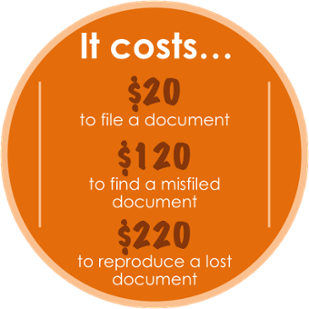
    Searching for and retrieving documents can be very time consuming – and we all know time is money. In fact, PWC published these statistics illustrating the costs related to the average time spent managing paper documents:

    1. Organizations spend $20 in labor to file a document, $120 in labor to find a misfiled document, and $220 in labor to reproduce a lost document.
    2. 7.5% of all documents get lost; 3% of the remainder get misfiled.
    3. Professionals spend 5 to 15% of their time reading information, and up to 50% of their time looking for it.

    A document management solution, specific for your enterprise, can be a powerful, time-saving tool. Depending on the solution implemented, a DMS can retrieve files by a word or phrase in a document – full text search, or DMS can apply index categories to a document or folder. Easier integration with business applications facilitates access to critical information. DMS also gives the opportunity to access documents remotely. As long as there is internet connection, documents can be accessed from virtually anywhere.

    5. Better Collaboration

    With DMS, information sharing and collaboration can be a lot easier. Documents captured from different sources can be accessed from multiple locations. Electronic imaging makes sharing documents over a network via email or the Internet possible. DMS provides greater visibility to business processes and can allow for better workflow monitoring. Authorized access by external users can be allowed and monitored. DMS also offers Version Control which allows for older versions of the same document to be recovered if needed. This feature is important if several parties work on the same document and there are changes made to a document that were not authorized or meant to happen.

    6. Better Backup and Disaster Recovery

    Any document management solution should include a data backup and disaster recovery plan. With digital archiving as a backup, paper documents are protected from fire and flood and other disasters. With a DMS, documents are highly traceable and can be tracked within a range of criteria.

    Also, because imaged documents are centrally stored they cannot be lost or misplaced after viewing. Documents are less likely to be misfiled, and if so they are easier to locate with cross-indexing. Documents can be digitized and archived at their point of entry into the system.

    7. The Intangibles

    Just a few of the intangible benefits of a document management system include:

    1.Flexibility
    2.Competitiveness
    3.Improved client relations
    4.Peace of mind

    Time is valuable, and time saved is a definite benefit of DMS that often translates directly into increased productivity. Faster and more efficient document retrieval can boost staff morale and increase client satisfaction. Also, document management solutions are scalable to meet the changing needs of any enterprise.

    Proper document management systems can bring many benefits to you and your office. Take initiative and schedule a demo today to see how a tailored document management solution can help you by improving business processes and increasing efficiency.

    The original article can be found here.

    If you are considering implementing a document management system for your business, but you are still sitting on the fence when it comes to selecting the right solution, we encourage you to e-mail us on sales@rincon.co.in and we will be glad to assist you.
  • ISO Certification – Can a Document Management System help?

    iso9001

    ISO 9001 certification is a must-have for most manufacturing and service companies.  The certification is increasingly required in subcontracts, especially by European multinationals.
    It helps in:
    • Increased marketability
    • Reduction of operational expenses
    • Better management control
    • Increased customer satisfaction
    • Improved internal communication
    • Improved customer service
    • Reduction of product-liability risks
    • Increased attractiveness to investors
    To achieve ISO 9001 certification, a manufacturer must collect, update and share its large library of ISO documents with single point access to the latest documentation.  This is a humongous task using paper-based documents and processes. Digitising the document processes would help simplify and streamline the certification process.
    Some of the processes that must be standardized and documented in ISO 9001 include:
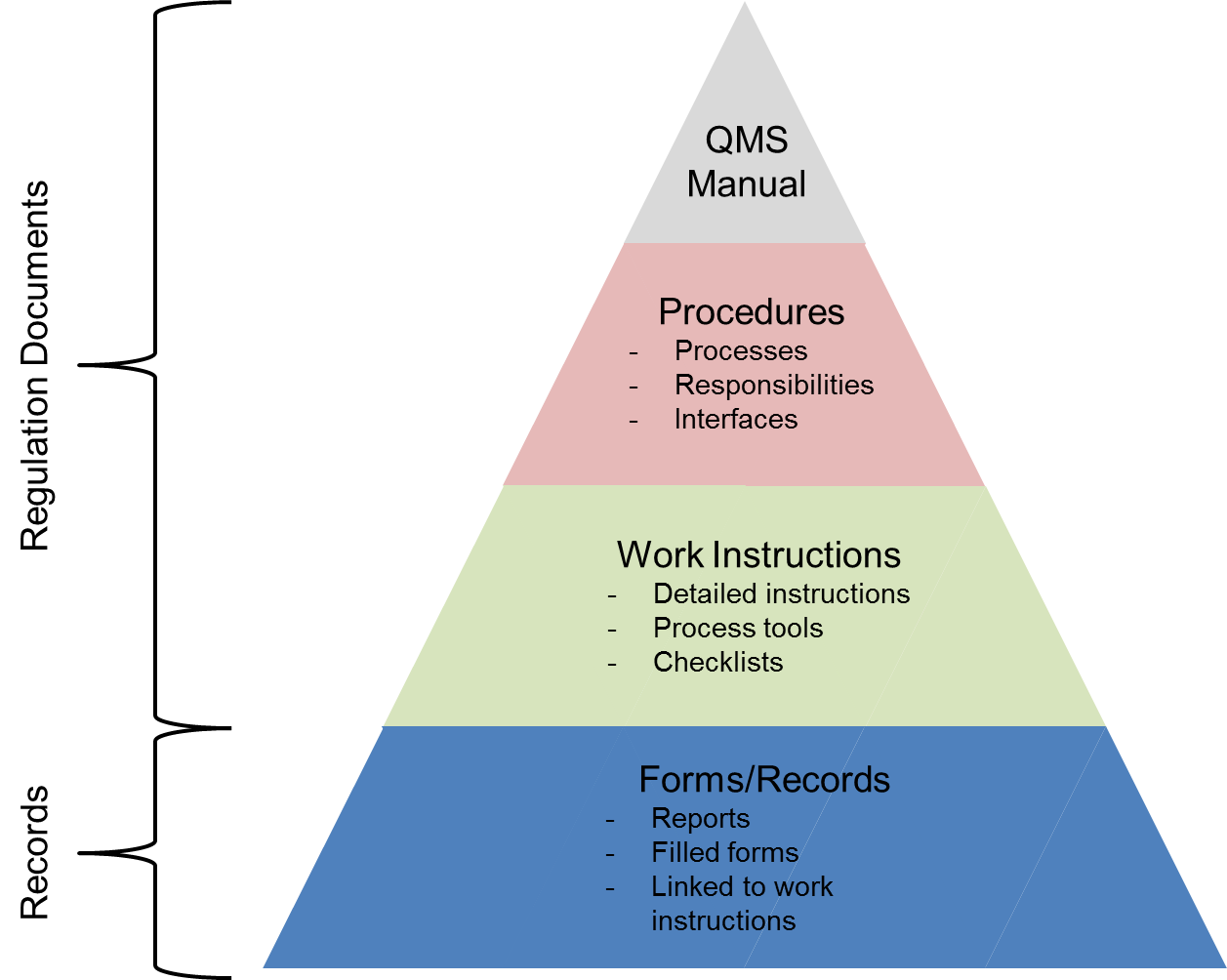
    • Quality Manual – The quality manual defines how each requirement of the rather generic ISO 9001:2008 standard is applied at the company.
    • Quality Procedures – The quality procedures are the essence of the ISO 9001 documentation. The ISO 9001 quality procedures explicitly describe how certain key processes within the company must be performed and who is responsible for them.
    • Quality Policy – The quality policy is the company’s policy defining its stance towards quality and customer satisfaction.
    • Quality Objectives – The quality objectives define measurable goals relative to the company’s quality management system.
    • Process Flowchart – The process flowchart is a description of how the various processes of the ISO 9001 QMS interact with each other.
    • Work Instructions – Work instructions are the most detailed and most company-specific of all ISO 9001 documents. Work instructions describe in detail how particular tasks must be performed. Work instructions are typically written by the people who perform the actual work.
    • Records – Records are different from the above documents, all of which provide directions on how to conduct business. Records, on the other hand, are evidence of things done. ISO 9001:2008 contains numerous explicit requirements on records plus requirements for many more undefined records.
    Most organizations are unaware that even if they previously went through the ISO 9001 certification process, things are changing. A new ISO 9001 standard has been published in September 2015. This means that the ISO 9001:2008 standard will become obsolete on September 14, 2018, and that all ISO 9001:2008 certifications issued in late 2015 and beyond bear an expiry date of September 14, 2018.
    There has never been a better opportunity than now to examine the underlying document management practices associated with ISO 9001 certification. Certifying against the new standard provides an opportunity to view ISO 9001 not only as a paper documentation exercise, but as an opportunity for digitizing document processes – and in the process transforming the business. Leading organizations are increasingly realising that if approached strategically through a document management system, compliance-mandated digital documents can provide a foundation for more effective processes throughout the business and provide insights that are critical to digital transformation.
    If you are considering the implementation of a document management system for your business, but you are still on the fence when it comes to selecting the right solution, please e-mail us on sales@rincon.co.in and we will be glad to assist you.

  • Video: Copy Machines Can Store Your Private Info

    Video: Copy Machines Can Store Your Private Info

    [youtube]http://www.youtube.com/watch?v=zTsBw-0bgmg[/youtube]

    The dangers of identity theft are well-publicized. We’ve all been asked to shred our documents, be on the lookout for phishing scams etc. But there is a new potential threat to our identity lurking in warehouses. We’re talking about copy machines.

    “Copy machines today are just like computers,” explained Boston security expert Robert Siciliano. “They have hard drives and can store data that can be extracted.”

    The video says it all.

  • Leaking health information may land you in prison

    Most of us believe that our medical and other health related information is private and is protected. As an individual we supposedly can decide who can look at and receive the information like our insurers, employers or any other government health care agency. In India even though there is no clear rule / law which states what information can be shared in the public domain. The Privacy Bill, 2011 could be the initial step from the government on implementing some privacy act. Here is the news article that appeared in The Deccan Herald.

    Getting this rule implemented calls the hospitals to review the existing security measures followed in safe guarding the patients’ health information. In short your health information shall be protected in a way that does not interfere with your health care. The health information cannot be shared without your written permission unless the law allows it but it is also necessary to keep a complete audit trail who has accessed the same to avoid any misuse. To view the analysis of the Privacy bill click here

  • Act before it’s too late! Documents are vital …

    A major telecom company warehouse in India had outsourced the storage and scanning of its Consumer Application Forms (CAFs) from 1996 onwards. This warehouse unfortunately caught fire in February this year. After this event, it was found that only 8 million forms had been scanned whereas 12 million unscanned forms had been destroyed. This was a major lapse. The incident not only highlighted the fact that important data had been lost completely, but also underscored the slow rate at which the digitisation of subscriber data was being carried out. Following this incident, the telecom service providers have been asked to ensure quick and time bound scanning of all CAFs, proper duplication of records with a mirror image in the archives, storage of the CAFs to have fireproof arrangements and secure from other hazards. (Refer to the news link http://bit.ly/hDH2MC and http://bit.ly/kh8MVP) Just ponder over the loss of imformation and the lack of records!! This would not have happened if all the documents were digitised regularly and stored in a good document management system.

    Security of documents isn’t just about access. You have to ensure that your documents do not get misplaced, lost or damaged. Who hasn’t looked for hours through file cabinets to find the document(s) needed? Sometimes documents are misfiled; other times they are left on someone’s desk or the worst case scenario it could be lost due to pest attack or some natural calamities like flood, fire etc. Many people believe storing documents on their computer or on the company network is considered a form of document management. If the files stored in computer are not backed up and something were to happen to the hard drive, all information is lost. A true document management system ensures that your organization’s information is protected at all times, from natural disaster, catastrophe and corruption.

    With a document management system, gone are the days of lost documents because they are all in a secure central electronic repository. Also gone are the days of wasted time because multiple people can retrieve documents from various locations and multiple file cabinets. With a document management system, the documents are immediately retrieved for the person looking for information. This not only makes them more productive for that one task, it shifts the focus from the document retrieval to solving the original issue. A good document management system’s aim is to provide everything you need to help your business run more efficiently, ensuring that you do not waste any unnecessary time and space maintaining your documents. It should also enable businesses to easily share and collaborate on documents in an efficient and productive way. A digital document management system is a great way to save time and take the first steps towards a paperless office.

    Along with convenient document sharing and data protection, businesses can take advantage of full audit control, reduced storage requirements, put an end to photocopying / misplaced / lost documents. Meeting regulatory requirements such as HIPAA, SEC and FINRA can be a headache. If you use an EDM, many of the regulatory requirements are built right in, helping you become compliant. No matter what your organization does, you find yourself liable to maintain documents. A document management solution secures the documents that are critical to your business so you can remain accountable to your clients.

    Contributed by Ashish Baby