Blog

  • Automate your email processes in less than 5 minutes

    [image src=”https://www.rincon.co.in/site/wp-content/uploads/2019/02/1532683853.png” shape=”img-rounded”]

    TPAs are inundated with emails and these mails are critical in nature. The number of emails is increasing exponentially and managing them is an arduous task. Is there a solution that can help automate this ever increasing volume?

    Introducing EMail Integrator, an application that runs in the background, saves time and allows you to focus on your important tasks. It works with any email box like Exchange server, Cloud emails service Gmail, Office 365, Yahoo mail, Hotmail, Outlook.com, any IMAP4 or POP3.

    Features:-

    • Auto printing and stamping of Insurance emails
    • Export your emails to PDF for integration
    • Customised auto reply to the sender’s email
    • Auto Archival of sent and received emails for future reference
    • Quick searching of emails
    • Reports
    • Keep your email box clean

    How will it help you?

    • Save all emails received from insurance companies in PDF, eml, txt for compliance and for future reference
    • Download insurance companys’ emails / attachments and integrate with your HIS
    • Automatically forward your patients’ insurance emails to the concerned person in the department
    • Print patients’ insurance emails directly to your desk printer.

    For more information e-mail us on sales@rincon.co.in and we will be glad to assist you.

  • Data Security – a Look Forward into 2019

    [image src=”https://www.rincon.co.in/site/wp-content/uploads/2019/02/data-security-300×200.jpg” shape=”img-rounded”]


    As the new year begins, we sat down with Executive Vice President and CTO of XMedius, Sébastien Boire-Lavigne, and asked him to consult his crystal ball about what might be the big data security stories waiting to happen in 2019.

    Internet of Things: The Enemy Within

    The proofs of concept have been well established and documented, it is just a question of time before Internet of Things (IoT) attacks will make the next big headline.

    When Alexandru Balan, Chief Security Researcher at Bitdefender, presented at RSA 2018 how a simple smart plug could be exploited, I came to realize how much of a serious blind spot in our information security system IoT devices are in general and how much of a grave danger it is to everyone’s home network.

    “Non computer” devices are often perceived has having a lower risk profile than computers, but that may change fast in the next few months. In his presentation, Alexandru managed to easily discover millions of smart plugs over the Internet using an open API and then proved that the plugs could be infected to establish a persistent foothold to launch attacks from within whatever network they are in. That’s as bad as it gets.

    Don’t be deceived by their appearance, these are fully-operational headless computers. Once infected, IoT devices bypass normal security protections, like firewalls, and allow attackers to start probing network weaknesses and eventually move into systems with valuable information. Most IoT devices run some version of busybox, a Linux distribution targeted for embedded devices.

    So the real danger of IoT is not a hacker flipping on or off your lamps, making you hot in the middle of the summer, or playing some Danish death metal on your smart speaker at 3AM in the night (Ref: episode eps2.0_unm4sk-pt1.tc of Mr Robot), it’s invading your network. Networks are more vulnerable from the inside than from the outside, and this is particularly true for home networks.

    HOW AN IOT HACK COULD HAPPEN

    Imagine this scenario: let’s have a tradeshow booth for our fake company at the Gartner IT Symposium, targeting high-profile IT executives. Let’s give away smart plugs to everybody who gives us their business cards. That way, by carefully giving the smart plugs in a particular order, we can even know who got which plug. Odds are good that they will use the smart plugs at home, which is perfect for us, as there aren’t usually much intrusion detection systems (IDS) running on home networks.

    The end result? For the cost of some smart plugs and a trade show booth, an attack on the CIO or head of IT of a billion-dollar company can be executed from the comfort of his home network. This is an hypothetical attack scenario, but it is certainly not far-fetched and would be fairly easy to implement.

    SO WHERE DOES THAT LEAVE US?

    Realistically it is hard to believe that IoT device manufacturers will harden their $50 devices to the point where they can be trusted. Legislation like California’s “Security of Connected Devices” is certainly a step in the right direction, but frankly it doesn’t change the economic fundamentals of those “cheap headless devices”.

    The only legitimate solution then is a zero trust approach to IoT, IoT devices must be radically segregated from the rest of our networks, both at work and at home. Consumer network manufacturers should start having “default” configurations that include a secure zone explicitly for IoT devices, where they could not be used to attack other valuable assets on the network.

    Note to self: do not install smart cameras in bedrooms…

    Over Proliferation of Security Frameworks and Questionnaires, the Unbearable Cost

    Security framework and security questionnaires have existed for while now, but 2018 is an inflection point. The conjunction of the adoption of the Cloud and the integration of the global IT supply chain is multiplying the requirements for providers running security programs, unfortunately while delivering frankly little benefit to all parties.

    Before, few customers were requiring security certifications, so supporting customer requirements was not too much of a burden and a certification was nice to have. Those days are over, and customers are getting more sophisticated in managing the security requirements of their cloud suppliers. This is actually a good thing, it makes businesses and the internet as a whole a safer place. The problem lies in the multiplication of ad hoc security questionnaires and various security requirements.

    TOO MANY QUESTIONS THAT ARE ALL THE SAME

    Most security questionnaires are asking the same questions, but in different ways. This imposes a heavy cost burden on cloud providers. For example, The Cloud Security Alliance CAIQ questionnaire is certainly a worthy initiative. We spent several weeks filling it out, supplying meaningful answers and thorough notes. We can’t spend that kind of effort on “ad hoc” questionnaires.

    It would be to the benefit of all parties to use a standardized security Q&A system, so that everyone gets the most out of it. Of course, some industries may have specific requirements, but we should be able to construct a modularized approach to questionnaires that build one on each other.

    A FRAMEWORK FOR EVERY PROBLEM

    We’re also seeing the same phenomena with security frameworks. In the last 12 months we have been asked to demonstrate compliance with: SOC2, HIPAA, GDPR, ISO 27001/27017/27018, NIST 800.53, CSA, HiTrust, PCI-DSS, Fedramp, and CIJS. I’m sure there are several more around the corner.

    There is a need to standardize the whole tech industry onto a single global security framework that can be extended into specializations that address particular requirements of specific markets.

    I think that France’s healthcare services provider certification (HDS) is a good example of the right way to establish sectorial certification. They required compliance to ISO 27001, ISO 20000 and ISO 27018 along with 38 additional security controls specific to their sector. This a much sounder approach to the problem than building yet another security framework from A-Z.

    We need a universal security framework. I personally favor ISO 27001 and working on sectorial security control as an extension to the base system. This would significantly reduce effort to support a broad range of certifications, make cyberspace a safer place, so we can spend our time securing information assets instead of demonstrating the same thing over and over again.

    I will not be holding my breath though…

    The Empire Strikes Back… on Encryption

    Encryption. We take it for granted, but the truth is that our privacy and security are under attack, and not by some dangerous hackers, but by our own governments.

    Following the footsteps of the UK government, the Australian government just signed a law (the Telecommunications and Other Legislation Amendment bill) giving law enforcement far reaching rights to compel internet service providers to alter their security protections (i.e. encryption) so law enforcement may gain access to user data.

    While this may sound reasonable, it’s a Pandora’s box that is easy to open, but very difficult to close. Given the way encryption works, it is not possible to weaken it for the government without weakening it for all hostile parties. For example, if companies are forced to roll back end to end encryption and best in class encryption key management practices to allow government to intercept communications, everyone suffers from the weakened security.

    In most cases, the best way to build strong encryption schemes is to make sure that even the maker of that scheme cannot circumvent it. If the NSA was not able to protect “EternalBlue”, which ended up causing several billion dollars in damages around the world, can we really expect that service providers will be able to protect us with weakened encryption systems?

    It doesn’t stop there. In the US, the FBI is lobbying for legislation that would force tech companies to weaken encryption schemes on smart devices, and also fighting in court to force Facebook to weaken the encryption of Whatsapp.

    What do clipper chipskey escrow, backdoor or front door, and lightweight encryption have in common? These are bad schemes that hurt citizen privacy and security with no clear advantage to society. Personal information, healthcare information, and banking information should be protected by the best encryption schemes possible.

    In any case, it is wishful thinking to try to put 100 years of advancement in cryptography science back into its box. Determined parties will have the means to develop and use perfectly secure encryption software, obtained outside normal commercial channels, and keep their communications protected from the prying eye of governments. In contrast, law-abiding citizens will see their day to day activities put at risks for little to no benefits. While that may discomfort governments, encryption is here to stay. In the age of the internet, without encryption there is no freedom and without freedom there is no encryption. Countries restricting access to encryption says a lot on how much they really value the freedom and protection of their citizens.

    It is a battle that the tech industry must continue to fight for the benefit of all.

    Want to be better prepared for the security requirements of 2019?

    XMedius offers cutting edge secure data exchange solutions that can boost protections while facilitating easier compliance with privacy regulations.

    The original article can be found here.

    For more information e-mail us on sales@rincon.co.in and we will be glad to assist you.
  • Reblog: 4 Things You Might Not Know About HIPAA Compliance

    [thumbnail target=”_self” src=”https://www.rincon.co.in/site/wp-content/uploads/2019/01/Healthcare-1024×560.jpg”]

    HIPAA is an incredibly influential part of the US healthcare regulatory landscape. Because its focus is the security of electronic personal information, it’s no surprise that the law and its requirements continue to evolve as the tech landscape changes.

    While this is ultimately a good thing, ensuring that the law makes sense in regards to the resources available and challenges faced in healthcare IT, it can also make HIPAA compliance a bit of a moving target. What doesn’t change, however, is the extreme consequences of a security breach.

    1. It’s Not the Fines That Get You

    A HIPAA breach can deliver a serious blow to your organization’s financials, but the costs may not be coming from where you think. The requirement to publicize that the breach occurred can cause more damage than a government fine.

    [well type=””]

    “If you do the math and you look at an organization that has 10,000 records, that’s between $2 million and $4 million worth of risk. 25,000 records? Up to $10 million in risk. And 100,000 records mean $40 million in risk. Now, I’m saying risk because it’s not the cost of the breach itself. A study shows that about one-third of these numbers is the actual cost of the breach.

    The cost of the breach includes notifying patients and hiring lawyers. If it’s a big breach, you have to set up an 800-number and have people answering it. You may have to do credit monitoring. That’s about a third of these costs. What’s the other two-thirds? It’s the loss of business.”

    Mike Semel

    President & Chief Compliance Officer, Semel Consulting

    [/well]

    2. Inattention is No Excuse, Even If Nothing Bad Happens

    The law requires organizations to secure information from prying eyes, whether those eyes are there or not. Organizations are required to make sure all their systems are properly maintained, even if that means installing a completely new operating system (which may itself require new hardware).

    [well type=””]

    “HIPAA says that you have to have devices that are currently supported with patches and updates in order to be compliant.”

    Mike Semel

    President & Chief Compliance Officer, Semel Consulting

    [/well]

    3. HIPAA Breaches Can Even Come from Within

    It’s important to remember that HIPAA violations aren’t always caused by malicious outsiders, your own employees can be a source of trouble, either intentionally or unintentionally. It’s essential to remember that HIPAA requires only relevant staff have access to any given record. If a nurse looks at the diagnosis for a celebrity staying in another ward, that’s a violation. If your radiology department email’s a patient’s x-ray results to the wrong doctor, that’s a violation.

    Regular training and oversight are key to protecting your organization against threats from within, in addition to keeping bad actors out.

    4. A Key to Better Health Data Security Can Be Simplicity

    Because many data security solutions are cumbersome, it is common for staff to circumvent them by relying on insecure (but more user-friendly) consumer file-exchange solutions instead. The best way to keep this from happening? Make your security rules easier rather than weaker.

    If sending a document via Fax-Over-IP or a secure file exchange solution is as easy as sending an unsecured email, your employees are much more likely to do it. By making proper compliance the path of least resistance, you streamline workflows, reduce staff frustration, and better protect your organization.

    Ready to streamline regulatory compliance with XMedius secure document exchange solutions?

    The original article can be found here.

    For more information e-mail us on sales@rincon.co.in and we will be glad to assist you.
  • FileDirector Enterprise Solution

    [thumbnail target=”_self” src=”https://backend.rincon.co.in/wp-content/uploads/2017/10/document-automation-300×113.png”]

    Bringing documents into today’s world

    • Lower costs
    • Processes paper documents in the same way as digital documents
    • Unlimited users
    • Perfect integration in Microsoft Office
    • Automatic email recording directly from the email server

    FileDirector brings the future of company management and data distribution into today’s world. Our Electronic Content Management solution shortens the time required to organise and handle documents within an enterprise enormously. This noticeably more productive and more efficient way of working reduces costs significantly.

    In achieving this, FileDirector covers all the working stages that a document goes through in modern enterprises: from recording paper documents, or handling documents already in digital format, across search and retrieval to secure archiving of data – all functions are covered. Moreover, FileDirector is not limited to a single location: multiple servers can work together in a network, enabling enterprises to gain the benefits of FileDirector even when operating on a global footing.

    Security is massively important in all Electronic Content Management solutions – which is why FileDirector manages all access authorisations to documents, changes, access periods, automatic storage of documents and emails.

    Capturing information is a very quick process using FileDirector. Scanning was never easier, as the program works with most digital input devices and uses pre-definable scan profiles. Thanks to the integration of FileDirector in Microsoft Office, you and your staff can archive documents, tables and emails with a simple mouse-click.

    Indexing and sorting documents is handled manually or via OCR (Optical Character Recognition) zones in the document, via full text or barcodes. Index data can be imported via ODBC from other databases or files, or transferred automatically when importing or recording.

    Searching for documents could not be easier: using full text search, you can find words or even whole sentences in the document content or index fields. A single double-click is all that is needed to display the document – even if the application used to create the document is not installed on your computer, as FileDirector supports a wide range of file formats. It is easy to scroll through pages, to display miniature images of the pages as a preview, and to call up any previous version of something has been changed. It is also possible to open and view several documents simultaneously.

    Business Process Management sends documents to users, using predefined processes, with each user being required to trigger actions, such as accept/reject. This makes it an ideal tool for tasks such as processing invoices.

    Storage is no problem for FileDirector. Due to the usage of Microsoft SQL or Oracle databases FileDirector can handle millions of datasets and documents with ease.

    For more information e-mail us on sales@rincon.co.in and we will be glad to assist you.

  • Reblog: A slice from Evelyne’s life, executive assistant in a hospital specializing in cardiology

    In my work, I interact with many institutions in the health sector. I meet and have discussions with people who handle a great deal of medical information. I take the time to learn about their daily lives. I enjoy it when they share their experiences and stories with me.

    [row]
    [column lg=”6″ md=”12″ sm=”12″ xs=”12″ ]
    [thumbnail target=”_self” src=”https://www.rincon.co.in/site/wp-content/uploads/2019/01/Hospital-300×200.jpg”]
    [/column]
    [column lg=”6″ md=”12″ sm=”12″ xs=”12″ ]

    Evelyne held a number of positions in various hospitals (in health care and economic services) before becoming Executive Assistant in a hospital specializing in cardiology. She quickly discovered that the hospital had to manage a large number of fax documents of all types (medical notifications, insurance case takeovers, analyses results, care sheets, history certificates, intervention approvals, radiology reports, various test requests or results, purchase orders, invoices, etc.).
    [/column]
    [/row]

    It became increasingly difficult to handle them effectively. Many documents were lost and others were sent to the wrong recipient or forgotten near the fax machine in full view of everyone. With such a volume of documents piled up in the filing cabinets, searching for a fax was lengthy and tedious.

    It was then that Evelyne remembered that the hospital where she had worked a few years prior used a fax software solution instead of traditional fax machines. Showing initiative, she decided to talk to the hospital IT director about it. Aware of the problems associated with the processing of documents sent and received by fax, he dealt with the problem. He quickly approved the idea of replacing the fax machines and fax boards by a software solution.

    This is how the XM Fax® solution was adopted, to the great delight of Evelyne, her co-workers, the IT department and management.

    Evelyne can now send and receive faxes from her work station, her messaging device and her electronic medical records. The processing of faxed documents has thus become much faster and she saves a lot of time. She no longer goes to fax machines many times per day. Evelyne is more productive and effective. She can focus on her mission, which is to provide quality services to patients and to ensure the absolute confidentiality of their personal information. Incoming faxes are now forwarded to the correct recipient without any human intervention, thus limiting unauthorized viewings of health-related personal medical information by the wrong person. With XM Fax, confidential documents of various types are routed to mailboxes or network folders belonging to approved recipients and to designated secure printers.

    As for the IT director, in addition to optimizing his telephone and IP network, it has drastically reduced his expenses related to the use of fax equipment (fax machines, fax boards, maintenance, ink, paper, and telephone lines), and has made it possible to better control the flow and security of communicating by fax. His team is now equipped to administer, monitor and track all the operations and actions carried out in connection with fax transmissions. She can avoid any unauthorized viewings, including those carried out by the administrators themselves, create audit trails, and report to the hospital management. Furthermore, since the hospital is equipped with a high availability redundant fax solution, service continuity is assured. In addition, the advanced and integrated control features of the fax server, the encryption, and the management for users/administrators, meet the requirements of the medical sector in terms of security and compliance. This solution is gaining popularity within hospitals in expansion. Fortunately, this system is scalable to handle a larger volume of faxes and thus serve more departments and employees.

    Today, thanks to Evelyne’s initiative, the hospital is optimizing its unified communications infrastructure, reducing its costs, and increasing the productivity of its employees. Above all, the healthcare organization is now able to process its patient records quickly and in a completely secure manner.

    This truly inspiring account proves to me that any person, no matter his or her hierarchical position, can influence the course of events within the organization in a positive way.

    The original article can be found here.

    For more information e-mail us on sales@rincon.co.in and we will be glad to assist you.
  • Reblog: The importance of software support to your business

    Ensure your software helps, not hinders, your work

    The software you use in your business is like the oil that keeps your car running smoothly. It’s taken for granted when it’s doing its job properly, but as soon as something goes wrong, things can come grinding to a shuddering halt.

    A survey published earlier this year highlighted the impact which technology problems can have on modern business.

    According to answers given by more than 2,000 respondents, 76% of workers felt that technical problems had impacted negatively on their productivity during the previous year. Crashing computers and slow connections were the main culprits.

    In fact, across a range of industries including professional services, marketing and healthcare, the average amount of time lost in the course of 12 months was 262 hours and 43 minutes.

    In simple terms, that’s 11 working days a year lost on average because the software in place wasn’t doing what it was put there to do.

    Addressing software issues proactively

    Most software needs to be updated or ‘patched’ from time to time. The reasons for this are many, but the nature of software is that new features may be added, user interfaces may be updated to improve usability, little flaws or anomalies may be fixed, and security vulnerabilities may need to be plugged.

    Perhaps the most common reason, however, is that operating systems and other software are updated, so if the applications running on them or in conjunction with them (to extend their capabilities) are not themselves updated within a specified timeframe, issues may start to creep in.

    The Equisys approach

    Equisys offers Software Assurance to take care of all these issues before they crop up.

    Here’s how it works and why it’s necessary. Suppliers of most software products (including Microsoft Office 365 and Dynamics NAV) release regular updates and fixes to deal with bugs or improve the user experience.

    That means that software such as Zetadocs and Zetafax that are designed to operate and be compatible with those products must keep pace and release updates at or near the time that updated versions of the Microsoft software are issued.

    Software Assurance ensures that you receive your Equisys software updates in a timely way to ensure that your product continues to work as it should.

    These software updates also include feature and usability improvements, so as well as working with the latest version of all the software you depend upon, you’ll also benefit from software improvements.

    World class technical support

    The benefits of software updates are clear.

    However, updates are only part of the picture. To complement software updates, technical support is also key.

    Equisys online support is available 24×7 and we offer support packages for all of our products. The different levels of support enable clients to tailor the support they receive to suit their budget and requirements. No matter which level of support you opt for, you will know that the solution to your technical issue can be just a simple point of contact away.

    It offers complete peace of mind, as you can see from this testimonial from a satisfied client, Innovative Inc:

    “In my role as a service engineer and reseller, I talk to technical support from many software manufacturers, and it seems the bar has really been raised in recent years. I congratulate Equisys for helping to set a new standard that makes owning and servicing technology so much more bearable and positive for my peers and my clients.”

    For more information e-mail us on sales@rincon.co.in and we will be glad to assist you.

    The original article can be found here.

  • Reblog: The enduring appeal of fax -Why it refuses to go away

    As different forms of business to business communication have come and gone over the years, there is one which refuses to go away. In fact, for many industry sectors, it continues to be an essential channel of communication.

    Time and time again, we’ve read articles predicting its final demise.

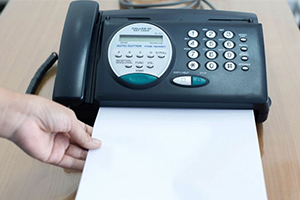
    Yet fax continues to hold its own, surviving and thriving in certain sectors where other forms of communication don’t provide the same level of simplicity, proof of delivery or, in some cases, levels of security.

    Anecdotal evidence from Japan is that faxing is still very common, and that virtually every office and workplace is equipped with the ability to send and receive faxes. Faxing is still in use for everyday communications such as replying to party invitations.

    We should add at this point that Japan is a special case, with a complex alphabet which makes hand writing messages preferable on many occasions. Perhaps there is even a cultural attachment to the personal aspect of sending a fax, but even so, evidence of the enduring qualities of fax comes from around the world.

    A 2017 survey of German companies with at least 20 employees found that:

    • 70% of respondents said they sent fax messages ‘often’ or ‘very often’
    • Amongst businesses with less than 50 employees, this figure rose to 77%

    The message is clear – if you want to do business with Germany or Japan, you need to include fax in your mix of communications channels.

    Yet this phenomenon is not confined to just these countries. A 2017 IDC (International Data Corporation) survey of senior decision makers in financial services, healthcare, government and manufacturing, across North America, Western Europe and Asia Pacific, found that the use of faxes was actually on the rise.

    • 82% of respondents had seen their use of faxes rise or stay the same compared with the previous year
    • The volume of faxes being sent had risen by 27%
    • Across the 3 regions, the average predicted growth in fax volume over the next 2 years was 25%

    Whilst it might be assumed that the healthcare and legal sectors make more use of faxes due to the paper trail they leave, the projected growth was spread across all sectors:

    • Finance – 20%
    • Healthcare – 25%
    • Government – 27%
    • Manufacturing – 29%

    Other reasons for the ongoing global appeal of faxing are varied:

    Compliance

    Sectors such as healthcare, legal, finance and government demand high levels of data and communications compliance, for example in maintaining a clear paper trail for certain processes and transactions.

    Many jurisdictions only accept signatures on faxed documents as being legally binding, and the fact that sending a fax produces an instant acknowledgement and record of receipt, contributes to the sense of reliability as a communications medium.

    Simplicity

    The simplicity of faxing is also an advantage in sectors such as manufacturing, when getting the right documents signed by the right people in a hurry is frequently advantageous.

    Many businesses still rely on keeping individual copies of receipts, invoices and contracts, and faxing is still the simplest means of ensuring that papers such as these go to exactly the right person, without being lost amongst the avalanche of emails received on a daily basis.

    Security

    Across all sectors, the security offered by faxing can be a huge advantage.

    Faxes can’t be tampered with once sent; nor can they carry a hidden virus.

    This advantage was underlined when Sony Pictures suffered an embarrassing cyber-attack in 2014, during which thousands of private emails were published online. In 2016, the chief executive of Sony, Michael Lynton, revealed that in response to the attack, he now writes out sensitive messages by hand and sends them by fax.

    The handwritten approach may seem a bit over the top for some, but the security and peace of mind offered by faxing is clear.

    In summary

    Fax remains a vital component of business communications across many industries. The benefits fax provides ensures its enduring appeal as a communications vehicle, that other comm’s methods such as email simply can’t match.

    Our ever-popular Zetafax network fax solution continues to meet on-going demand, offering the advantages of faxing combined with the flexibility of online hosting. It is used by more than 65,000 customers worldwide and improves on manual faxing through factors such as:

    • Cost cutting automation
    • Automated archiving
    • Support for Fax over Internet Protocol (FoIP)
    • Integration with other applications

    For more information e-mail us on sales@rincon.co.in and we will be glad to assist you.

    The original article can be found here.

  • Get Tag Information Anytime, Anywhere

    We’re always connected. Be it our cell phones, tablets, televisions, or computer screens—we have what we want and need at our fingertips.

    And your nurses should too.

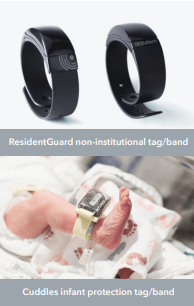
    Having the information they want and need at their fingertips is vital—and in some cases life-saving. Can your nurses see important information about their patients and their patients’ security tags from the palm of their hand?

    Take away some of the inefficiencies and challenges in the day-to-day of your staff with mobile tag testers. No more walking to the nurse’s station to see how much battery life is left on a certain tag or manually testing if the individual tags are working properly. Instead every nurse can see the information they want to see, when they need to see it.

    Knowing that your patients are safe and secure is important. Make sure your nurses have the flexibility to review tag information anytime, anywhere with these new options from Accutech Security.

    DescriptionAt the tag test stationFrom a mobile tag tester (ID-TAD)

    Tag/band has modern,discreet look and feel

    Yes

    Yes

    See remaining battery percentage per tag

    Yes

    Yes

    Check the warranty date

    Yes

    Yes

    Read any notes other nurses
    may have added about this tag

    Yes


    Switch tags “on” and “off”

    Yes

    Yes

    Run reports on each tag

    Yes


    Guarantee nothing will be lost—the tag test station is at a permanent location; and tag testers alarm is anyone attempts to remove them from the facility

    Yes

    Yes

    Get the information they need anytime, anywhere


    Yes

    For more details contact us on sales@rincon.co.in

  • Reblog: Arizton Report Reveals Valuable Global Fax Market Insights

    Arizton Advisory & Intelligence is a market research organization that produces premium market research solutions and customized reports for a wide variety of industries. They track both high growth and niche markets across industries, such as:

    • Consumer Goods & Retail Technology
    • Automotive & Mobility
    • Smart Tech
    • Healthcare and Lifesciences
    • Industrial Machinery
    • Chemicals & Materials
    • IT & Media
    • Logistics & Packaging

    Arizton recently released their “Global Fax Services Market Outlook and Forecast 2017-2022”, and once we heard about it we naturally jumped at the opportunity to get our hands on it! The report is chock-full of industry tidbits and also contains their 5-year forecast of the global fax services market. Here are 4 of what we consider to be the key takeaways from their 2017 report.

    1. Fax Services Reduce Carbon Footprint

    It’s important to indicate that for the context of this article, the term “fax services” refers to the plethora of on-premise, cloud-based, hybrid, and secure file exchange solutions on the market that have been developed to replace traditional, paper-based faxing. Most people are aware that by switching to a digital fax solution they reduce paper usage within their organization, but Arizton’s findings delve a little deeper. In discussing market growth enablers in their Global Fax Services Market report, Arziton mentions that modern fax services reduce the usage of paper by up to 75% across organizations of all sizes.

    Computer-based fax solutions reduce paper use not only by replacing traditional fax machines, but by replacing other workflows involving paper, such as scan-to-email workflows as well. The report estimates that in a single year, 150 billion papers are used for faxing purposes in the US alone.

    As awareness and initiatives to create a “green office environment” grow across all industries, on-premise and cloud-based faxing services have helped organization’s paper requirements decrease significantly over the last decade. Every organization that adopts cutting-edge fax solutions not only minimizes their own carbon footprint, they help reduce the need for paper production in general.

    2. Fax Automation Workflow is a growing trend

    Arizton’s report explains that fax automation has grown to become one of the most popular features of today’s fax solutions for organizations who largely operate in a transaction-based environment. The automated sending of documents is especially appealing to companies whose document processing needs are growing, and is an available feature provided by various fax services vendors in the industry.

    Fax automation is achieved by integrating on-premise or cloud-based solutions with existing customer applications, such as CRM. Users can then predefine numerous documents and contacts for automatic transmissions based on their business needs.

    3. There’s still a lack of awareness of traditional fax alternatives

    Although there are several models of fax solutions on the market to replace the traditional fax infrastructure, the Arizton report explains that lack of awareness of fax services often leads to usage of email as a substitute. Many organizations replace traditional fax by sending documents via email after scanning them through hardware devices.

    Email may provide a faster and more convenient alternative to using fax machines, but it isn’t inherently secure and without the right security measures in place, an organization’s data governance may not meet compliance regulations. Fax solutions that integrate directly with user email applications are a modern, secure, and compliant alternative that allow users to continue to send and receive files from the platforms they’re most comfortable working with. Several contain a built-in audit trail function to eliminate any guesswork should an organization come under regulatory audit.

    4. The Healthcare industry is leading the fax services adoption pack

    Several end-user industries are discovering that modern fax solutions are a great way to increase productivity, save cost, and enable a more compliant environment, but none more than the healthcare sector. Ariston reports that healthcare (which includes hospitals, clinics and pharmaceutical companies) is the biggest revenue contributor for fax services, representing 30% of the global market. Healthcare organizations mainly opt for fax services to ensure the secure transmission of patient documents which helps comply with regulatory compliance like HIPAA in the US, not to mention that fax solutions can also automate several document management processes. In coming years, Arizton expects healthcare revenues to continue to grow as fax solutions become more widely used by individual physicians and the use of fax solutions grows in the APAC regions.

    A close runner-up, representing 26% of global revenue for the fax services market is the Banking, Financial services and Insurance (BFSI) sector, with banks and insurance organizations are the leading revenue contributors, followed by mortgage companies. The Arizton report forecasts that by 2022, more organizations in the financial sector are expected to migrate towards hybrid fax solutions. Hybrid fax solutions give companies greater control over their data with on-premise server deployments, yet also offer the flexibility and scalability of cloud fax solutions.

    Looking for a fax solution that can boost productivity, automate workflows, and help your organization meet regulatory compliance no matter what industry you’re in? Speak with an expert today to find out which solution would best meet your business needs.

    For more information e-mail us on sales@rincon.co.in and we will be glad to assist you.

    The original article can be found here.

  • Reblog: Is Fax Dead in Healthcare?

    The word “fax” has some pretty outdated connotations within today’s highly mobile and technologically savvy workforce. When people think fax, it may invoke a flashback of standing in front of a jammed machine as they attempt another go at sending a single page for the 6th time, or trying to get an urgent document over to a waiting recipient, only to discover that the receiving fax machine is out of ink. Regardless of the reputation fax has for being obsolete tech, the reality is that fax usage in many industries is still rising, not dropping, and faxing itself no longer means having to rely on outdated machines.

    If you’ve pondered the question “Who still faxes in 2018?” the straightforward answer is that many businesses rely on fax for their day-to-day operations.

    In The International Data Corporation’s (IDC) 2017 fax survey, 82% of respondents in the Finance, Healthcare, Manufacturing, Legal, and Government sectors saw fax usage go up or remain consistent compared to the previous year. The average growth of fax usage across the board was 27%, with a quarter of companies in these sectors reporting growth between 50-74% – a very far cry from the statement that “fax is dead”!

    Fax is far from dead. Not only is it still widely used, it has evolved into a digitized medium that integrates seamlessly with interfaces that most of us use regularly, like email. While fax machines may remain for a little while longer, their use is no longer synonymous with faxing itself. Fax-over-internet-protocol (FoIP) technology has revolutionized communications, allowing for increased security, mobility, and ease-of-use. Read on for an overview of how and why fax has remained commonplace in the healthcare industry.

    The Role of Compliance in Healthcare Faxing

    The healthcare industry’s wide use of fax has a lot to do with regulatory compliance, namely with the Health Insurance Portability and Accountability Act, or HIPAA, which was passed by the US Congress in 1996. Navigating the details of regulatory compliance can get overwhelming: when it comes to secure data transmission, what does HIPAA actually say? The HIPAA Privacy Rule was enacted in 2001, shedding a little more light on exactly how healthcare organizations should protect patient data. It urges healthcare professionals to take “reasonable safeguards” when sharing patient files between hospitals, labs, doctors’ offices, and insurance providers.

    The US Department of Health and Human Services (HHS) clearly names fax as an essential method of transmitting medical records, test results, and anything else containing personally identifiable information (PII). This is not to say that email isn’t widely used as well, but there are tremendous security risks that come along with using email to send and receive sensitive files.

    A quick “healthcare data breach” search in Google will reveal the startling number of phishing scams and email hacks that take place in the industry almost every day. While there are secure email servers galore available on the market, these platforms are often reserved for larger healthcare corporations or hospital networks since they are often too costly or complicated for the average healthcare provider.

    EHR/EMR Systems and Paperless Faxing

    The advent of Electronic Health Record and Electronic Medical Record (EHR/EMR) systems have completely changed the healthcare records management landscape. Not only is electronic record management in accordance with HIPAA’s efforts to digitize the healthcare environment, it provides a safer means for storing data. Electronic record keeping also allows healthcare professionals to minimize human error while taking full advantage of cost savings.

    As technology advances, EHR/EMR systems vendors now offer on-site or cloud data hosting options, and the systems themselves provide improved coordination between healthcare providers, even granting patients the ability to access their records online. They’ve progressively become more prevalent in healthcare facilities of all sizes – It’s estimated that 77% of today’s healthcare providers have moved their records into the digital sphere.

    Fax-over-Internet-Protocol (FoIP) technology has also evolved over time, with many vendors offering seamless integration with today’s EHR/EMR systems. From a user perspective, sending a fax is now as simple as pushing a button on the interface they already use every day. This eliminates the need for paper filing and simplifies the data transmission process since documents no longer need to be printed or scanned to before users hit send.

    Healthcare Carries the Highest Digital Fax Adoption Rate

    Healthcare showed 9% growth in digital fax usage in 2017. Right now, in healthcare facilities across North America, GPs, surgeons, nurses and other staff are putting a sensitive document in a fax tray, pressing send, and listening to the cringey audio-frequency tones that signify their information being transmitted one page per minute. Of course, not all medical records are sent through fax machines – many healthcare organizations have digitized their faxing or are in the process of doing so. In fact, the healthcare industry leads the pack for transitioning to modern FoIP technology, representing a whopping 30% contribution to the fax services global market in 2017.

    Confirmations of Receipt: From Paper Trail to Audit Trail

    The fact that faxing gives organizations confirmation of receipt is a major reason that it remains a prevalent form of communication. For years, the confirmation page (the printout that lets users know that their message has been completely received) has served as a faster and cheaper equivalent of sending registered mail. Most email systems come equipped with a read receipt feature, but these typically still give recipients the choice to opt out.

    For healthcare organizations who send and receive large volumes of sensitive data daily, confirmations of receipt offer several benefits:

    • They eliminate both administrative and IT guesswork (follow-up calls, manual logging)
    • They facilitate easy records keeping

    When it comes to dealing with sensitive patient information, confirmations of receipt are necessary from both an administrative and regulatory compliance perspective. Today, medical staff have a few ways of maintaining a paper trail of how, when, and to whom patient data is exchanged. While physical paper filing might be a slightly outdated practice, it remains a reliable system for some healthcare organizations. Many use document scanners or multifunction printers (MFPs) to scan confirmations of receipt and file them electronically.

    Healthcare facilities who have implemented FoIP solutions, however, often do so for their built-in records keeping features. XMediusFAX, for example, is designed to keep an audit trail of all fax transmissions, maintaining detailed records that can generate reports any time. Not only does this free up time for healthcare administration, it alleviates healthcare IT of having to use additional software to log communications.

    FoIP for Savings

    In addition to security and compliance benefits, switching to FoIP can bring significant savings as well. Switching organizations regularly reduce costs by eliminating expensive analog fax lines and paper filing/waste. IT departments love being able to get rid of high-maintenance fax machines in favor of more reliable software and MFP integration.

    Beyond the IT and accounting departments, FoIP is a win for the rest of the staff too. Staff members across Healthcare report significant time savings between reducing/eliminating trips to machines, no longer waiting for acknowledgement receipts, and incoming faxes automatically being routed directly to them, wherever they are.

    Fax Isn’t Dead, It’s Evolving

    Discover how fax software can improve the security and compliance of your healthcare document transmissions. Speak with one of our knowledgeable experts today about how FoIP solutions could work for you.

    The original article can be found here.

    For more information e-mail us on sales@rincon.co.in and we will be glad to assist you.